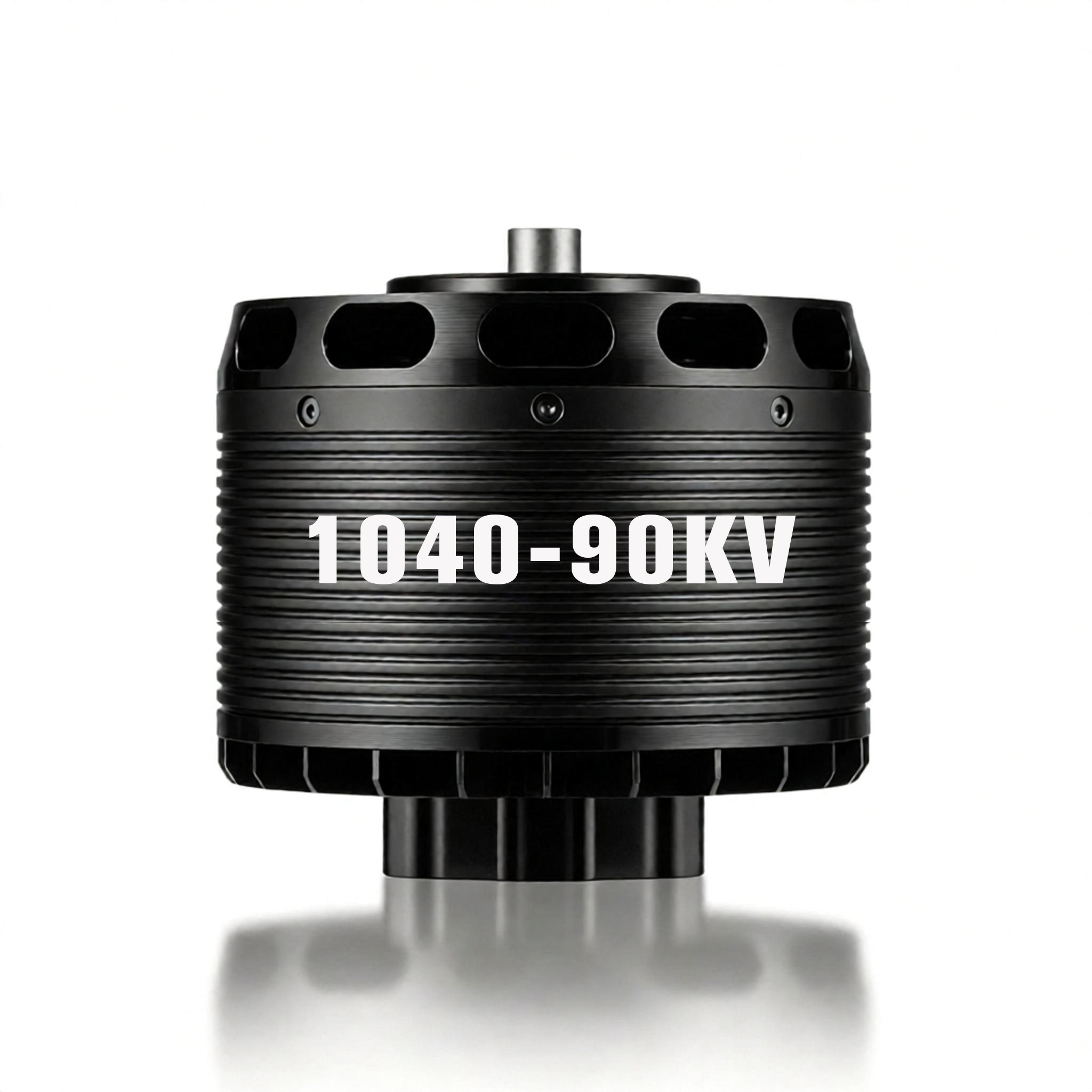
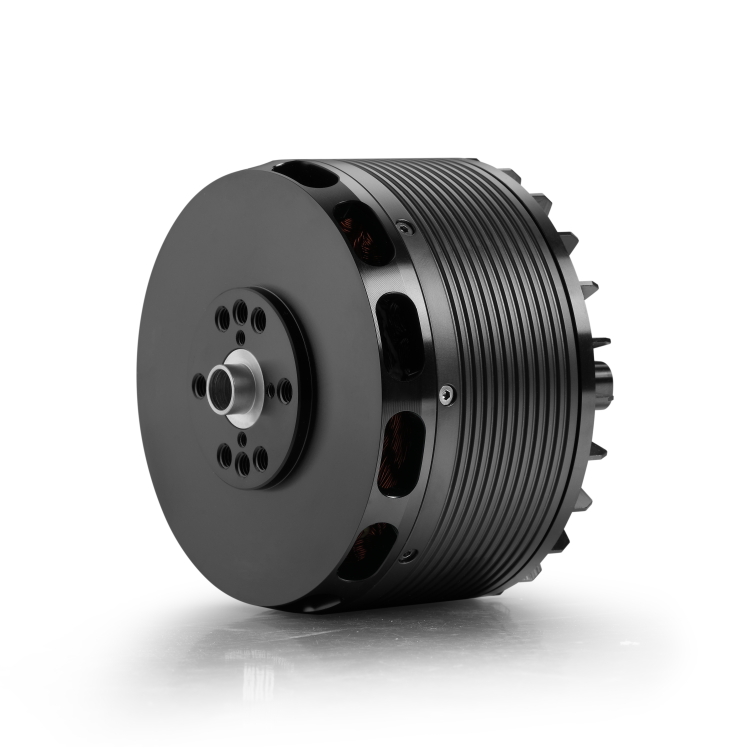
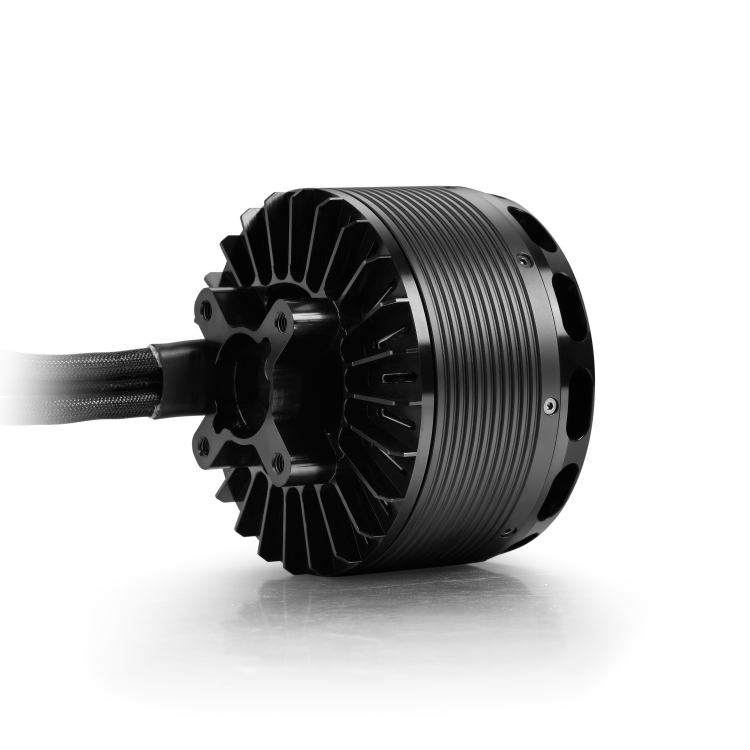
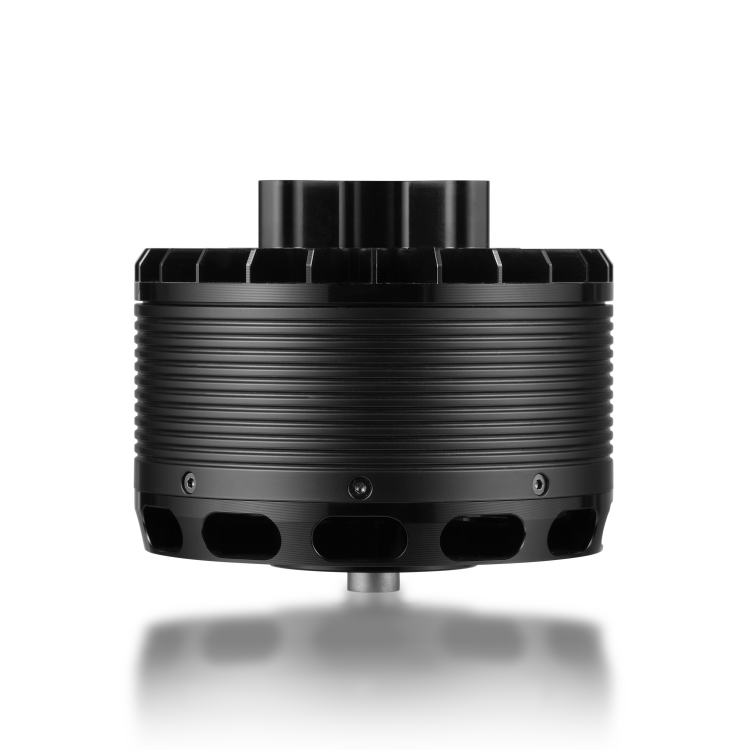
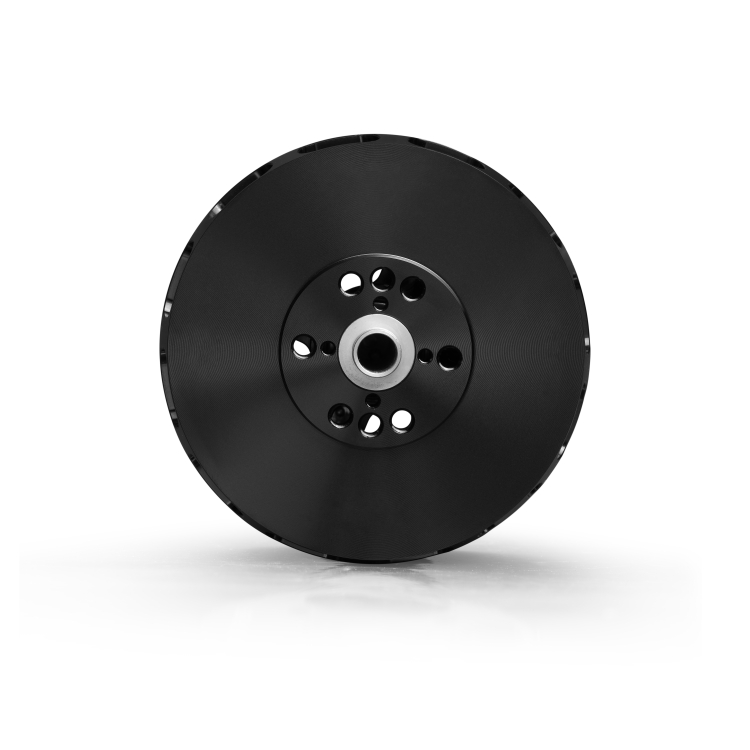
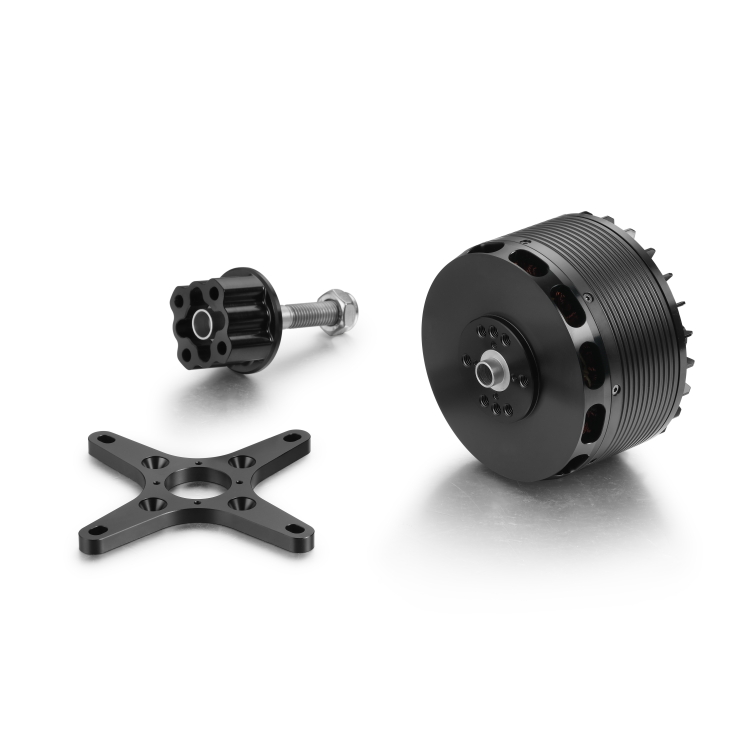
110.6*109.8mm
24N28P
220℃

12mm
2200g
>1000h

| FW1040 Basic Data | |
| Motor Mode:AT1040 | Rotor Dynamic Balance Standard:≤30mg |
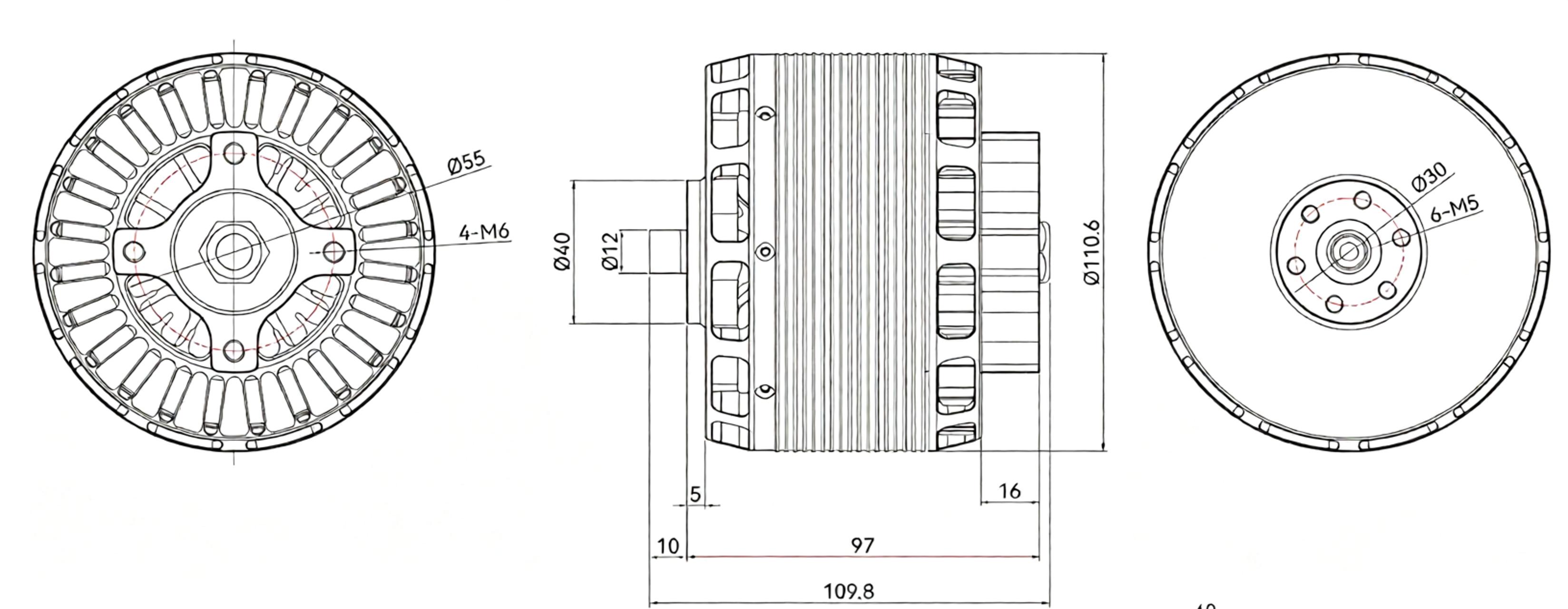
| Motor Overall Dimensions:Φ110.6*109.8mm | KV Value:90 |
| Stator Process:150°C | Maximum Continuous Power:4617W |
| Slot/Pole Count:24N28P | Rated Operating Voltage (LiPo):24S |
| Motor Shaft Diameter:IN:15mm, OUT:12mm | Maximum Thrust:32kg |
| Bearing Model:6902/6202 | No-Load Current (15V):4.9A |
| Magnet Temperature Resistance Grade:180°C | Maximum Current:105A |
| Lead Wire Specification × Length:Enameled Wire 100mm | Phase-to-Phase Internal Resistance:8.8mΩ |
| Enameled Wire Temperature Resistance Grade:220°C | Motor Weight (with Wire):2200g |
| MODEL | KV Value | maximum power | Maximum current | pull | Efficiency | Applicable blades | Number of batteries | Adapt to electric adjustment | |
| BGS-FW1040 | KV | W | A | g | g/W | / | S | A | |
| 90 | 9321 | 107.02 | 29953 | 3.21 | APC27*12 | 24 | 40 | ||
| 90 | 9015 | 104.38 | 32003 | 3.55 | APC28*10 | 24 | 40 | ||
| 90 | 10518 | 120.52 | 33242 | 3.20 | APC 29*12 | 24 | 40 | ||
| Model | accelerator | Voltage | Pulling Force | Torque | Current | speed | Power | Efficiency | Motor temperature |
| BGS-FW1040 KV90 27*12 | % | V | g | N.m | A | rpm | W | g/W | ℃ |
| 40.% | 88.31 | 10846 | 3.74 | 24.40 | 4052 | 2155 | 5.03 | 117 | |
| 45.% | 88.23 | 12624 | 4.35 | 29.58 | 4346 | 2610 | 4.84 | ||
| 50.% | 88.01 | 17111 | 5.92 | 44.27 | 5016 | 3896 | 4.39 | ||
| 55.% | 87.95 | 18147 | 6.28 | 47.71 | 5155 | 4196 | 4.32 | ||
| 60.% | 87.89 | 19175 | 6.65 | 51.32 | 5293 | 4511 | 4.25 | ||
| 65.% | 87.83 | 20474 | 7.13 | 55.92 | 5458 | 4911 | 4.17 | ||
| 70.% | 87.73 | 22122 | 7.72 | 62.11 | 5654 | 5449 | 4.06 | ||
| 75.% | 87.62 | 23683 | 8.31 | 68.25 | 5834 | 5980 | 3.96 | ||
| 80.% | 87.55 | 24875 | 8.75 | 72.85 | 5971 | 6378 | 3.90 | ||
| 90.% | 87.33 | 28020 | 9.96 | 86.73 | 6312 | 7573 | 3.70 | ||
| 100.% | 87.10 | 29953 | 11.52 | 107.02 | 6731 | 9321 | 3.21 | ||
| BGS-FW1040 KV90 28*10 | 40.% | 88.37 | 10995 | 3.63 | 23.88 | 4095 | 2110 | 5.21 | 116 |
| 45.% | 88.27 | 12882 | 4.26 | 29.34 | 4425 | 2590 | 4.97 | ||
| 50.% | 88.04 | 17074 | 5.67 | 42.82 | 5058 | 3770 | 4.53 | ||
| 55.% | 87.98 | 18075 | 5.98 | 45.97 | 5190 | 4045 | 4.47 | ||
| 60.% | 87.93 | 19148 | 6.33 | 49.62 | 5332 | 4363 | 4.39 | ||
| 65.% | 87.86 | 20481 | 6.80 | 54.28 | 5502 | 4768 | 4.30 | ||
| 70.% | 87.75 | 22076 | 7.35 | 60.03 | 5695 | 5267 | 4.19 | ||
| 75.% | 87.65 | 23646 | 7.88 | 65.90 | 5877 | 5776 | 4.09 | ||
| 80.% | 87.59 | 24634 | 8.24 | 69.67 | 5992 | 6102 | 4.04 | ||
| 90.% | 86.79 | 28170 | 9.56 | 84.47 | 6357 | 7331 | 3.84 | ||
| 100.% | 86.36 | 32003 | 11.14 | 104.38 | 6765 | 9015 | 3.55 | ||
| BGS-FW1040 KV90 29*12 | 40.% | 88.59 | 11864 | 4.43 | 25.59 | 3912 | 2267 | 5.20 | HOT |
| 45.% | 88.48 | 13961 | 5.20 | 31.73 | 4230 | 2808 | 5.00 | ||
| 50.% | 88.41 | 16442 | 6.10 | 39.03 | 4535 | 3451 | 4.80 | ||
| 55.% | 88.19 | 20445 | 7.58 | 52.35 | 5046 | 4617 | 4.40 | ||
| 60.% | 88.25 | 22024 | 8.15 | 57.79 | 5204 | 5100 | 4.30 | ||
| 65.% | 88.09 | 23661 | 8.76 | 63.49 | 5379 | 5593 | 4.20 | ||
| 70.% | 88.03 | 25445 | 9.47 | 70.21 | 5544 | 6181 | 4.10 | ||
| 75.% | 87.90 | 26733 | 10.06 | 75.74 | 5700 | 6658 | 4.00 | ||
| 80.% | 87.95 | 27972 | 10.60 | 81.56 | 5814 | 7173 | 3.90 | ||
| 90.% | 87.63 | 31458 | 12.11 | 98.46 | 6192 | 8628 | 3.60 | ||
| 100.% | 87.27 | 33242 | 13.94 | 120.52 | 6591 | 10518 | 3.20 |
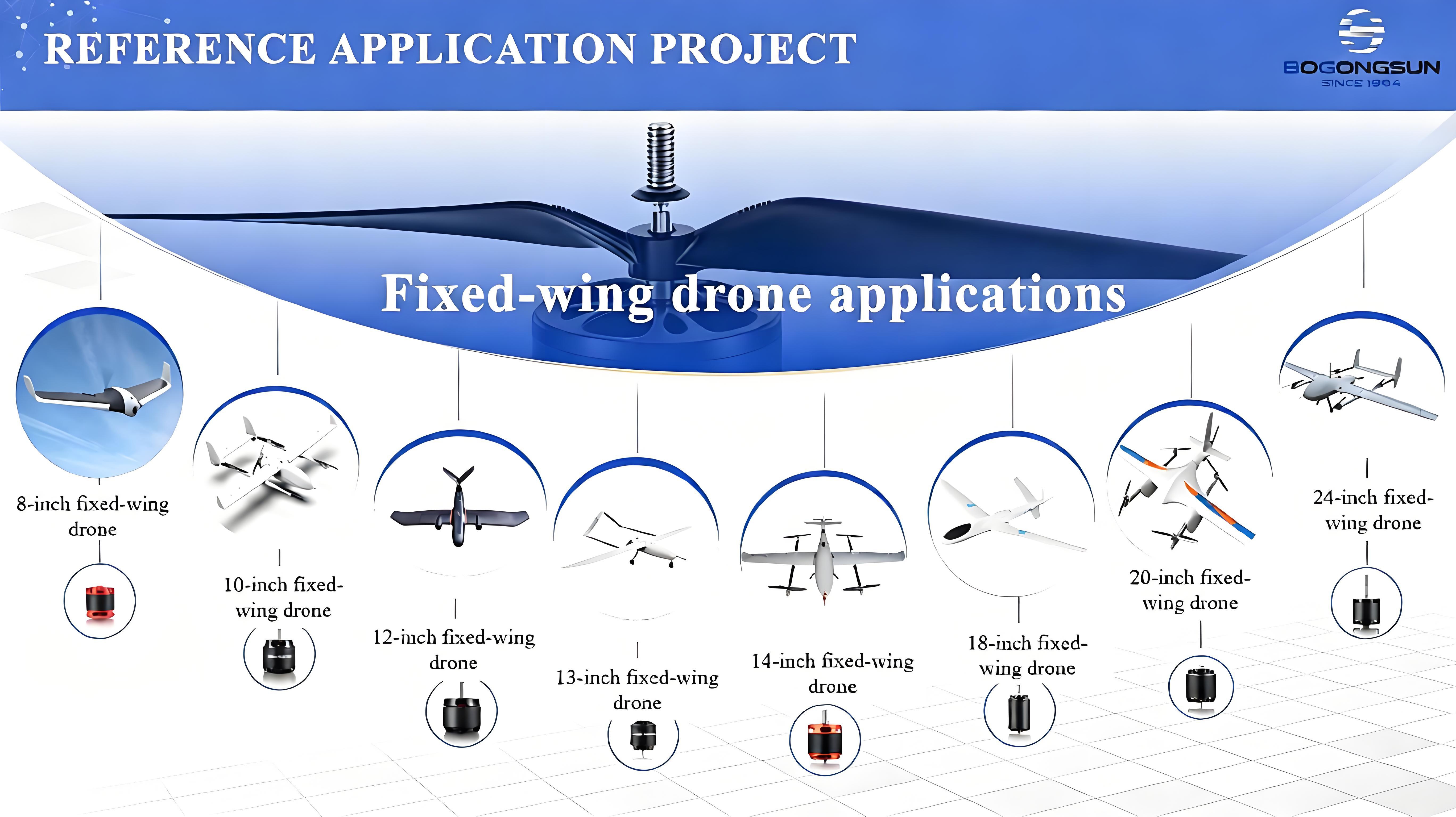
Fixed-wing UAVs have become an important choice for industries that require long-distance, high-efficiency aerial operations. Unlike multi-rotor drones that rely entirely on propeller thrust to stay airborne, fixed-wing UAVs generate lift through their wings, allowing them to consume less energy during cruise flight. This aerodynamic advantage enables longer flight endurance, higher cruising speeds, and larger area coverage, making them widely used for agricultural surveying, mapping, pipeline inspection, border patrol, environmental monitoring, and other professional applications where efficiency and reliability are essential.
The greatest advantage of a fixed-wing UAV lies in its ability to fly farther and longer while carrying professional payloads such as high-resolution cameras, LiDAR systems, thermal imaging devices, and various industrial sensors. Compared with multi-rotor platforms, fixed-wing aircraft can cover significantly larger areas in a single mission and maintain more stable flight in moderate wind conditions. These characteristics not only improve operational efficiency but also reduce labor costs and increase the accuracy of data collection for commercial and industrial users.
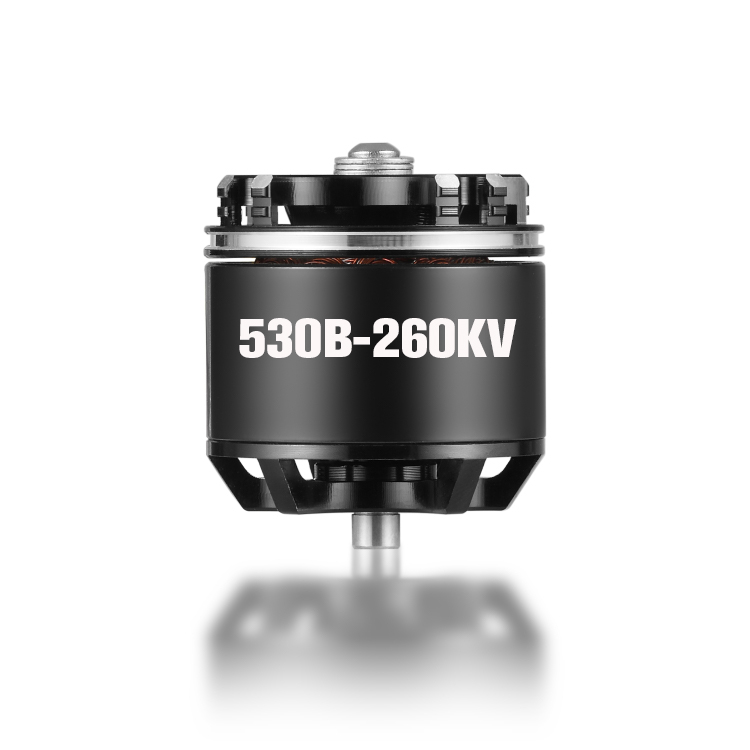
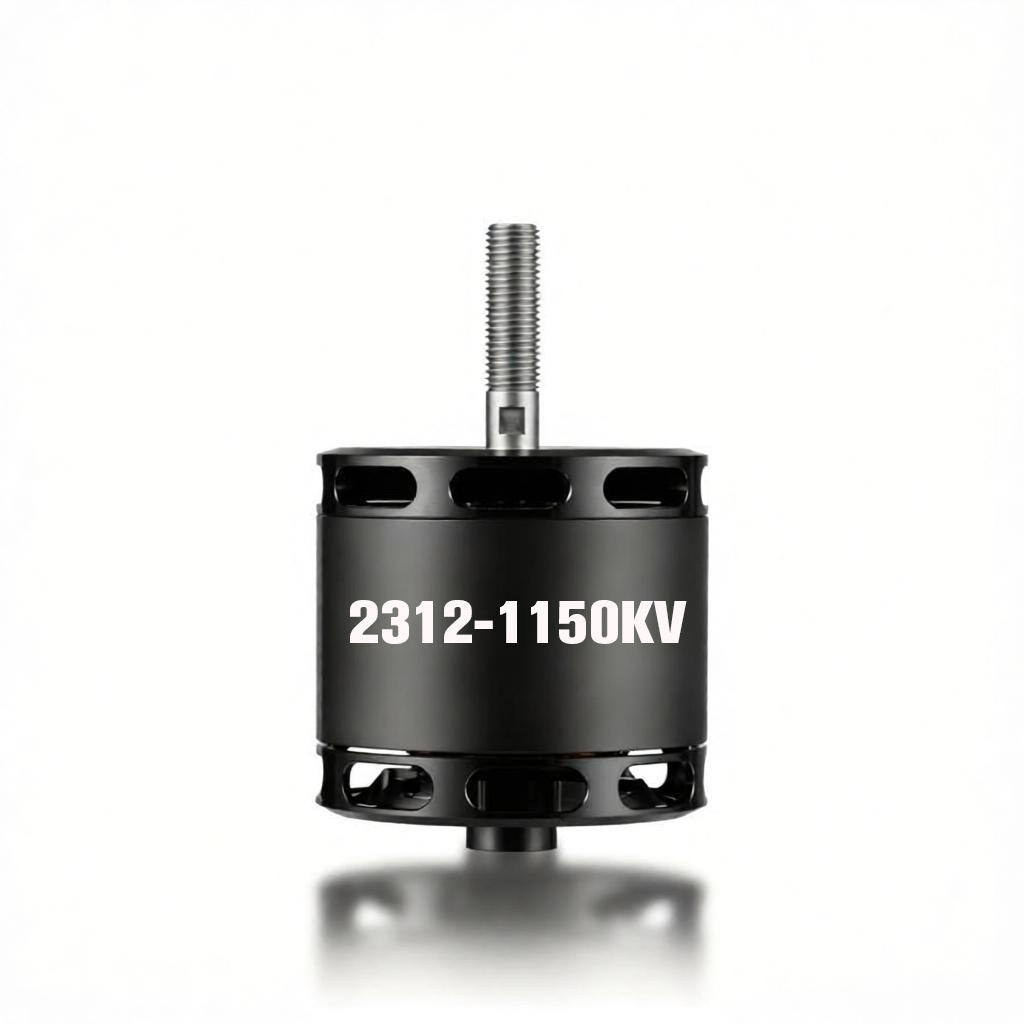
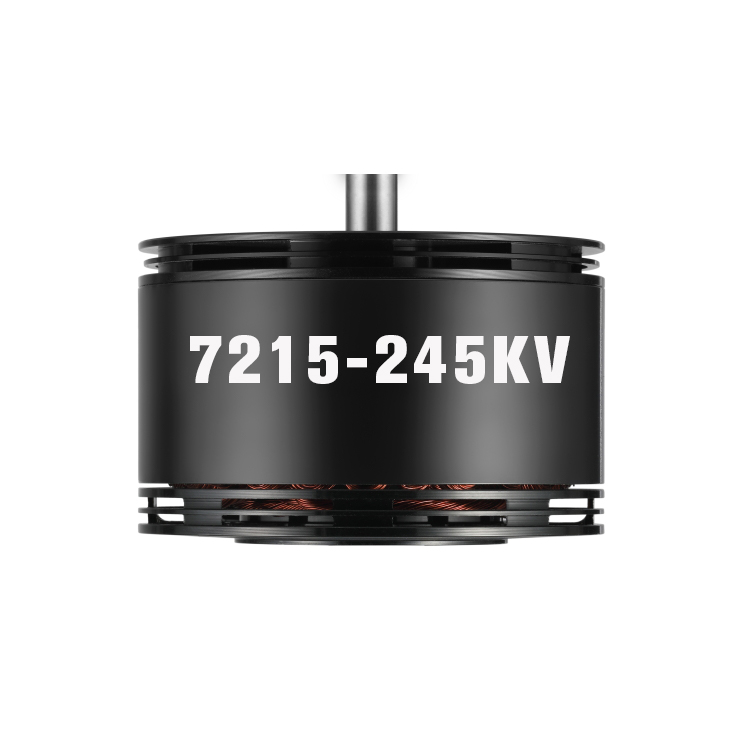
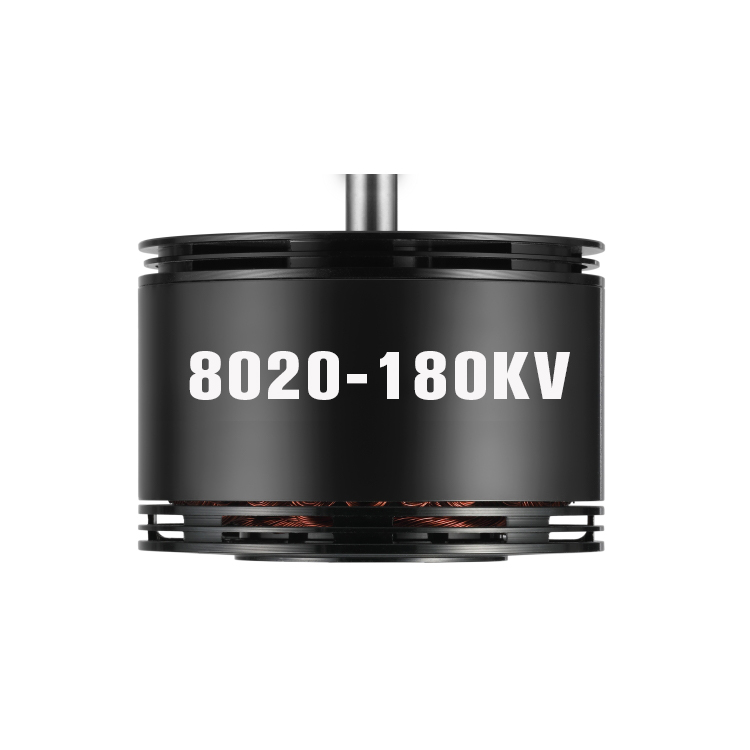
A fixed-wing UAV can only achieve its full potential when equipped with a high-performance motor. The motor directly affects flight endurance, propulsion efficiency, payload capacity, and overall reliability. High-efficiency brushless motors convert more electrical energy into useful power, allowing the aircraft to achieve longer flight times while reducing battery consumption. At the same time, high power density and strong torque provide stable thrust during takeoff, climbing, and heavy-load operation, ensuring consistent performance throughout every mission.
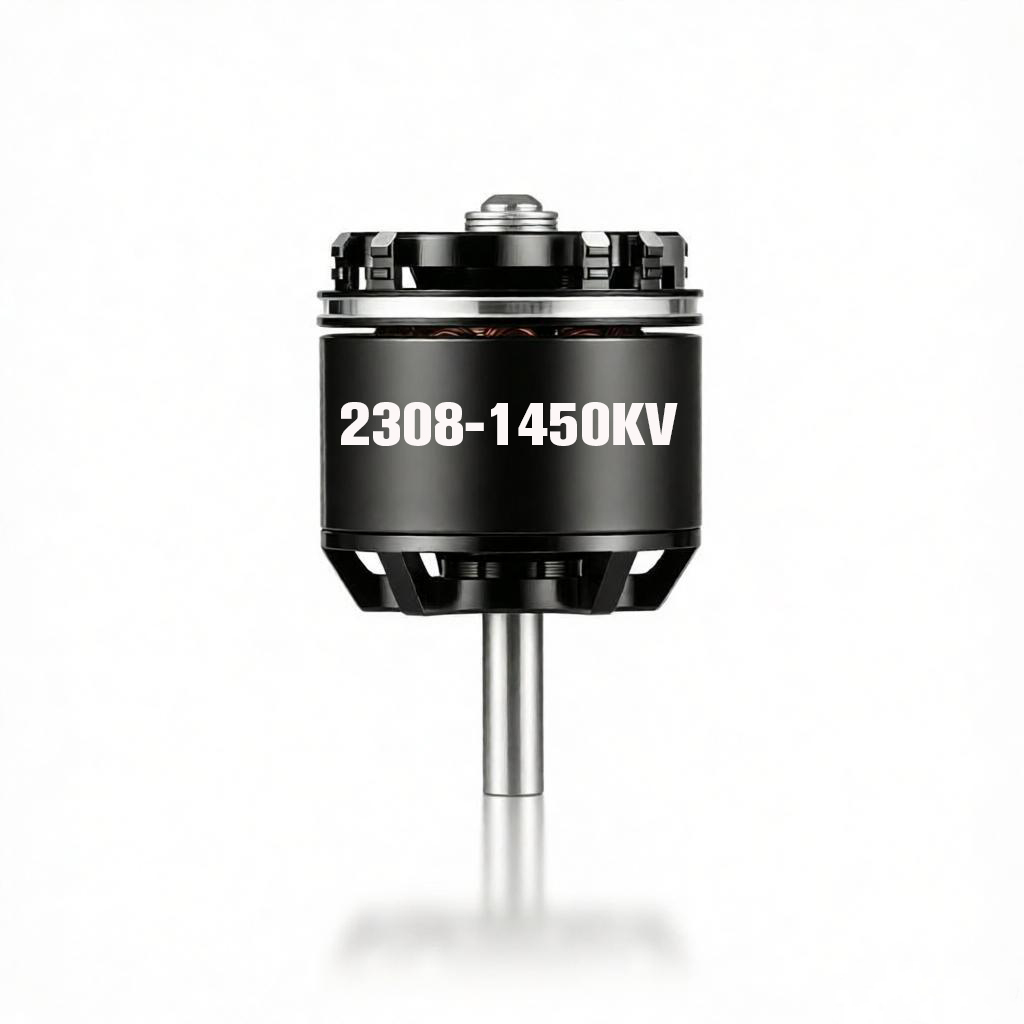
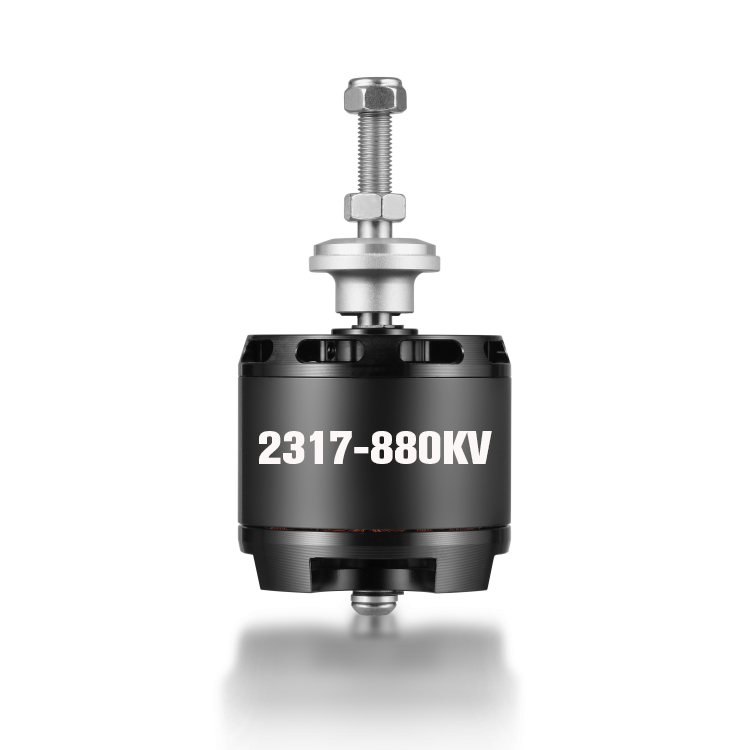
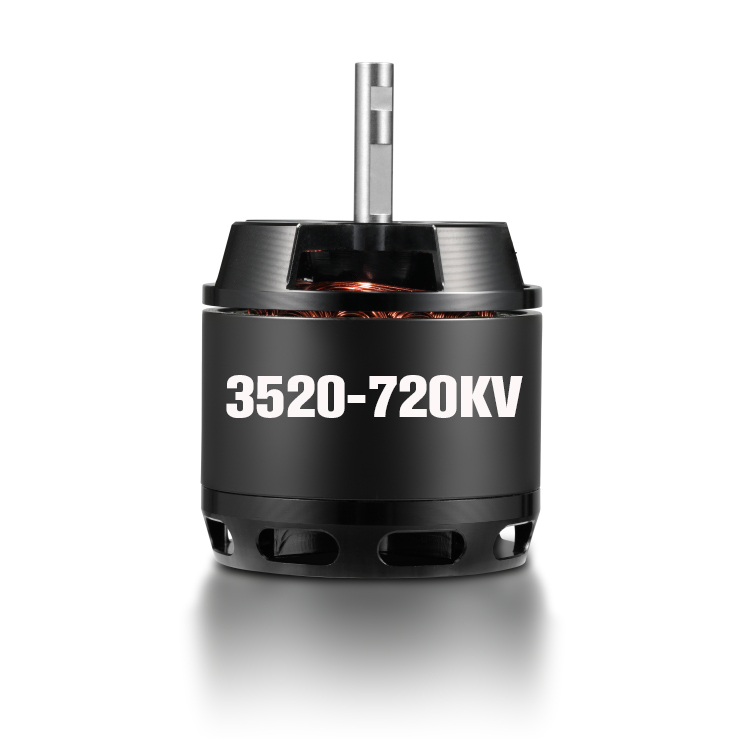
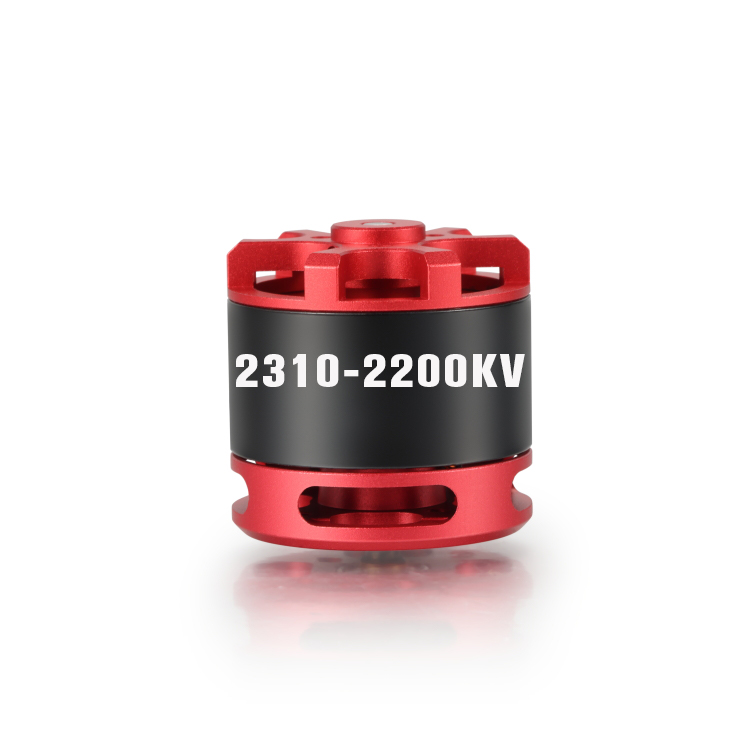
Brushless DC motors are widely preferred for fixed-wing UAVs because they offer excellent efficiency, low noise, minimal vibration, and a long service life. Their brushless design reduces mechanical wear and maintenance requirements while improving operational reliability during continuous flights. In addition, lightweight construction, precise dynamic balancing, and customizable specifications—including voltage, speed, shaft dimensions, protection level, and integrated gearboxes or encoders—allow manufacturers to optimize motor performance for different UAV platforms and application requirements.
 what's app