
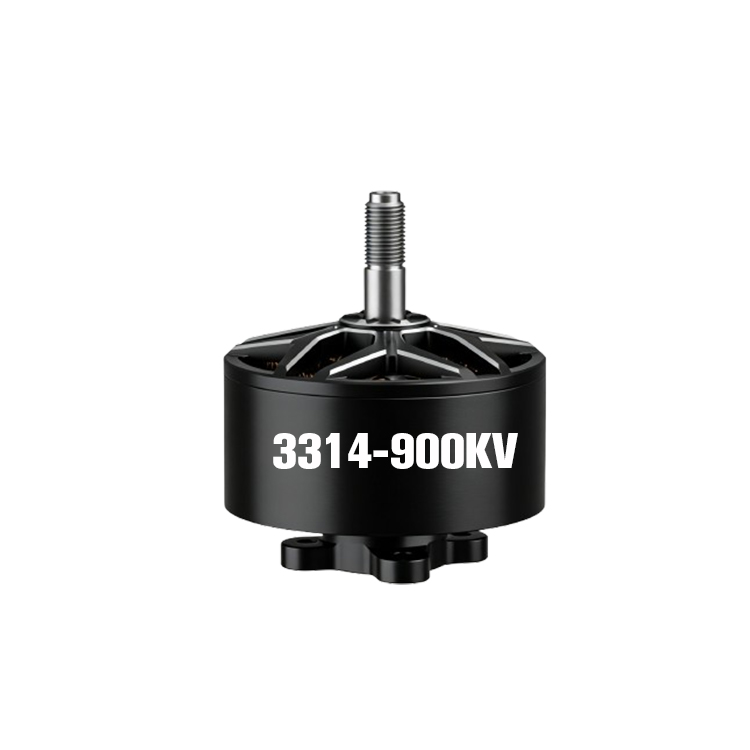
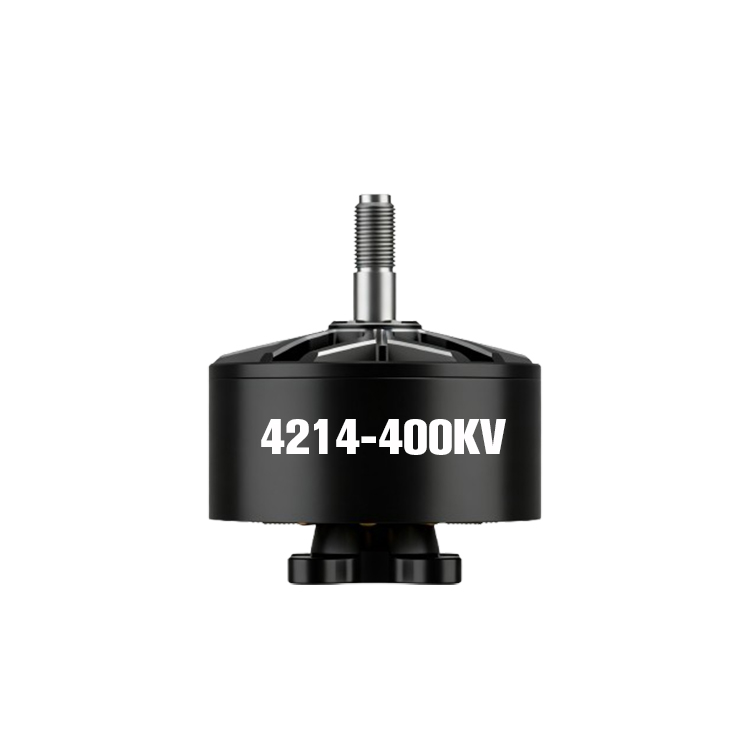
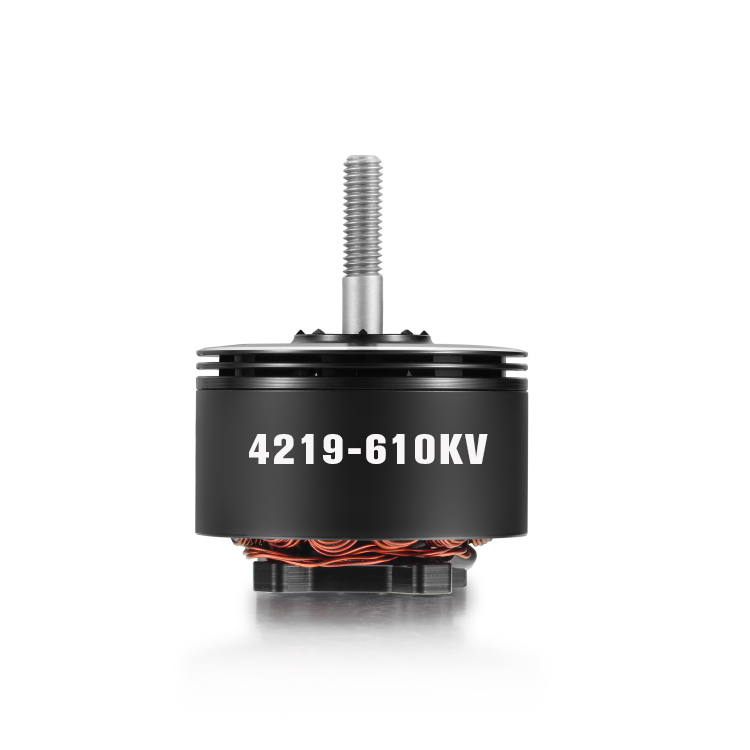
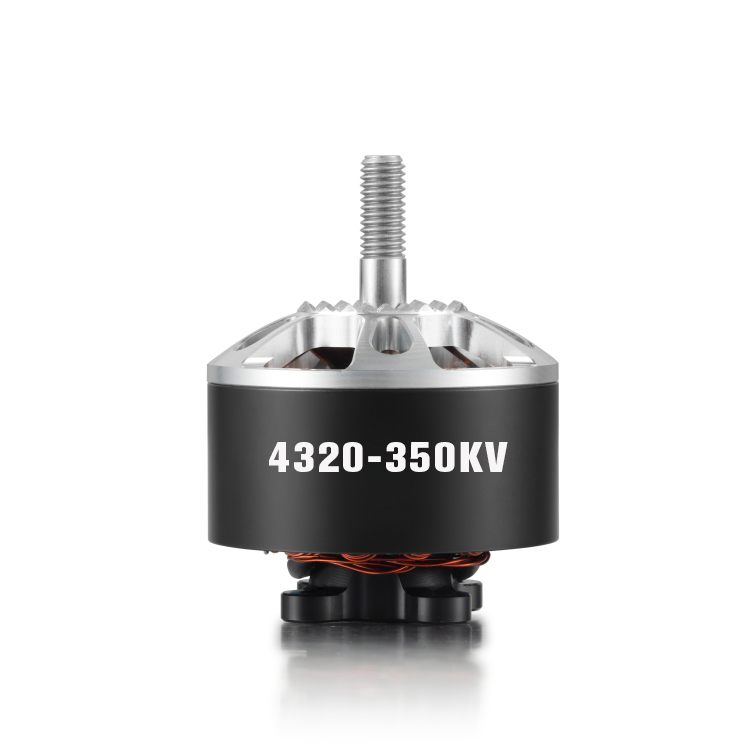
FPV (First Person View) drones allow pilots to experience real-time flight through an onboard camera. The drone motor is the core power source that determines flight speed, stability, efficiency, and payload capacity.
An FPV drone motor works together with the battery, ESC, flight controller, and propellers to create a complete propulsion system. Selecting the correct motor size, KV rating, voltage, and propeller combination directly affects thrust, flight time, responsiveness, and overall drone performance.
Understanding how FPV motors work is essential before choosing the best motor for your drone. This guide explains every key factor you should know.
One of the first decisions when selecting a drone motor is understanding the difference between brushed and brushless motors. Although both convert electrical energy into mechanical rotation, they differ significantly in efficiency, durability, maintenance, and performance.
A brushed motor transfers electrical current through carbon brushes that make physical contact with the commutator. As the motor operates, these brushes gradually wear down, creating friction, heat, and electrical noise. Because of this design, brushed motors require regular maintenance and generally have a much shorter service life. They are inexpensive and simple to manufacture, making them suitable for toy drones and entry-level educational products where low cost is more important than performance.
A brushless motor, on the other hand, uses electronic commutation controlled by an Electronic Speed Controller (ESC). Instead of brushes, permanent magnets rotate around a stationary stator while the ESC precisely switches current between windings. This design eliminates mechanical friction, greatly improving efficiency and reliability.
Modern FPV drones almost exclusively use brushless drone motors because they offer several advantages:
- Higher efficiency with less energy loss
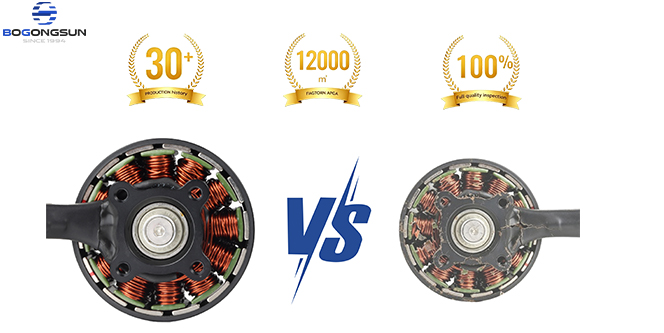
- Greater thrust for aggressive flight
- Faster throttle response
- Longer service life
- Lower operating temperature
- Reduced maintenance
- Lower vibration and noise
- Better control during rapid acceleration and braking
For example, racing drones frequently accelerate from 0% to 100% throttle within fractions of a second. Only a high-quality brushless FPV motor can provide this level of responsiveness while maintaining stable flight.
Brushed motors still appear in micro indoor drones because they reduce manufacturing costs. However, for freestyle, cinematic, long-range, industrial inspection, mapping, or agricultural drones, brushless motors have become the industry standard.
For professional users looking for the **best drone motor**, investing in a high-quality brushless motor almost always delivers better long-term value despite the higher initial cost.
Choosing the right FPV motor involves much more than selecting a popular model. Every motor specification influences how the drone performs in different flight conditions. Understanding these parameters allows engineers and drone manufacturers to build a balanced propulsion system.
The KV value indicates how many revolutions per minute (RPM) a motor will rotate for every volt supplied without load. It does not measure power but rather motor speed.
For example:
- 900KV= approximately 900 RPM per volt
- 1500KV= faster rotation
- 1950KV= common for cinematic drones
- 2450KV = widely used on freestyle drones
- 2800KV= suitable for lightweight racing drones
A lower KV motor typically generates higher torque and works better with larger propellers, while a higher KV motor delivers higher rotational speed using smaller propellers.
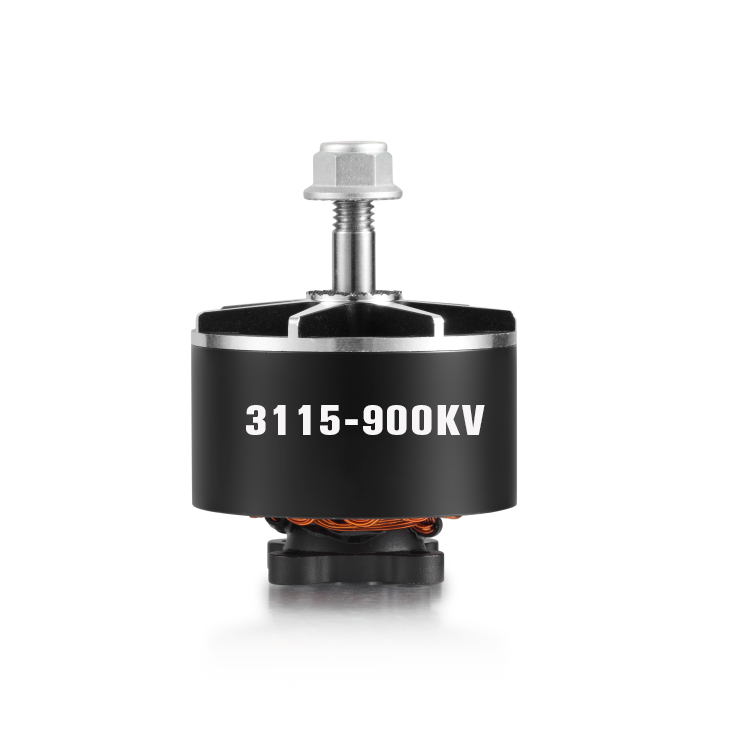
The popular 3115 900KV motor is an excellent example. Its large stator diameter provides strong torque, making it ideal for heavy-lift FPV platforms, aerial photography, mapping drones, and industrial inspection equipment. When paired with 6S or 8S LiPo batteries and larger propellers, it produces stable thrust while maintaining high efficiency during long flights.
Selecting the correct KV rating depends on several factors, including drone weight, battery voltage, propeller size, payload, and desired flight characteristics. Rather than choosing the highest KV available, experienced engineers focus on balancing the complete propulsion system.
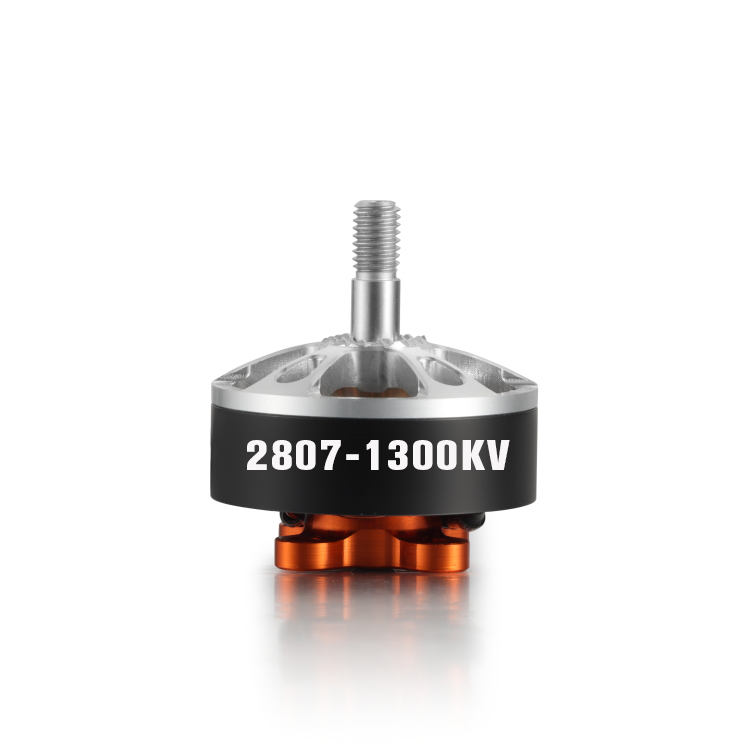
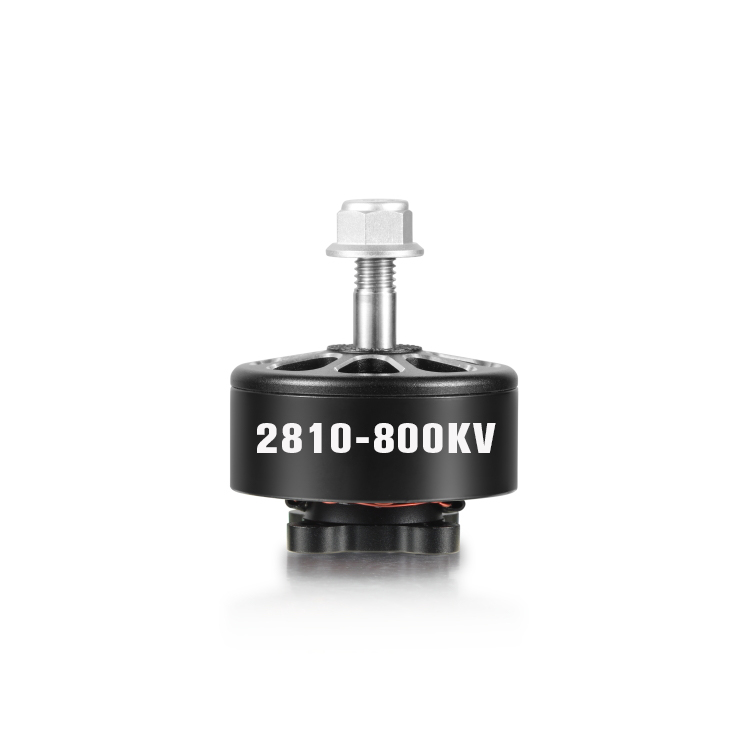
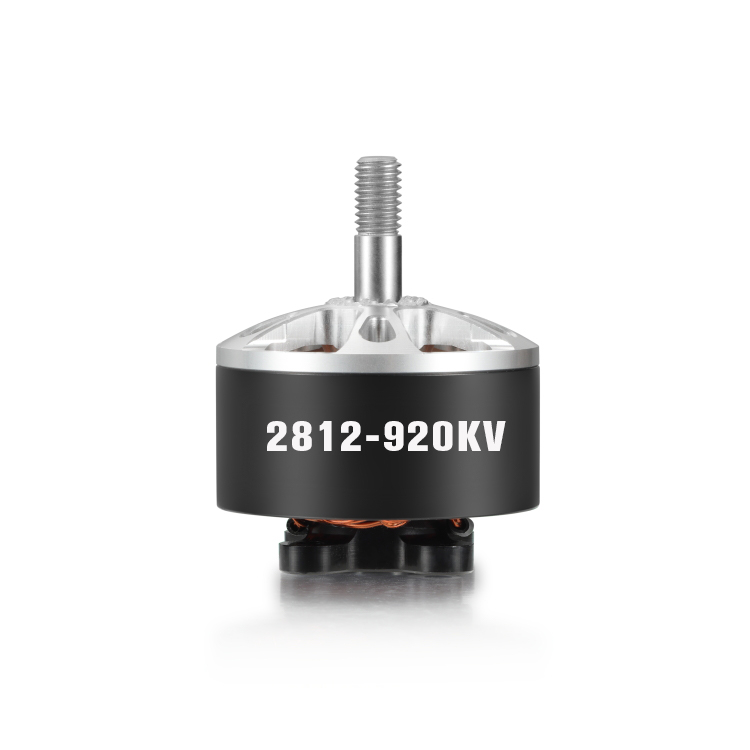
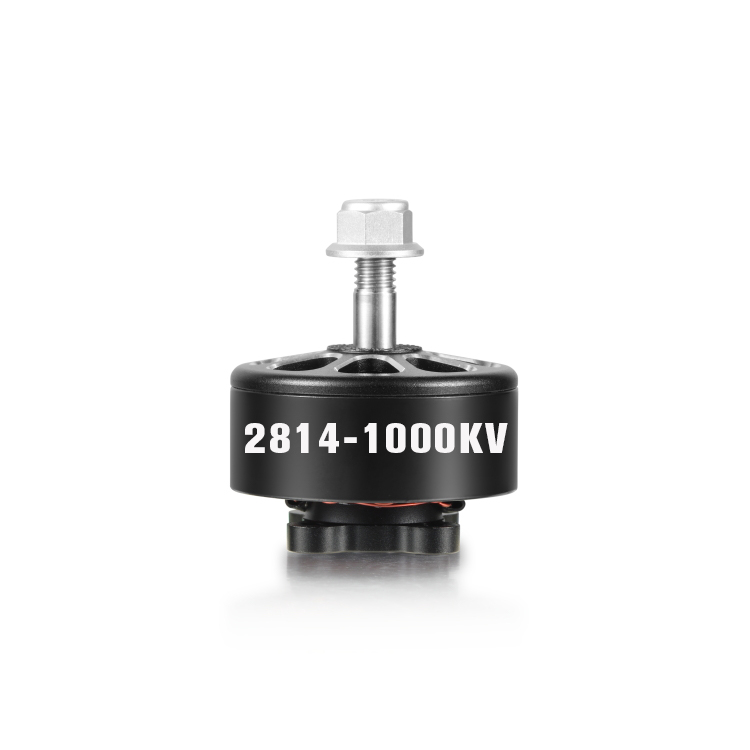
Motor size is usually expressed using four numbers, such as 1103, 2207, 2306, 2806.5, or 3115. The first two digits represent the stator diameter in millimeters, while the last two digits indicate the stator height. In general, a larger stator can produce more torque and support larger propellers, but it also increases the motor's weight.
Below are several common FPV motor sizes and their applications:
| Motor Size | Typical KV | Best Application |
|------------|------------|------------------|
| 1103 | 8000–10000KV | Tiny Whoop, Micro FPV |
| 1404 | 3800–4600KV | Lightweight 3-inch drones |
| 2207 | 1700–2750KV | Racing FPV drones |
| 2306 | 1700–2550KV | Freestyle FPV drones |
| 2806.5 | 1100–1500KV | Long-range FPV drones |
| 3115 900KV | 900KV | Heavy-lift cinematic and industrial drones |
Among these options, the 3115 900KV FPV motor has become increasingly popular for professional applications. Its large stator provides excellent torque output, allowing it to efficiently drive 12 to 15-inch propellers while carrying cameras, LiDAR sensors, mapping equipment, or inspection payloads. Compared with smaller FPV motors, it generates higher thrust at lower RPM, improving stability and reducing vibration during long-duration flights.
When selecting a motor size, avoid choosing the largest available. Instead, consider your drone's total weight, intended payload, battery voltage, propeller diameter, and desired flight style. A properly matched propulsion system always delivers better efficiency than simply installing a larger drone motor.
Battery voltage directly influences motor speed and overall drone performance. Modern FPV drones typically use lithium polymer (LiPo) batteries ranging from 2S to 8S configurations.
Common voltage options include:
- 2S (7.4V): Tiny drones and indoor FPV
- 3S (11.1V): Beginner freestyle drones
- 4S (14.8V): Traditional racing drones
- 6S (22.2V): Professional freestyle and cinematic drones
- 8S (29.6V): Heavy-lift industrial drones
Higher voltage allows the motor to produce the required power while drawing less current. Lower current reduces heat generation inside the ESC, battery, and motor windings, improving overall efficiency.
However, increasing voltage also requires selecting a lower KV motor. For example, a 2450KV motor designed for 4S batteries should never be paired with an 8S battery because excessive RPM may damage the motor or propellers.
The battery serves as the energy source for the entire propulsion system. Choosing the correct battery affects flight time, acceleration, and payload capacity.
Two battery technologies dominate today's drone industry:
LiPo (Lithium Polymer)
LiPo batteries provide extremely high discharge rates, making them ideal for racing and freestyle FPV drones. They can deliver massive bursts of current during rapid throttle changes, allowing pilots to perform aggressive maneuvers. The trade-off is shorter flight time and careful charging requirements.
Li-ion (Lithium-ion)
Lithium-ion batteries store more energy for the same weight, resulting in significantly longer flight times. Although they cannot deliver current as quickly as LiPo batteries, they are excellent for long-range FPV missions, mapping, surveillance, and inspection drones where endurance is more important than rapid acceleration.
Professional drone designers always evaluate battery capacity (mAh), discharge rating (C-rating), weight, and voltage together rather than considering any single specification in isolation.
Thrust is the upward force generated by a drone motor and propeller combination. It determines how much weight a drone can lift and how quickly it can accelerate.
Motor manufacturers often publish thrust tables showing the relationship between throttle percentage, current, voltage, power consumption, and generated thrust. These data help engineers compare different FPV motors under identical test conditions.
For smooth and stable flight, many experienced drone builders recommend maintaining a thrust-to-weight ratio between 2:1 and 5:1.
For example:
- A 500 g freestyle drone should ideally produce 1,500–2,000 g of total thrust.
- A 5 kg industrial inspection drone should produce at least 10 kg of combined thrust.
The 3115 900KV motor is specifically designed for applications requiring high continuous thrust. Combined with larger propellers, it can efficiently lift heavy payloads while maintaining low operating temperatures and excellent flight stability.
Throttle response refers to how quickly the FPV motor reacts when the pilot changes throttle input.
A fast throttle response provides:
- Better maneuverability
- Faster cornering during racing
- More accurate altitude control
- Improved freestyle performance
- Smoother cinematic movements
Throttle performance is influenced by several components working together, including motor design, ESC firmware, battery voltage, propeller inertia, and flight controller tuning.
Most FPV drones hover at approximately 30–45% throttle, leaving enough reserve power for climbing, braking, or emergency maneuvers. Motors that achieve efficient cruising within this throttle range generally produce lower temperatures and longer flight times.
Even the best drone motor cannot perform well without proper ESC and propeller matching.
The Electronic Speed Controller (ESC) regulates electrical current supplied to the motor. It must support both the battery voltage and maximum motor current. Selecting an undersized ESC can result in overheating, unstable flight, or permanent failure.
Propellers are equally important. Larger propellers generate greater thrust but require higher torque, while smaller propellers allow faster acceleration and higher rotational speeds.
For example:
- 2207 motors typically pair with 5-inch propellers for racing.
- 2306 motors perform exceptionally well with freestyle propellers.
- 2806.5 motors are commonly matched with 7-inch long-range propellers.
- 3115 900KV motors are often paired with 12 to 15-inch carbon fiber propellers for heavy-lift and industrial drones.
The most efficient FPV drone is never built around a single component. Instead, the motor, ESC, battery, propeller, and flight controller should be carefully matched as one integrated propulsion system.
Although the drone motor generates the mechanical power required for flight, it cannot operate independently. Every successful FPV drone relies on a complete propulsion system in which each component performs a specific function. Weakness in any part of the system can reduce flight performance, efficiency, and reliability.
A typical FPV drone power system consists of:
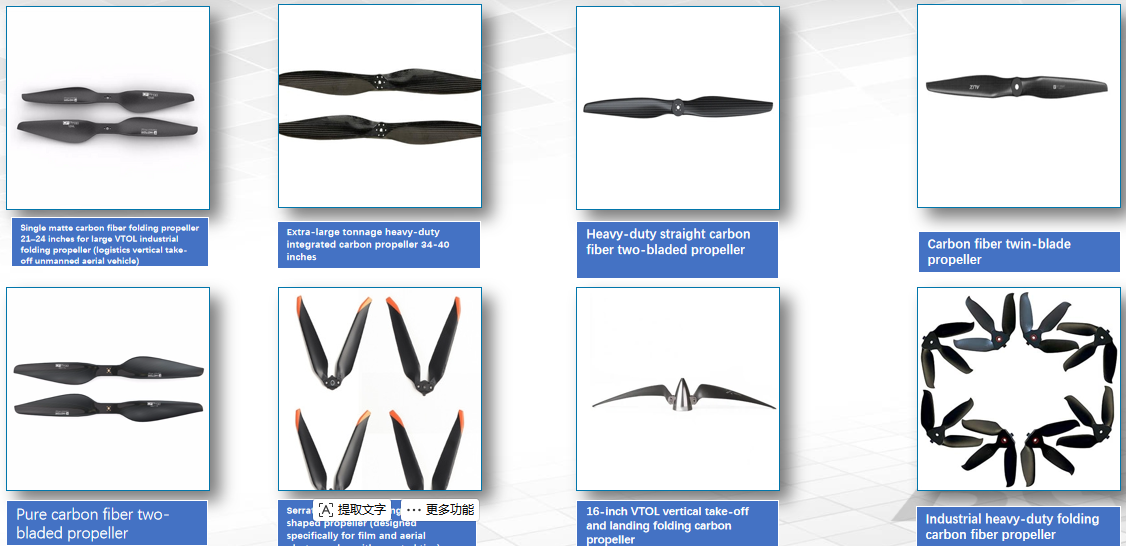
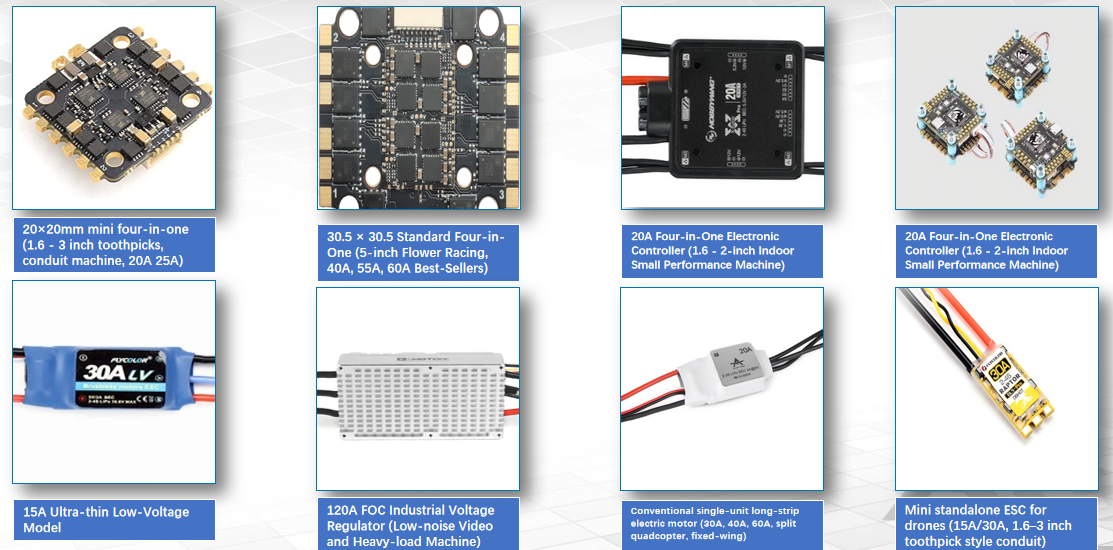
Battery → ESC → Drone Motor → Propeller → Flight Controller → Receiver → GPS → Cooling System → Frame
The battery supplies electrical energy to the ESC. The ESC converts DC power into precisely timed three-phase signals that drive the brushless FPV motor. The motor transforms electrical energy into rotational force, spinning the propeller to generate thrust.
Meanwhile, the flight controller constantly receives information from the gyroscope, accelerometer, GPS module, and radio receiver. It calculates thousands of adjustments every second and sends commands to the ESC, allowing each drone motor to respond instantly and maintain stable flight.
Cooling is another often-overlooked part of the support system. Continuous high-current operation generates heat in both the motor and ESC. Adequate airflow, proper motor mounting, and efficient frame design help maintain safe operating temperatures and extend component lifespan.
Finally, the drone frame provides structural support for every component. A rigid yet lightweight carbon fiber frame minimizes vibration, improves handling, and allows the propulsion system to operate at maximum efficiency.
Understanding how these systems interact enables engineers to optimize the entire drone rather than focusing on the motor alone. In professional drone design, system integration is the key to achieving reliable performance, long service life, and maximum flight efficiency.
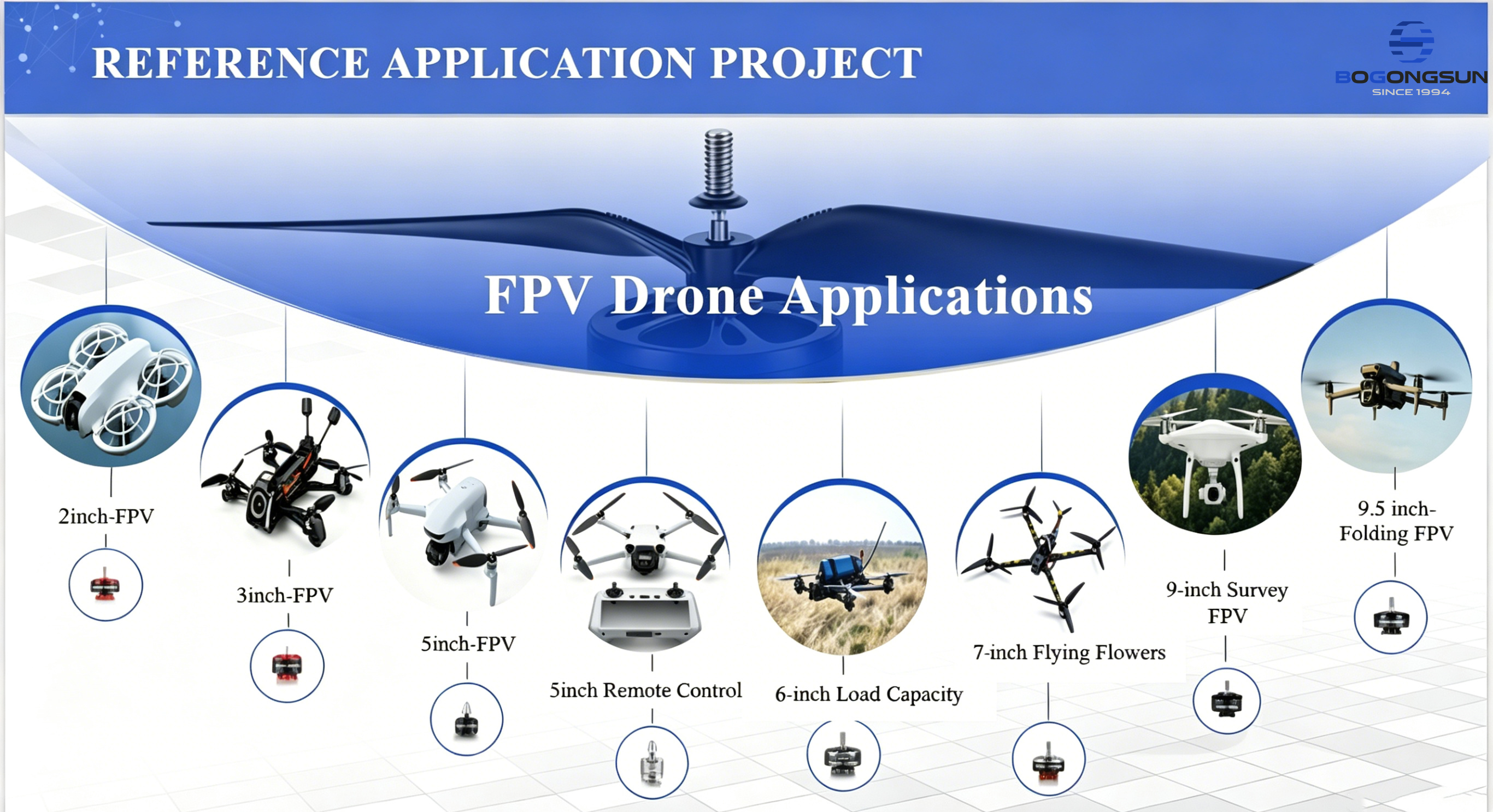
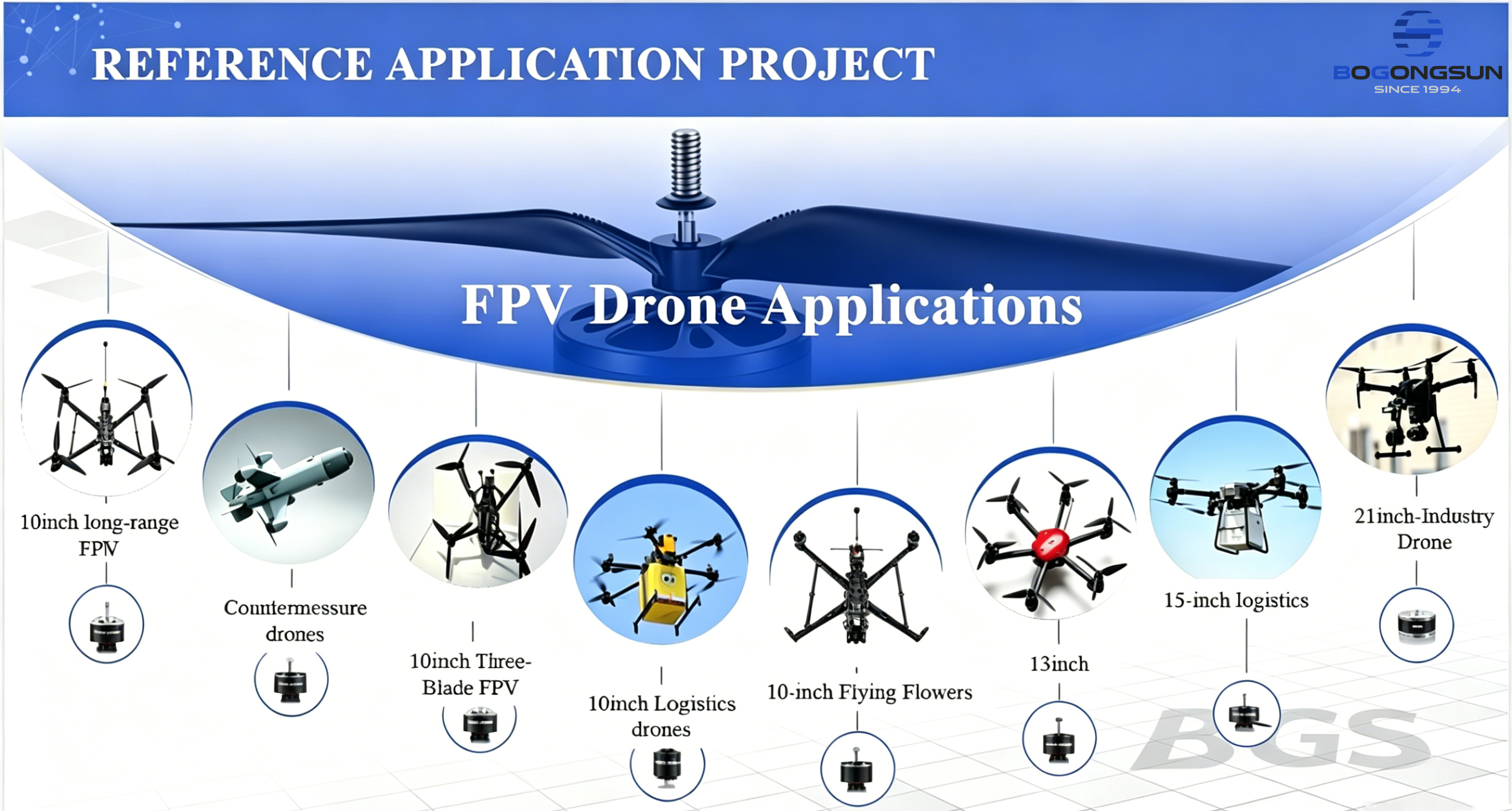
Choosing the best FPV motor depends on much more than its maximum power. Different drone applications require different balances of thrust, efficiency, flight time, payload capacity, and responsiveness. A motor that performs exceptionally well on a racing drone may be completely unsuitable for an agricultural or inspection drone. Therefore, engineers should evaluate the entire propulsion system—including motor size, KV rating, battery voltage, propeller size, and ESC specifications—before making a final selection.
Below are the most common FPV drone applications and their recommended motor configurations.
Racing drones prioritize acceleration, rapid throttle response, and lightweight construction. Every gram matters because lower weight improves cornering speed and reduces lap times.
Typical configuration:
| Component | Recommendation |
|-----------|---------------|
| Motor Size | 2207 |
| KV Rating | 1950KV–2750KV |
| Battery | 4S or 6S LiPo |
| Propeller | 5-inch |
| Flight Time | 3–6 minutes |
The 2207 FPV motor has become the industry standard for racing because it delivers an excellent balance between torque and rotational speed. Combined with a high-performance ESC and lightweight carbon-fiber propellers, it enables extremely fast throttle response and precise maneuverability.
Freestyle pilots demand smooth handling, rapid recovery from tricks, and enough power to perform flips, dives, and power loops while maintaining stable control.
Typical configuration:
| Component | Recommendation |
|-----------|---------------|
| Motor Size | 2306 |
| KV Rating | 1700KV–2550KV |
| Battery | 6S LiPo |
| Propeller | 5-inch |
| Flight Time | 5–8 minutes |
Compared with racing motors, 2306 motors provide slightly higher torque, making them ideal for carrying HD action cameras without sacrificing responsiveness.
 what's app