Selecting a UAV motor is often perceived as a straightforward engineering task. Many beginners compare only rated power, maximum current or KV value before choosing a motor, believing that higher power inevitably translates into better flight performance. In reality, professional UAV designers rarely begin the propulsion design process by asking, "Which motor should I buy?" Instead, they start with a far more fundamental question:
How will the aircraft actually fly?
The answer to this question defines almost every aspect of the propulsion system. A drone designed to dive toward a moving target at over 150 km/h requires a completely different motor from one expected to hover steadily while carrying a thermal camera, even if both aircraft have the same maximum take-off weight. Likewise, a fixed-wing UAV designed to remain airborne for six hours prioritizes efficiency over acceleration, making its propulsion requirements fundamentally different from those of an FPV attack drone.
This is why experienced UAV engineers focus first on the mission profile, often referred to as the flight style, before selecting any propulsion components. Flight style determines the desired thrust-to-weight ratio, cruising speed, acceleration, propeller diameter, battery voltage, ESC configuration and ultimately the most suitable brushless motor.
Although UAVs are available in countless configurations, most propulsion systems can be grouped into three representative flight styles:
Violent Flight – represented by FPV Attack Drones and high-speed racing UAVs.
Balanced Flight – represented by industrial quadcopters and commercial multirotor UAVs.
Long-Endurance Flight – represented by fixed-wing and VTOL UAVs designed for long-range surveillance or mapping.
Each flight style places completely different demands on the motor. A propulsion system optimized for explosive acceleration is unlikely to provide the endurance required for long-distance patrol missions, while a motor designed for maximum cruising efficiency will struggle to deliver the rapid throttle response demanded by FPV aircraft.
Understanding these differences is essential because there is no universal "best UAV motor." Instead, the most effective motor is the one that matches the aircraft's aerodynamic characteristics and operational objectives.
This article explores how three typical UAV flight styles influence motor selection from an engineering perspective. Instead of simply recommending motor models, we will explain the design logic behind KV rating, stator size, propeller selection, thrust generation and propulsion efficiency. By understanding these relationships, UAV manufacturers and design engineers can develop propulsion systems that are better matched to their applications rather than relying on trial-and-error component selection.
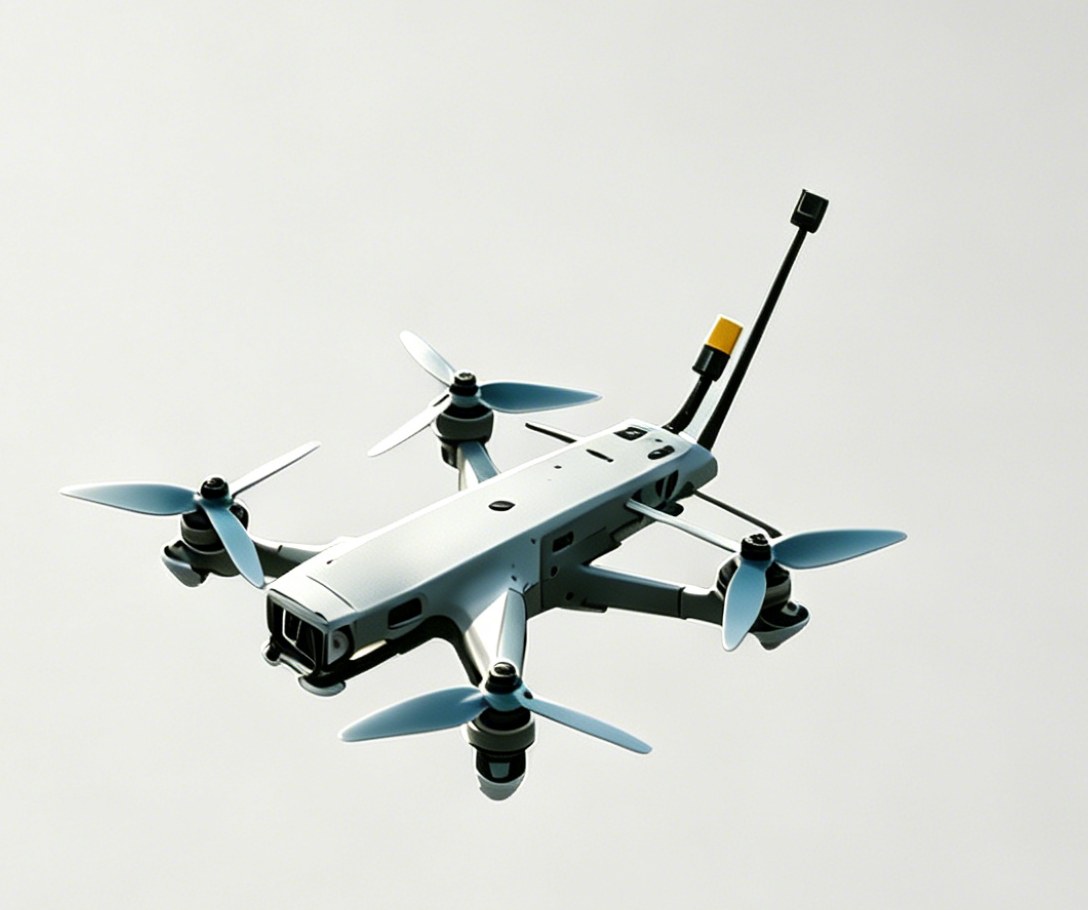
When discussing UAV propulsion, no aircraft demonstrates the importance of instantaneous power delivery better than the FPV attack drone.
Unlike industrial UAVs that spend most of their flight hovering or following pre-programmed routes, FPV platforms are designed around aggressive manual control. Their mission is not to remain airborne for extended periods but to reach the target as quickly as possible while maintaining exceptional maneuverability throughout the engagement.
Every maneuver performed by an FPV drone—rapid take-off, high-speed acceleration, split-S turns, barrel rolls and terminal dives—places enormous demands on the propulsion system. The pilot continuously changes throttle position, forcing the motor to accelerate and decelerate thousands of times during a single mission.
For this reason, motor responsiveness becomes significantly more important than absolute efficiency.
An FPV drone capable of producing tremendous thrust one second too late has already failed its mission.
Instead of maximizing flight endurance, engineers prioritize:
Explosive throttle response
High thrust-to-weight ratio
Rapid rotational acceleration
Low rotor inertia
High peak power output
Excellent transient torque
These characteristics enable the aircraft to change direction almost instantly while maintaining sufficient control authority during aggressive aerobatic maneuvers.
One of the biggest misconceptions among new UAV designers is assuming that longer flight time always represents superior performance.
For FPV platforms, the opposite is often true.
Most professional FPV attack drones remain airborne for only 10–20 minutes, and many military FPV systems complete their missions within 5–10 minutes. Extending endurance beyond this point usually requires larger batteries, which inevitably increase aircraft weight and reduce acceleration.
Because interception or strike missions are completed within a relatively short period, every additional gram of battery weight decreases the aircraft's ability to rapidly pursue moving targets.
Consequently, propulsion systems are optimized to maximize power density rather than endurance.
This design philosophy explains why FPV drones often appear "overpowered." Their motors generate considerably more thrust than is necessary for level flight because excess thrust is reserved for violent maneuvering.
Perhaps no parameter influences FPV performance more than the thrust-to-weight ratio (TWR).
The thrust-to-weight ratio describes how much lifting force the propulsion system can generate compared with the total aircraft weight.
A conventional industrial quadcopter may operate comfortably with a thrust ratio between 2:1 and 3:1, allowing stable hovering while carrying moderate payloads.
FPV aircraft, however, commonly target ratios exceeding 6:1, while professional racing drones may approach 10:1 under peak output conditions.
Higher thrust ratios provide several important advantages:
Faster vertical acceleration
Shorter take-off distance
Improved recovery after sharp dives
Greater maneuverability
Better resistance to wind disturbances
These benefits are essential for aircraft expected to operate in unpredictable combat environments.
Among all propulsion parameters, KV rating is probably the most misunderstood.
Many beginners assume that a higher KV motor is simply "more powerful." In reality, KV only describes how many revolutions per minute the motor attempts to produce for every applied volt without load.
A higher KV motor rotates faster, but it generally produces less torque per ampere than a lower KV motor.
For FPV drones, high rotational speed is desirable because rapid propeller acceleration directly improves throttle response.
Most modern FPV aircraft therefore use relatively high KV motors.
Typical recommendations include:
| Battery | Recommended KV |
|---|---|
| 4S | 2300–2800 KV |
| 6S | 1700–2100 KV |
| 8S | 1100–1500 KV |
Selecting an excessively high KV, however, increases current consumption, reduces efficiency and generates additional heat. Engineers therefore seek a balance between rotational speed and thermal performance rather than pursuing the highest possible KV.
Unlike industrial multirotor UAVs that emphasize continuous hovering performance, FPV drones require lightweight motors capable of delivering extremely fast throttle response and exceptional power density. For this reason, professional FPV platforms typically use compact outrunner motors with relatively high KV ratings rather than large industrial propulsion systems.
The appropriate motor size depends primarily on the aircraft's propeller diameter, frame size and mission profile.
| Motor Size | Typical Propeller | Recommended Battery | Typical UAV Size | Primary Applications |
|---|---|---|---|---|
| 1103 | 2–3 inch | 2S–3S | Micro FPV | Indoor FPV, lightweight racing drones |
| 1404 | 3–4 inch | 3S–4S | Mini FPV | High-speed freestyle drones |
| 1407 | 3–5 inch | 4S–6S | Lightweight FPV | Agile attack drones |
| 1804 | 4–5 inch | 4S–6S | Racing FPV | High-speed pursuit UAVs |
| 2207 | 5 inch | 4S–6S | Standard FPV | Freestyle, racing and attack drones |
| 2212 | 8–10 inch | 4S–6S | Large FPV | Long-range FPV platforms |
| 2806.5 | 7–10 inch | 6S–8S | Heavy FPV | Tactical FPV UAVs |
The 1103 outrunner is designed for ultra-lightweight FPV drones where every gram directly influences acceleration and maneuverability. Its compact rotor exhibits extremely low rotational inertia, allowing almost instantaneous throttle response.
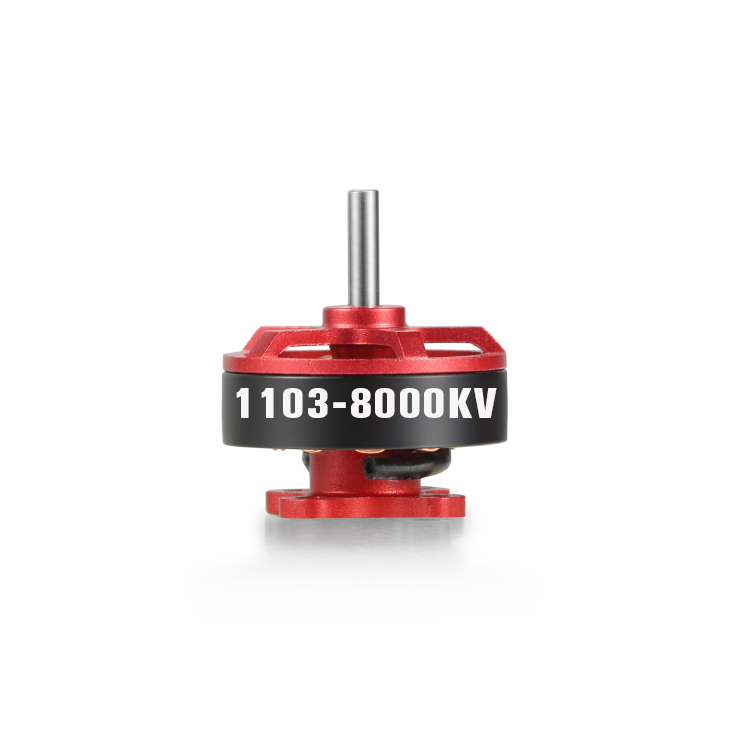
Typical applications include:
Tiny Whoop drones
Indoor FPV
Micro reconnaissance UAVs
Advantages include:
Extremely lightweight
Outstanding agility
Very low power consumption
Excellent control precision
Among modern FPV propulsion systems, the 1407 motor has become one of the preferred choices for lightweight high-performance aircraft. Compared with smaller motors, it provides noticeably greater torque while maintaining rapid throttle response.
When paired with 3–5 inch carbon fiber propellers and a 4S or 6S battery, the 1407 platform delivers excellent acceleration, making it suitable for aggressive flight profiles that demand repeated changes in speed and direction.
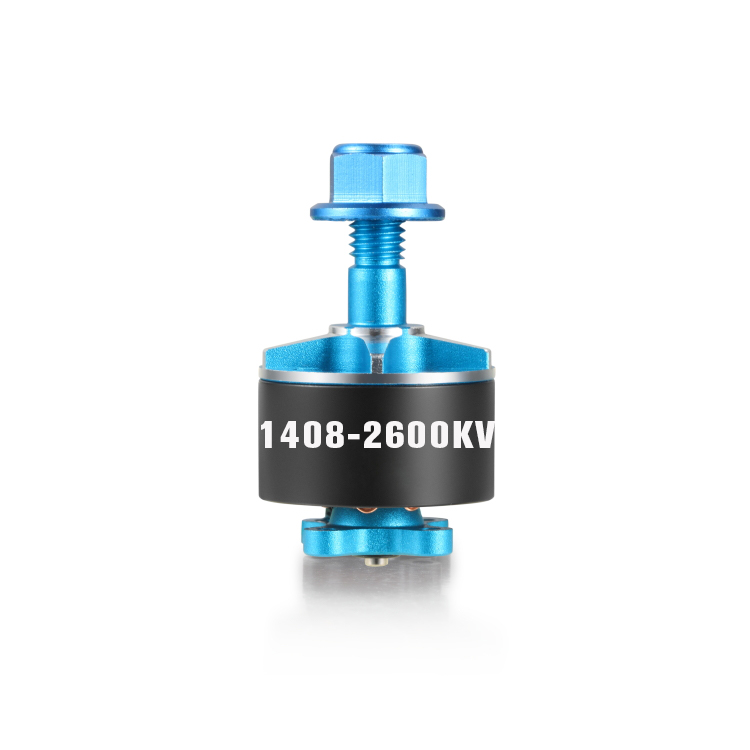
Typical applications include:
Lightweight FPV attack drones
Freestyle FPV
Agile reconnaissance UAVs
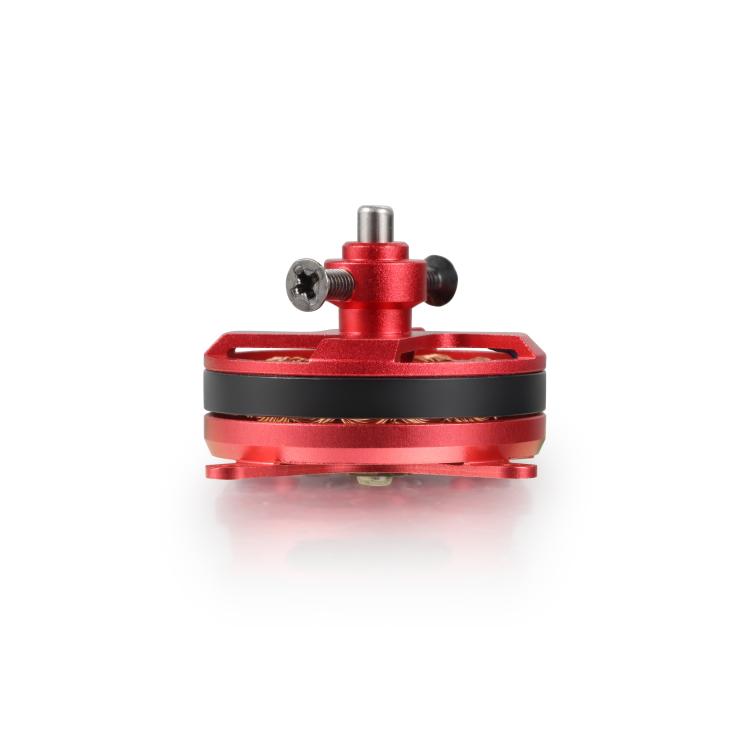
The 2207 is widely regarded as the benchmark motor for 5-inch FPV drones. Its stator dimensions provide an excellent balance between rotational speed, torque and thermal performance, enabling sustained high-power output during racing or tactical missions.
Because of its versatility, the 2207 platform is commonly selected for aircraft requiring both explosive acceleration and stable control at high speed.
Typical characteristics include:
Excellent thrust-to-weight ratio
Rapid throttle response
High continuous power
Broad propeller compatibility
The 2212 series occupies the transition between consumer FPV drones and larger multirotor UAVs. Its larger stator volume supports bigger propellers, producing higher static thrust while maintaining relatively low motor weight.
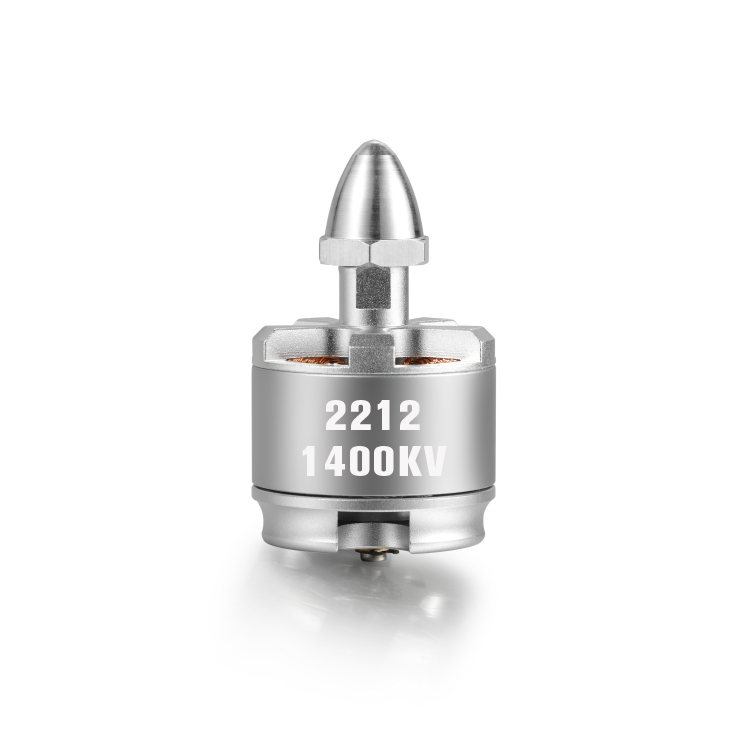
This makes the 2212 particularly suitable for long-range FPV platforms, surveillance drones and tactical UAVs that require improved payload capacity without sacrificing maneuverability.
Typical applications include:
Long-range FPV drones
Small tactical UAVs
Mapping drones
Educational UAV platforms
Many new UAV designers assume that replacing a 2207 motor with a 3115 or 4315 will automatically improve FPV performance. In practice, the opposite is often true.
Larger motors generate more continuous torque, but they also introduce greater rotor inertia and require larger propellers. This increases the time needed for the propulsion system to accelerate and decelerate, reducing the rapid throttle response that FPV pilots depend on during high-speed maneuvers.
For most FPV aircraft, minimizing rotating mass is more important than maximizing continuous power output. As a result, compact motors such as the 1407, 2207 and 2212 often deliver superior flight dynamics despite having lower absolute power ratings.
If FPV drones represent the pursuit of explosive acceleration, then industrial multirotor UAVs represent the pursuit of controlled efficiency.
Although both aircraft rely on brushless outrunner motors and multirotor flight controllers, their propulsion philosophies are fundamentally different. FPV pilots demand immediate throttle response to execute rapid rolls, dives and high-speed directional changes. By contrast, an industrial UAV is expected to hover steadily for extended periods while carrying expensive payloads such as LiDAR scanners, thermal cameras, multispectral sensors or precision spraying systems.
For these applications, flight stability is no longer a desirable feature—it becomes the foundation of mission success. A mapping drone that cannot maintain a consistent altitude will produce inaccurate survey data, while a power-line inspection UAV affected by excessive vibration may compromise image quality and reduce the effectiveness of automated defect detection.
As a result, propulsion systems for balanced-flight UAVs are designed around three priorities:
Stable hovering performance
High propulsion efficiency
Reliable continuous power output
Rather than producing the highest possible thrust within a few seconds, the motor must operate efficiently over long flight durations while maintaining smooth torque delivery and low vibration.
Unlike FPV drones, industrial multirotor UAVs spend most of their flight time hovering or flying at relatively low speeds.
This means the propulsion system is optimized not for peak acceleration but for hover efficiency, which describes how effectively the motor converts electrical energy into usable lift during sustained flight.
Hover efficiency directly influences several key performance indicators:
Flight endurance
Battery utilization
Payload capacity
Thermal stability
Operating cost
For professional UAV manufacturers, improving hover efficiency by just a few percentage points can extend flight time by several minutes without increasing battery size.
This is why commercial UAV propulsion systems typically employ lower KV motors driving larger propellers at lower rotational speeds.
A common misconception is that lower KV motors produce weaker performance.
In reality, reducing KV increases the motor's ability to generate torque, allowing it to rotate larger propellers more efficiently.
Large-diameter propellers accelerate a greater volume of air at lower velocity, producing the same lift while consuming less electrical power. This significantly improves propulsion efficiency during continuous hovering.
Typical KV recommendations include:
| Battery Voltage | Recommended KV |
|---|---|
| 6S | 650–900 KV |
| 8S | 450–700 KV |
| 12S | 280–500 KV |
Compared with the high-KV motors used in FPV drones, these lower-KV configurations deliver smoother throttle response, lower operating temperatures and greater endurance.
One of the defining characteristics of balanced-flight UAVs is the use of larger propellers.
Instead of maximizing rotational speed, engineers seek to increase propeller disk area, allowing the aircraft to generate lift more efficiently.
Larger propellers offer several advantages:
Higher lifting efficiency
Lower energy consumption
Reduced motor temperature
Lower acoustic noise
Improved wind resistance
Smoother hover characteristics
For this reason, industrial UAVs commonly use carbon fiber propellers ranging from 15 to 22 inches, depending on aircraft weight and payload requirements.
The larger rotating disk reduces induced power losses and improves aerodynamic efficiency, making it the preferred solution for inspection, mapping and logistics applications.
Unlike FPV drones that prioritize rapid acceleration, industrial multirotor platforms require motors capable of delivering stable thrust over extended operating periods. Larger stator volumes, higher copper fill factors and improved thermal management enable these motors to sustain continuous output without excessive heat buildup.
The following frame sizes have become some of the most widely adopted solutions for commercial UAV manufacturers.
| Motor Size | Typical Propeller | Recommended Battery | Typical MTOW | Primary Applications |
|---|---|---|---|---|
| 3110 | 12–14 inch | 6S | 2–4 kg | Inspection drones, compact quadcopters |
| 3115 | 13–15 inch | 6S–8S | 3–6 kg | Survey UAVs, security drones |
| 3508 | 13–15 inch | 6S | 3–5 kg | Agricultural scouting, aerial photography |
| 4006 | 15–17 inch | 6S–8S | 5–8 kg | Mapping UAVs, LiDAR platforms |
| 4014 | 16–18 inch | 8S–12S | 6–10 kg | Industrial inspection UAVs, VTOL lift systems |
| 4315 | 18–22 inch | 12S | 10–20 kg | Heavy-lift multirotor UAVs, logistics drones |
The 3110 series represents an excellent entry point for lightweight industrial UAVs where compact size and energy efficiency are equally important.
When paired with 12–14 inch carbon fiber propellers, the 3110 motor provides stable thrust with relatively low power consumption, making it suitable for compact inspection platforms and security drones that require agile yet reliable flight performance.
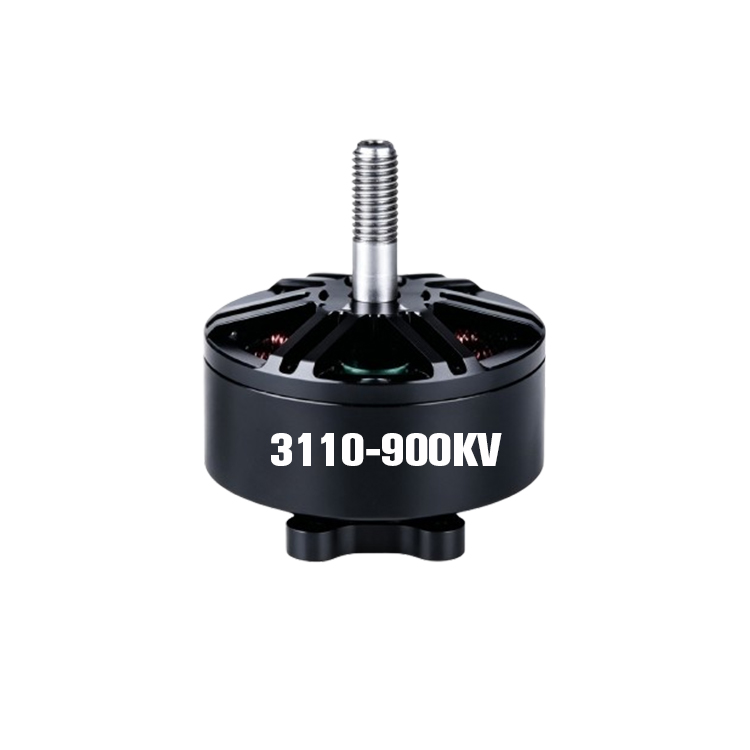
Typical applications include:
Infrastructure inspection
Utility patrol
Security surveillance
Small commercial quadcopters
Key advantages include:
Lightweight construction
Smooth hovering characteristics
High efficiency at medium loads
Low vibration levels
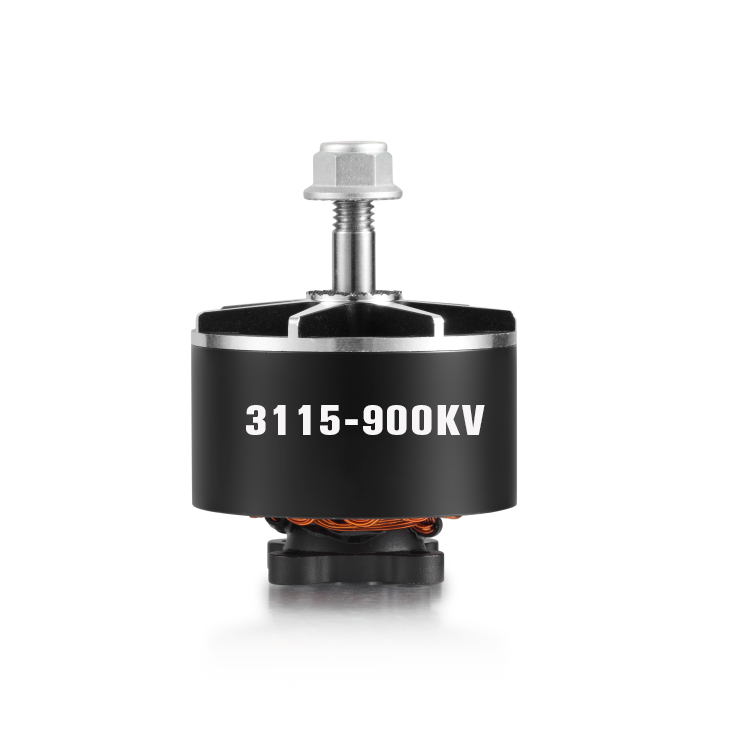
The 3115 motor is widely regarded as one of the most versatile propulsion options for medium-sized multirotor UAVs.
Its longer stator increases copper volume and torque output, allowing the motor to drive larger propellers while maintaining excellent efficiency during prolonged hover operations.
Compared with the 3110 platform, the 3115 delivers improved continuous power, making it particularly suitable for drones carrying thermal cameras, zoom optics or multisensor payloads.
Recommended applications include:
Survey and mapping UAVs
Border patrol drones
Emergency response platforms
Professional aerial imaging systems
The 3508 frame offers a balanced combination of torque, responsiveness and compact dimensions. It is particularly well suited to commercial UAVs that require moderate payload capacity without sacrificing maneuverability.
This motor is commonly selected for agricultural scouting drones, environmental monitoring aircraft and lightweight inspection platforms where stable flight and efficient power consumption are more important than maximum lifting capability.
For commercial UAVs carrying significant payloads, the 4315 has become one of the industry's benchmark propulsion platforms.
The larger stator diameter and increased magnetic flux enable exceptional continuous torque output, supporting 18–22 inch propellers with impressive efficiency.
Unlike motors optimized for speed, the 4315 is designed for sustained operation under demanding conditions. Its robust thermal performance and low vibration characteristics make it an excellent choice for heavy-lift multirotor aircraft operating in logistics, emergency response and industrial inspection.
Typical applications include:
Heavy-lift quadcopters
Cargo drones
Utility maintenance UAVs
Industrial logistics platforms
Selecting a larger motor alone does not guarantee stable flight. True hover stability results from the careful integration of multiple propulsion components.
Engineers must optimize:
Motor KV rating
Propeller diameter and pitch
ESC response characteristics
Battery voltage
Aircraft weight distribution
Flight controller tuning
When these parameters are properly matched, the UAV benefits from smoother throttle transitions, reduced vibration, improved payload stability and longer operational endurance.
This holistic approach is what distinguishes professional industrial UAVs from consumer-grade multirotor platforms.
If FPV attack drones are designed to maximize acceleration, and industrial multirotor UAVs are optimized for stable hovering, then long-endurance UAVs pursue an entirely different objective—maximizing every watt-hour of available battery energy.
For aircraft performing border surveillance, pipeline inspection, environmental monitoring, maritime patrol or long-distance mapping, flight time is often more valuable than maximum speed. Every additional minute in the air increases mission coverage, reduces operational costs and minimizes the number of takeoffs and landings.
Unlike FPV drones that frequently change throttle positions or multirotor UAVs that spend most of their time hovering, long-endurance aircraft typically operate in a steady cruise state, where propulsion efficiency becomes the dominant design objective.
This change in mission profile fundamentally transforms the motor selection strategy. Instead of focusing on peak thrust or rapid throttle response, engineers seek a propulsion system capable of delivering continuous, efficient and reliable power over extended flight durations.
One of the biggest misconceptions in UAV propulsion design is believing that installing a larger battery automatically increases endurance.
While a higher-capacity battery stores more energy, it also adds weight, requiring additional thrust to keep the aircraft airborne. As battery mass increases, the propulsion system consumes more energy simply to support the extra load, leading to diminishing returns.
Professional UAV designers therefore focus on reducing power consumption rather than endlessly increasing battery capacity.
Every component in the propulsion system contributes to overall efficiency, including:
Motor efficiency
ESC efficiency
Battery voltage
Propeller aerodynamic performance
Aircraft weight
Airframe drag
Among these factors, the motor and propeller combination has the greatest influence on cruise endurance.
Long-endurance UAVs almost always use low KV brushless outrunner motors.
Unlike high-KV motors that prioritize rotational speed, low-KV motors generate higher torque at lower RPM, enabling them to drive larger propellers more efficiently.
This approach offers several important advantages:
Lower operating current
Reduced copper losses
Lower motor temperature
Higher propulsion efficiency
Improved battery utilization
Longer component lifespan
Typical KV recommendations include:
| Battery Voltage | Recommended KV |
|---|---|
| 6S | 350–500 KV |
| 8S | 250–400 KV |
| 12S | 120–280 KV |
| 14S | 80–180 KV |
These lower rotational speeds allow the propulsion system to generate sufficient thrust without wasting energy through excessive RPM.
Among propulsion engineers, Disk Loading is one of the most important indicators of flight efficiency.
Disk loading describes the amount of aircraft weight supported by the total area swept by the propellers.
In simple terms:
Larger propeller area = Lower disk loading = Higher aerodynamic efficiency.
When propellers become larger, they move a greater volume of air while accelerating it less aggressively. Producing lift in this manner requires significantly less energy than using smaller propellers spinning at extremely high speeds.
For this reason, many long-endurance UAVs rely on large-diameter carbon fiber propellers operating at relatively low rotational speeds.
Compared with high-speed propulsion systems, this configuration provides:
Lower induced power loss
Higher propeller efficiency
Lower acoustic noise
Reduced vibration
Improved cruise endurance
This is one of the primary reasons why long-range UAVs often appear "slow" despite their impressive flight duration.
A common question among UAV designers is why endurance-oriented aircraft frequently use propellers exceeding 20 inches in diameter.
The answer lies in aerodynamic efficiency.
Larger propellers:
Generate higher thrust at lower RPM.
Require less current for the same lifting force.
Reduce turbulence behind the propeller.
Improve overall propulsion efficiency.
Lower thermal stress on the motor.
As a result, endurance-focused UAVs typically operate with 20–30 inch carbon fiber propellers, depending on aircraft size and mission requirements.
Rather than chasing maximum speed, engineers optimize the relationship between propeller diameter, pitch, motor torque and cruise power consumption.
Long-endurance UAVs require propulsion systems capable of delivering high torque, excellent efficiency and outstanding thermal stability during continuous operation.
Compared with motors used in FPV drones or industrial quadcopters, these platforms employ larger stator sizes that can efficiently drive large-diameter propellers under relatively low rotational speeds.
The following motor sizes are among the most widely adopted in professional long-range UAV and VTOL applications.
| Motor Size | Typical Propeller | Recommended Battery | Typical MTOW | Primary Applications |
|---|---|---|---|---|
| 4315 | 18–20 inch | 12S | 10–15 kg | VTOL lift motors, long-range quadcopters |
| 5010 | 20–22 inch | 12S | 12–20 kg | Survey UAVs, fixed-wing VTOL |
| 5315 | 22–24 inch | 12S–14S | 15–30 kg | Long-endurance VTOL UAVs |
| 6215 | 24–28 inch | 12S–14S | 25–45 kg | Heavy-duty surveillance UAVs |
| 8017 | 28–34 inch | 14S+ | 40 kg+ | Heavy-lift VTOL platforms, logistics UAVs |
The 5010 motor bridges the gap between industrial multirotors and larger endurance platforms.
With its increased stator diameter and higher torque output, it efficiently drives 20–22 inch propellers while maintaining low current consumption.
Typical applications include:
Mapping UAVs
Long-range fixed-wing VTOL aircraft
Environmental monitoring drones
Coastal surveillance UAVs
Key advantages include:
Higher propulsion efficiency
Strong continuous torque
Excellent cooling capability
Wide propeller compatibility
The 5315 has become one of the most widely adopted propulsion platforms for professional long-endurance UAVs.
Its larger magnetic circuit and increased copper volume allow it to sustain continuous high-power operation while maintaining excellent electrical efficiency.
Compared with smaller motors, the 5315 provides:
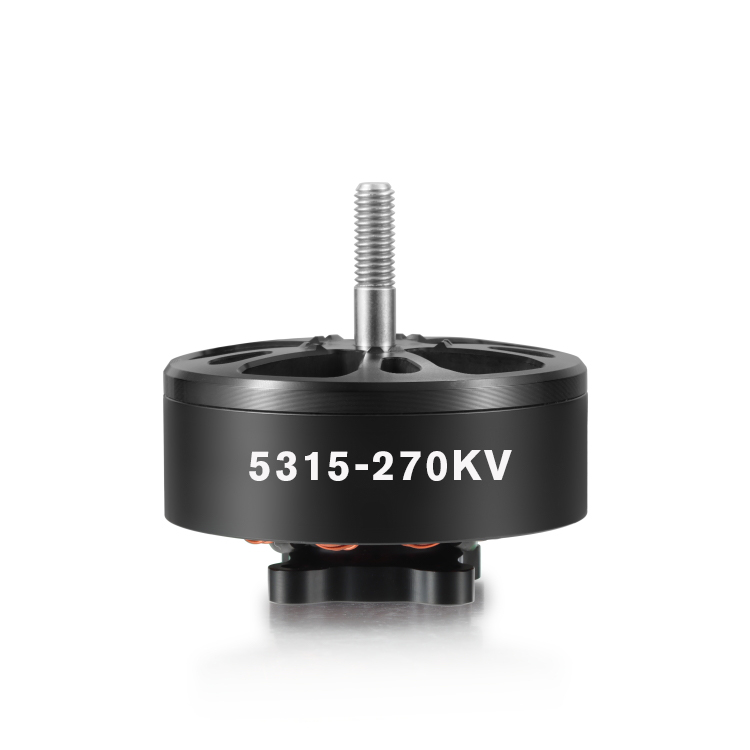
Higher torque
Lower operating temperature
Improved cruise efficiency
Better endurance under heavy payloads
When paired with 22–24 inch carbon fiber propellers, it becomes an ideal solution for:
Long-endurance VTOL UAVs
Heavy reconnaissance drones
Emergency response aircraft
Maritime patrol UAVs
For aircraft exceeding 25 kg MTOW, the 6215 offers a significant increase in propulsion capability.
Its large stator volume enables efficient operation with 24–28 inch propellers while maintaining relatively low RPM.
These characteristics make it particularly suitable for:
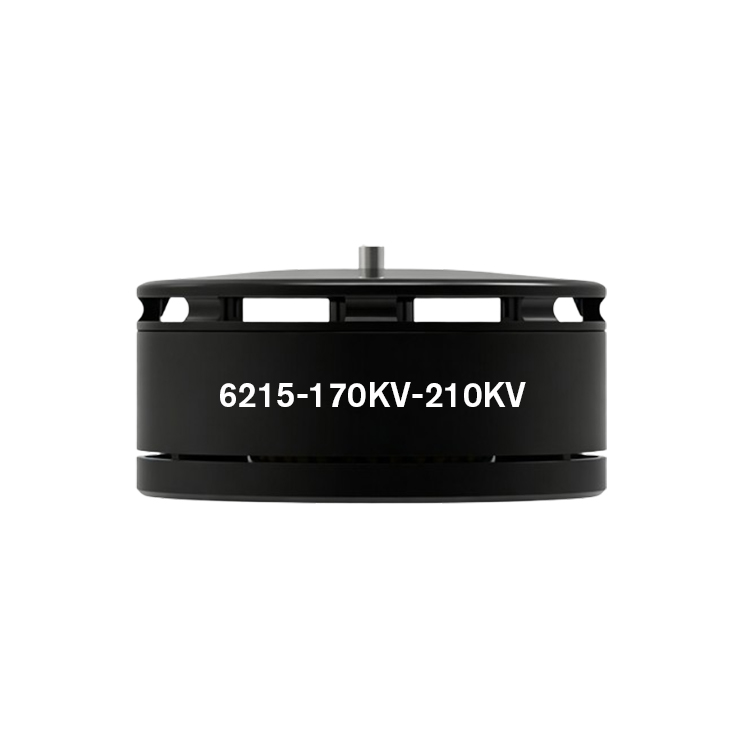
Long-range logistics UAVs
Heavy surveillance platforms
Scientific research aircraft
Large VTOL systems
Advantages include:
Exceptional torque output
High thermal stability
Excellent endurance
Reliable continuous operation
One of the defining characteristics of long-endurance UAV design is that maximum thrust is rarely the primary objective.
Once the aircraft reaches its cruising altitude, the propulsion system only needs to generate enough thrust to overcome aerodynamic drag and maintain steady flight.
This means an oversized motor operating far below its optimal efficiency point may actually shorten flight time due to increased weight and reduced energy utilization.
Experienced propulsion engineers therefore size the motor to operate near its highest efficiency region during cruise rather than selecting the largest available motor.
This philosophy explains why the most successful endurance UAVs often appear conservatively powered despite achieving exceptional flight durations.
Throughout this article, one principle has become increasingly clear: there is no such thing as a universally "best" UAV motor.
A motor that delivers outstanding performance on an FPV attack drone may perform poorly on an industrial quadcopter, while a propulsion system designed for a long-endurance VTOL aircraft would feel sluggish and inefficient on a high-speed FPV platform.
The reason is simple.
A brushless motor is not an independent component—it is one element within a complete propulsion system. Its performance depends on how effectively it works with the battery, ESC, propeller and airframe.
Consequently, experienced UAV engineers rarely select a motor by looking at the KV rating alone. Instead, they evaluate how the entire propulsion system will operate under the aircraft's expected mission profile.
Among all motor specifications, KV is probably the most misunderstood parameter.
Many beginners assume that:
Higher KV means more power.
Lower KV means less performance.
Neither statement is correct.
KV simply indicates the motor's theoretical rotational speed per applied volt under no-load conditions.
For example:
A 1,000 KV motor supplied with 24 V will theoretically rotate at approximately 24,000 RPM without load.
A 300 KV motor supplied with the same voltage will rotate at approximately 7,200 RPM.
This value describes speed potential—not thrust, torque or efficiency.
Actual propulsion performance depends on multiple interacting variables.
Motor performance is the result of an entire propulsion ecosystem rather than a single specification.
The most important design variables include:
Motor KV
Stator diameter and length
Rotor magnetic design
Battery voltage
ESC current capability
Propeller diameter
Propeller pitch
Aircraft weight
Flight mission
Ambient operating conditions
Changing any one of these parameters influences every other component in the propulsion system.
This is why professional UAV manufacturers evaluate propulsion systems as integrated engineering solutions instead of purchasing motors based solely on published specifications.
Another common misconception is that larger motors simply produce more power.
In reality, increasing motor size primarily increases torque production and thermal capacity.
A larger stator allows:
More copper windings
Greater magnetic flux
Higher continuous current
Improved cooling
Lower operating temperature
These characteristics enable larger motors to drive larger propellers efficiently.
However, larger motors also introduce additional mass and rotor inertia, making them less suitable for aircraft requiring rapid throttle response.
Therefore:
Small motors prioritize responsiveness.
Medium motors balance efficiency and maneuverability.
Large motors maximize lifting capability and endurance.
One of the most overlooked aspects of UAV propulsion is propeller selection.
Even the highest-quality brushless motor cannot perform efficiently if paired with an unsuitable propeller.
Propeller diameter determines how much air is accelerated, while pitch determines how aggressively that air is displaced.
Together they influence:
Static thrust
Cruise efficiency
Current consumption
Maximum flight speed
Hover stability
Noise
Motor temperature
For example:
A 3115 motor paired with an oversized propeller may draw excessive current and overheat.
The same motor equipped with an undersized propeller may operate efficiently but fail to generate sufficient lifting force.
Finding the optimal combination is therefore far more important than simply selecting the largest available propeller.
The three UAV categories discussed throughout this article can be summarized as three completely different propulsion philosophies.
| Flight Style | Primary Objective | Motor Characteristics | Recommended Motor Sizes |
|---|---|---|---|
| FPV Attack Drone | Maximum acceleration | High KV, lightweight, rapid response | 1103, 1407, 1804, 2207, 2212, 2806.5 |
| Balanced Multirotor UAV | Stable hover and payload | Medium KV, continuous torque, efficient hovering | 3110, 3115, 3508, 4006, 4014, 4315 |
| Long-Endurance UAV | Maximum flight time | Low KV, high torque, cruise efficiency | 4315, 5010, 5315, 6215, 8017 |
Although these propulsion systems may appear similar externally, their engineering priorities are fundamentally different.
Motor selection is not about finding the most powerful or the highest-KV motor—it is about matching the propulsion system to the aircraft's mission.
An FPV attack drone succeeds through explosive acceleration and rapid throttle response. An industrial multirotor achieves reliable performance through stable hovering and continuous torque. A long-endurance UAV extends its operational range by maximizing propulsion efficiency and minimizing energy consumption.
These three flight styles represent three distinct engineering philosophies, each requiring a different combination of motor size, KV rating, propeller geometry and power system design.
Understanding these relationships enables engineers to move beyond specification sheets and build propulsion systems that are not only more powerful, but also more efficient, reliable and purpose-driven.
Whether you are developing a lightweight FPV platform, a commercial inspection drone or a long-range VTOL aircraft, the most effective motor is always the one designed around the mission—not the one with the highest numbers on paper.
 what's app