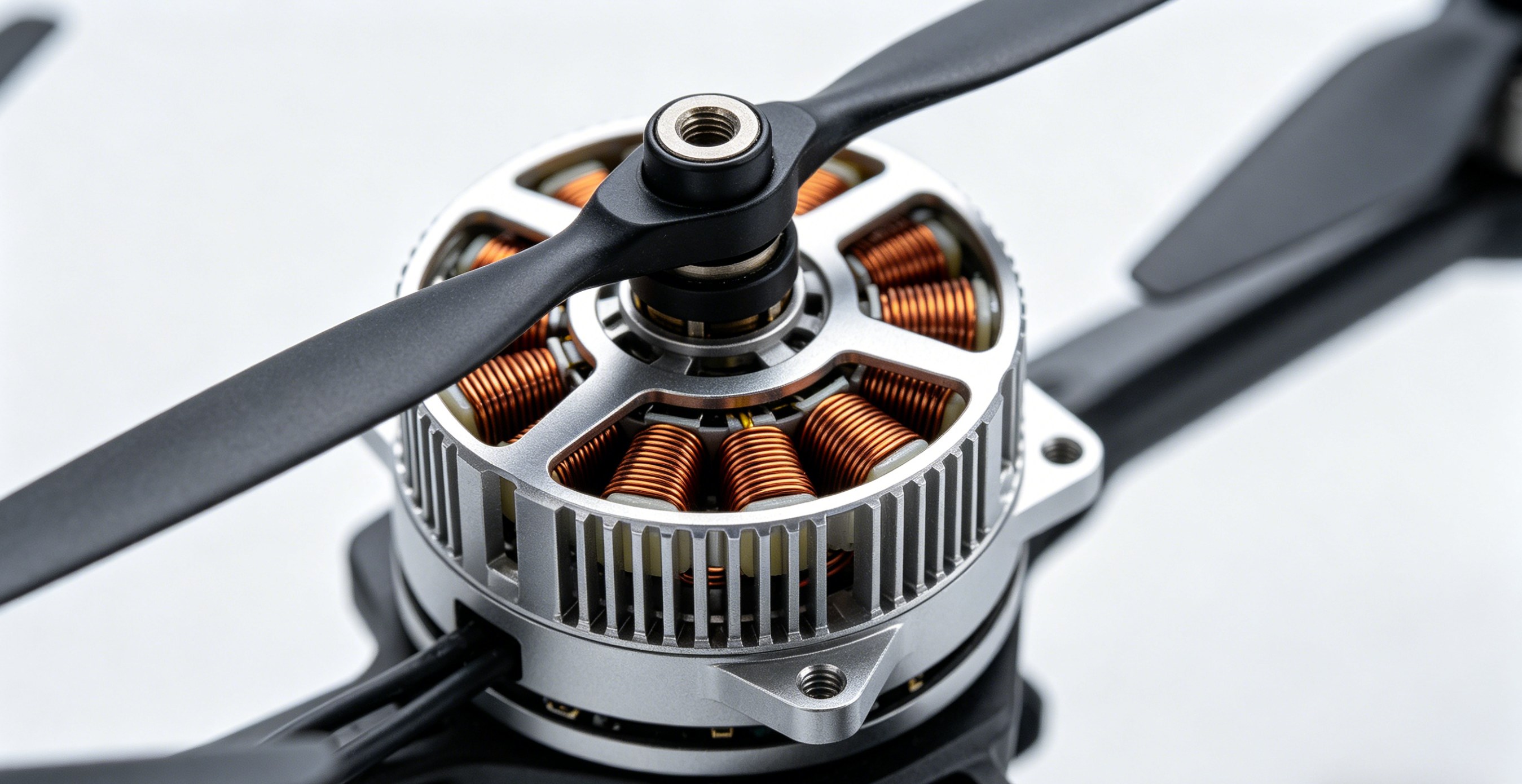
In modern multirotor UAV systems, motor efficiency is not governed by a single variable, but rather emerges from the coordinated interaction of electromagnetic design, electrical characteristics, and thermal management, all of which collectively determine how effectively electrical energy is converted into mechanical output. It is a system problem. From magnet selection and winding architecture to KV matching and heat dissipation, every structural parameter contributes to the final efficiency profile, making high-performance motor design a process of continuous optimization rather than isolated improvement.
The magnetic system defines the foundation of torque generation, where high-grade NdFeB magnets, combined with optimized air gap control and multi-pole rotor configurations, enable stronger magnetic flux density and improved energy conversion efficiency. Stronger flux. Lower loss. When the magnetic circuit is carefully designed to minimize leakage and hysteresis effects, the motor achieves higher torque output with reduced energy waste; however, insufficient magnet quality or poor structural layout can quickly lead to efficiency degradation, thermal buildup, and even demagnetization risks under extreme operating conditions.
The winding system acts as the primary electrical pathway, and its performance is heavily influenced by copper purity, slot fill factor, and winding configuration. A higher copper fill ratio directly reduces electrical resistance, thereby lowering I²R losses and improving efficiency under load conditions, while optimized delta or star configurations allow engineers to fine-tune current distribution and torque characteristics. Better winding. Less resistance. In contrast, inefficient winding layouts often result in uneven current flow and unnecessary heat generation, which ultimately limits motor performance.
KV value is often misunderstood as a simple speed indicator, yet in practical applications it serves as a critical matching parameter that must align with propeller size, battery voltage, and payload requirements. Matching matters. A high KV motor may deliver higher rotational speed, but it typically operates with increased current draw and reduced efficiency under load, whereas a lower KV motor provides greater torque output and improved energy utilization, especially in heavy-lift or endurance-focused UAV systems.
Motor efficiency is highly sensitive to current variations, particularly under dynamic flight conditions where load continuously changes, and excessive current draw rapidly increases copper losses according to the I²R relationship. More current. More loss. As thermal energy accumulates, electrical resistance rises, further reducing efficiency and creating a negative feedback loop, which makes it essential to optimize ESC parameters and maintain the motor within a stable operating range.
Thermal management is a decisive factor in maintaining long-term efficiency, as elevated temperatures directly impact winding resistance, magnetic stability, and overall system reliability. Heat kills efficiency. By incorporating optimized airflow channels, heat-dissipating structural designs, and high thermal conductivity materials, modern UAV motors are able to sustain consistent performance even under prolonged high-load conditions, effectively mitigating thermal degradation.
Mechanical factors such as bearing quality, shaft alignment, and rotor balance play a subtle yet important role in efficiency, as they directly influence frictional losses and vibration levels. Precision matters. High-quality bearings and strict tolerance control reduce mechanical resistance, while dynamic balancing minimizes vibration, leading to smoother operation and improved overall energy utilization.
Ultimately, motor efficiency cannot be evaluated in isolation, because it is inherently linked to the performance of the entire propulsion system, including ESC, propeller, and battery configuration. It’s a system. Only through proper system-level matching can the motor operate within its optimal efficiency range, ensuring that thrust, power consumption, and endurance are all balanced effectively.
Drone motor efficiency is the result of multi-factor engineering synergy, where magnetic design, winding structure, KV selection, current control, and thermal management must all work together in a balanced manner. Small changes. Big impact. Understanding these relationships not only enables better motor design, but also allows users to optimize their UAV systems for longer flight time, higher reliability, and superior performance.
 what's app