
The rapid proliferation of unmanned aerial vehicles (UAVs) has fundamentally changed modern security, surveillance, logistics and military operations. While commercial drones have created enormous value across industries, they have also introduced new security challenges. Unauthorized drones are increasingly used for illegal surveillance, contraband delivery, intelligence gathering, infrastructure disruption and even battlefield attacks. As a result, counter-UAS (C-UAS) technologies have become one of the fastest-growing sectors in the global defense and security market.
Among the various counter-drone solutions available today, interceptor drones have emerged as one of the most effective and economically sustainable options. Instead of relying on expensive surface-to-air missiles or static electronic warfare systems, interceptor drones provide a reusable, highly maneuverable and precision-guided platform capable of detecting, pursuing and neutralizing hostile UAVs with significantly lower operational costs.
However, the success of an interceptor drone depends on much more than advanced sensors or autonomous flight software. Every interception mission is ultimately constrained by the aircraft's propulsion system. The motor determines how quickly the drone accelerates, how efficiently it climbs, how precisely it maneuvers at high speed and how long it can remain airborne while searching for a target. For this reason, motor selection has become one of the most critical engineering decisions in modern interceptor drone development.
This article provides a comprehensive technical overview of interceptor drones, their operating principles, classification, applications and performance requirements while explaining why high-performance brushless motors have become the preferred propulsion solution for next-generation interceptor UAVs.
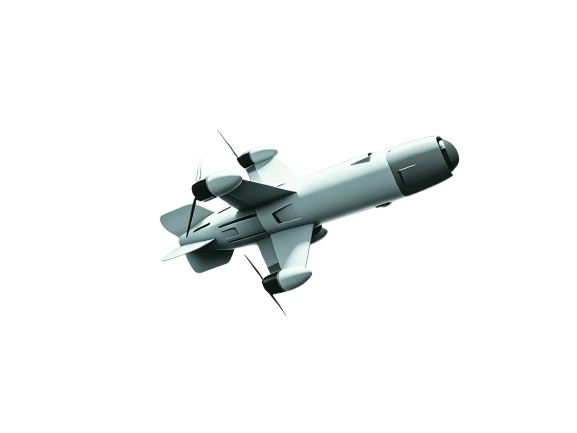
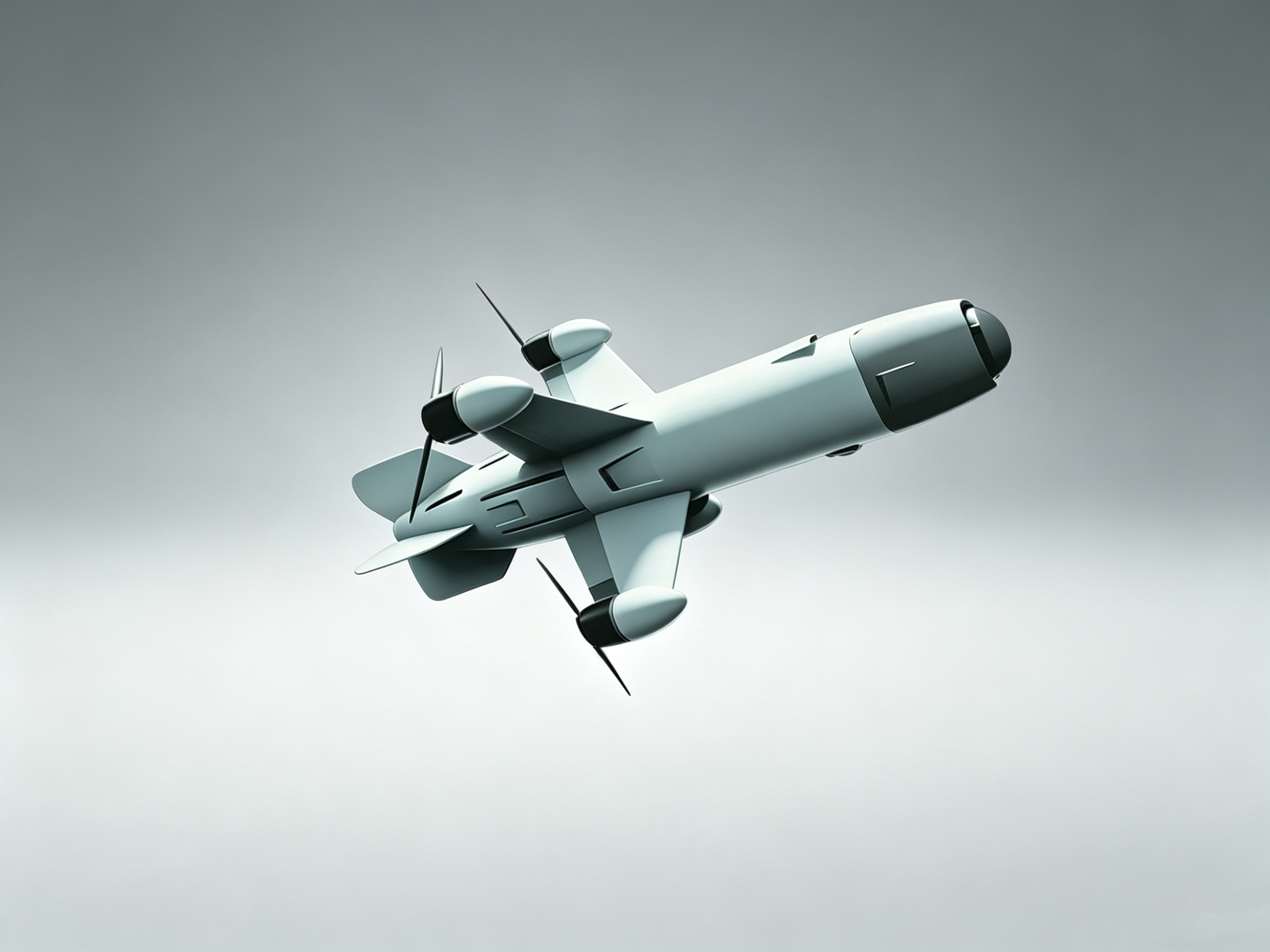
An interceptor drone is a specialized unmanned aircraft designed to detect, pursue and disable unauthorized aerial targets. Unlike conventional surveillance UAVs that primarily collect data, interceptor drones are engineered for dynamic aerial engagement. Their mission requires rapid acceleration, aggressive maneuverability, precise flight control and reliable propulsion under continuously changing aerodynamic conditions.
Modern interceptor drones are no longer limited to military applications. Governments, airports, power utilities, industrial facilities and public security organizations increasingly deploy them to protect critical infrastructure from unauthorized drone activities.
Compared with traditional air defense systems, interceptor drones offer several significant advantages. They can be launched within seconds, operate repeatedly without consuming expensive missiles, accurately identify individual targets and minimize collateral damage during interception. Their modular architecture also allows operators to integrate different interception methods depending on mission requirements.
The increasing popularity of interceptor drones is closely linked to the explosive growth of commercial UAVs worldwide. Consumer quadcopters capable of flying several kilometers are now inexpensive and widely available, making them accessible not only to hobbyists but also to criminals and hostile organizations.
Unauthorized drones have been responsible for airport shutdowns, prison smuggling operations, industrial espionage, border surveillance and attacks on military facilities. Traditional countermeasures such as radio-frequency jamming or GPS spoofing are not always effective because many modern drones incorporate autonomous navigation and anti-jamming capabilities.
Furthermore, destroying a small UAV with high-cost missile systems creates an unfavorable economic imbalance. A drone worth only a few thousand dollars should not require an interceptor costing hundreds of thousands of dollars.
Interceptor drones address this challenge by providing a reusable platform capable of physically capturing or disabling hostile aircraft with substantially lower operating costs.
Interceptor drones can be categorized according to their interception mechanism, aerodynamic configuration and propulsion architecture. Although manufacturers often develop proprietary systems, most platforms can be classified into four primary interception methods.
Kinetic interception is currently the most widely adopted approach. These drones directly collide with the target at high speed using carefully calculated flight trajectories. Their lightweight structure, rapid acceleration and high maneuverability enable them to destroy or disable hostile drones without carrying additional interception equipment.
This method minimizes system complexity while maximizing response speed, making it particularly suitable for military operations and rapid counter-drone missions.
Typical characteristics include:
Flight speed between 150 and 300 km/h
High thrust-to-weight ratio
Extremely responsive flight control
Lightweight composite airframe
Brushless direct-drive propulsion
Instead of destroying the target, net-based interceptor drones launch a specially designed capture net that entangles the propellers of the hostile aircraft.
Because the intercepted drone remains largely intact, this approach is especially valuable for forensic investigations, airport security and law enforcement operations where evidence preservation is important.
These systems generally require highly accurate positioning and stable flight during the final interception phase.
Electronic warfare interceptor drones carry communication jamming equipment, GPS spoofing modules or cyberattack payloads capable of interrupting the target's navigation system.
Although these platforms avoid physical collision, their effectiveness depends heavily on the communication protocol used by the hostile drone. Military UAVs equipped with encrypted communication links are significantly more resistant to electronic attacks.
Military interceptor drones designed for battlefield operations may carry fragmentation charges or directional explosive devices that detonate near the target after precise guidance.
These systems are primarily intended to defeat high-speed reconnaissance drones, loitering munitions and coordinated drone swarms.
Different mission profiles require different aircraft structures.
Multirotor aircraft provide exceptional maneuverability, rapid vertical takeoff and precise hovering capability. Their ability to rapidly change flight direction makes them ideal for short-range interception around airports, government buildings and industrial facilities.
However, limited endurance and relatively low cruising speed restrict their operational radius.
Fixed-wing interceptor drones achieve significantly higher flight efficiency because aerodynamic lift is generated by wings instead of rotor thrust alone.
Compared with multirotors, they provide:
Longer flight endurance
Higher cruising speed
Greater interception distance
Better energy efficiency
These characteristics make them particularly suitable for border protection and long-range defense missions.
Hybrid Vertical Take-Off and Landing (VTOL) aircraft combine multirotor lift systems with fixed-wing cruise capability.
This configuration enables operators to launch from confined locations while maintaining long-range cruising efficiency after transition into forward flight.
Hybrid platforms are becoming increasingly popular in modern counter-UAS systems because they balance flexibility with endurance.
Unlike consumer photography drones, interceptor UAVs require propulsion systems capable of delivering exceptionally high thrust, rapid throttle response and continuous high-power operation. In practical engineering, motor selection is generally based on the aircraft's maximum take-off weight (MTOW), required thrust-to-weight ratio, propeller diameter and battery voltage rather than power alone.
Among commercially available brushless outrunner motors, the following frame sizes are widely adopted in professional UAV platforms because they provide an excellent balance between efficiency, reliability and power density.
| Motor Size | Typical Power | Recommended Propeller | Typical UAV Weight | Recommended Applications |
|---|---|---|---|---|
| 3110 | 700–1200 W | 12–14 inch | 2–4 kg | High-speed quadcopters, FPV interceptor drones |
| 3115 | 900–1600 W | 13–15 inch | 3–6 kg | Medium-size interceptor UAVs, reconnaissance drones |
| 3508 | 400–800 W | 10–12 inch | 1.5–3 kg | Lightweight pursuit drones |
| 4006 | 500–900 W | 13–15 inch | 2–5 kg | Long-endurance surveillance UAVs |
| 4014 | 1000–1800 W | 15–17 inch | 4–8 kg | VTOL interceptor drones |
| 4315 | 1500–2500 W | 16–18 inch | 6–12 kg | Heavy-duty interceptor UAVs |
| 5010 | 1800–2800 W | 18–20 inch | 8–15 kg | Long-range tactical UAVs |
| 5315 | 2500–4000 W | 20–24 inch | 12–25 kg | Military interceptor drones and heavy-lift UAVs |
| 6215 | 3500–6000 W | 24–28 inch | 20–40 kg | Large VTOL platforms |
| 8017 | 6000 W+ | 30 inch and above | 40 kg+ | Industrial and military heavy UAVs |
The above specifications represent common engineering ranges. Actual performance depends on KV rating, operating voltage, propeller selection, ESC configuration and cooling conditions.
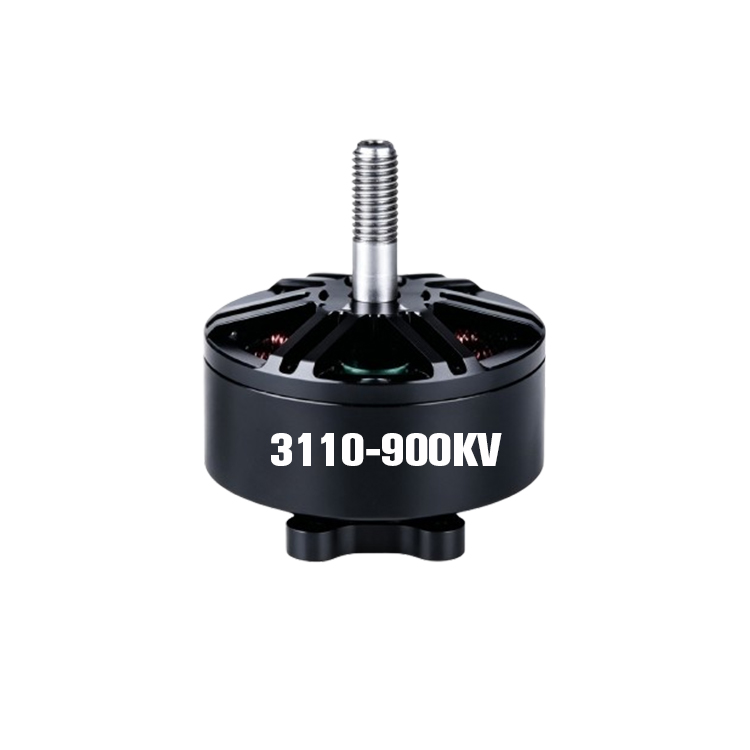
The 3110 frame size is one of the most popular propulsion solutions for lightweight interceptor drones because it provides an excellent compromise between weight and thrust. When operated on a 6S lithium battery with a 13-inch carbon fiber propeller, a high-quality 3110 motor can generate approximately 2.5–3.5 kg of static thrust, making it suitable for compact pursuit drones requiring rapid acceleration and high maneuverability.
Typical applications include:
FPV interceptor drones
High-speed quadcopters
Small military UAVs
Border patrol drones
Compared with the 3110 series, the 3115 motor incorporates a longer stator, increasing copper fill and magnetic flux. This design significantly improves continuous torque output while maintaining excellent efficiency.
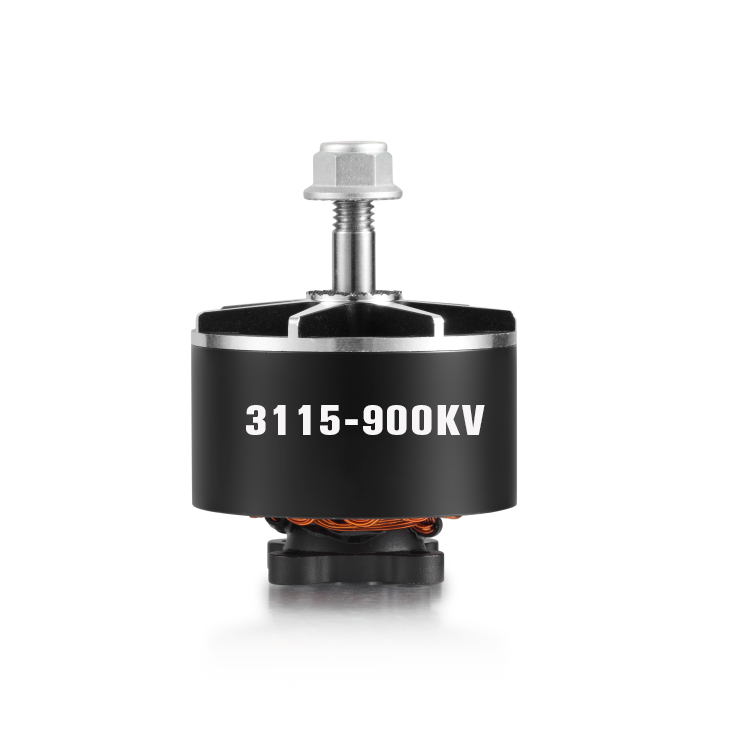
The larger thermal capacity also enables extended high-power operation, making the 3115 particularly suitable for interceptor drones that must perform repeated pursuit missions without overheating.
Typical specifications include:
Continuous power: 900–1600 W
Peak thrust: 4–5 kg per motor
Propeller: 13–15 inch
Battery: 6S–12S
Recommended applications include:
Medium interceptor drones
Tactical reconnaissance UAVs
VTOL transition aircraft
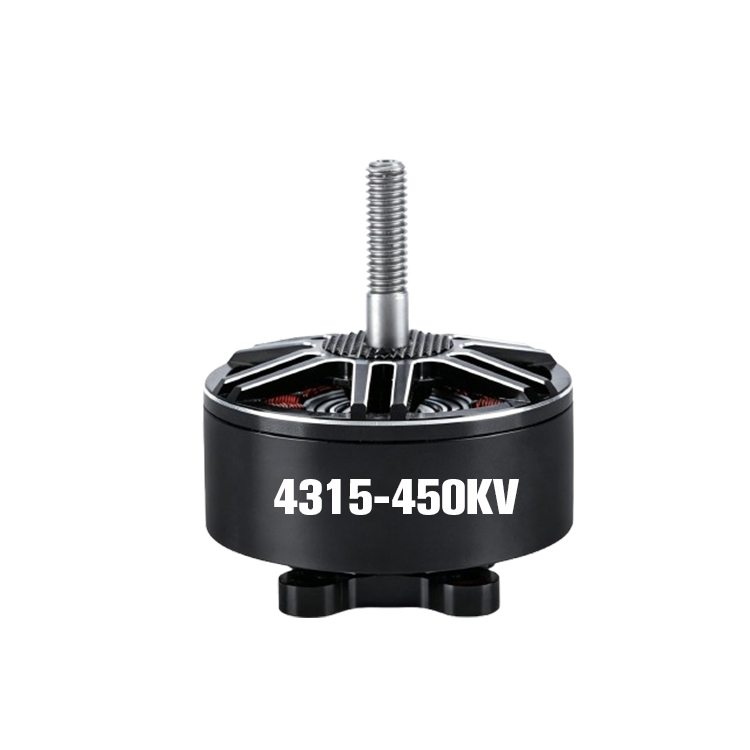
The 4315 series represents one of the most widely adopted professional UAV propulsion platforms for medium-to-heavy interceptor drones.
Its larger stator diameter substantially increases electromagnetic torque, allowing the aircraft to carry heavier payloads while maintaining aggressive climb performance.
A typical 4315 motor operating on a 12S battery with an 18-inch carbon fiber propeller can produce 8–10 kg of maximum thrust, making it suitable for aircraft with total take-off weights between 8 and 20 kilograms.
Advantages include:
Excellent continuous output
Superior thermal dissipation
Low vibration
High reliability
Long service life
Typical missions include:
Long-range interception
Infrastructure protection
Military surveillance
Autonomous counter-UAS systems
For large interceptor drones designed to neutralize high-speed or long-range aerial threats, the 5315 motor has become one of the industry's preferred propulsion solutions.
Its larger magnetic circuit and higher copper volume enable continuous operation at power levels exceeding 3 kW, while maintaining high electrical efficiency and relatively low operating temperatures.
Typical characteristics include:
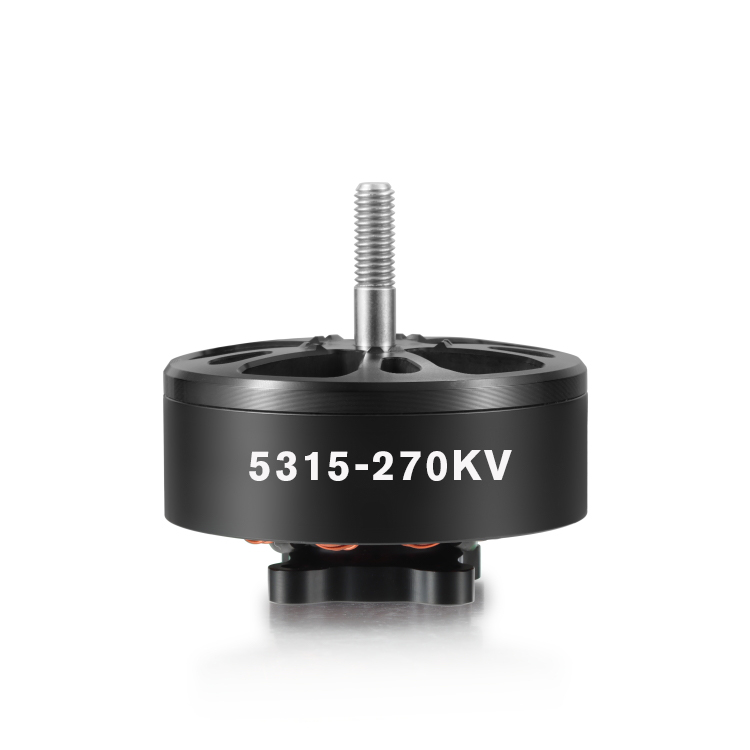
Continuous power: 2500–4000 W
Peak thrust: 12–18 kg per motor
Battery: 12S–14S
Propeller: 20–24 inch
These motors are commonly integrated into:
Heavy interceptor UAVs
Large VTOL aircraft
Long-endurance military platforms
Autonomous defense drones
For practical engineering projects, propulsion systems are generally selected according to the aircraft's maximum take-off weight.
| UAV MTOW | Recommended Motor |
|---|---|
| 1–3 kg | 2808 / 3110 |
| 3–5 kg | 3110 / 3115 |
| 5–8 kg | 3115 / 4006 / 4014 |
| 8–12 kg | 4014 / 4315 |
| 12–20 kg | 4315 / 5010 / 5315 |
| 20–40 kg | 5315 / 6215 |
| 40 kg+ | 8017 / 10020 |
Interceptor drones have become an essential component of modern counter-UAS strategies because they provide a reusable, precise and economically sustainable method of neutralizing unauthorized aerial threats. While advances in artificial intelligence, sensing technologies and autonomous navigation continue to improve target detection and engagement capabilities, the propulsion system remains the foundation upon which every successful interception depends.
For engineers developing next-generation interceptor UAVs, selecting the appropriate motor requires balancing power density, torque characteristics, thermal performance, vibration control, efficiency and long-term reliability rather than simply pursuing maximum output power. High-performance brushless DC motors, particularly when supported by customized engineering solutions and integrated drive systems, continue to represent the optimal choice for achieving rapid acceleration, stable flight control and high interception success rates.
As counter-drone technology advances toward increasingly intelligent and demanding operational environments, customized brushless motor solutions will play an even more critical role in enabling interceptor drones to operate faster, farther and more reliably than ever before.
 what's app