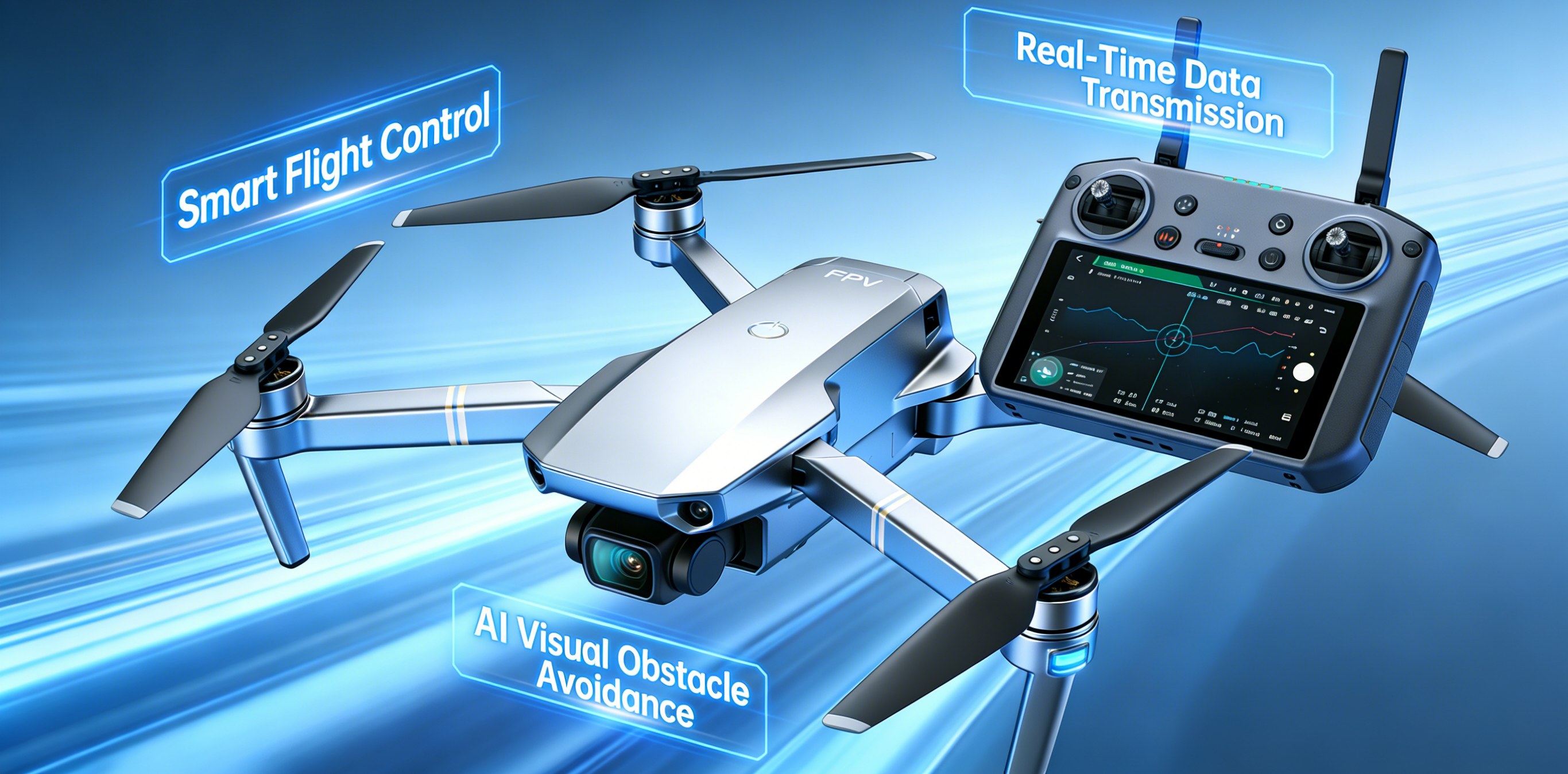
FPV drones have evolved rapidly from hobbyist racing tools into highly sophisticated aerial platforms, where motor performance, flight control systems, and propulsion efficiency collectively define the limits of speed and maneuverability. In modern FPV systems, the brushless outrunner motor is no longer just a power source, but a critical component that directly determines flight responsiveness and stability.
The demand for aggressive flight characteristics has led to the widespread adoption of high KV motors, particularly in the 1800KV–2800KV range for 5-inch racing drones. These motors are designed to deliver:
Extremely fast RPM acceleration
High thrust-to-weight ratio
Immediate throttle response
At the same time, engineers must carefully balance KV value with torque output and efficiency, ensuring that motors do not overheat or lose control under high load conditions.
Weight reduction is a fundamental principle in FPV drone engineering. Every gram matters.
Modern FPV motors achieve lightweight performance through:
Hollow shaft structures
High-strength aluminum alloys
Optimized stator and rotor geometry
These innovations significantly increase power density, allowing smaller motors to generate higher thrust while maintaining structural integrity.
The interaction between ESC (Electronic Speed Controller) and motor defines real-time performance.
With the introduction of protocols such as:
DShot600 / DShot1200
Bidirectional DShot
RPM filtering
Motors are now capable of delivering precise, synchronized output, reducing vibration and improving flight smoothness.
Recent developments in FPV racing competitions and AI-based drone research have accelerated motor innovation. High-speed drone events require motors that can sustain extreme load cycles, while autonomous FPV systems demand predictable and repeatable motor behavior.
The future of FPV drones is inseparable from motor innovation. As propulsion systems continue to evolve, high-efficiency brushless motors, lightweight structures, and intelligent control integration will define the next generation of UAV performance.
 what's app