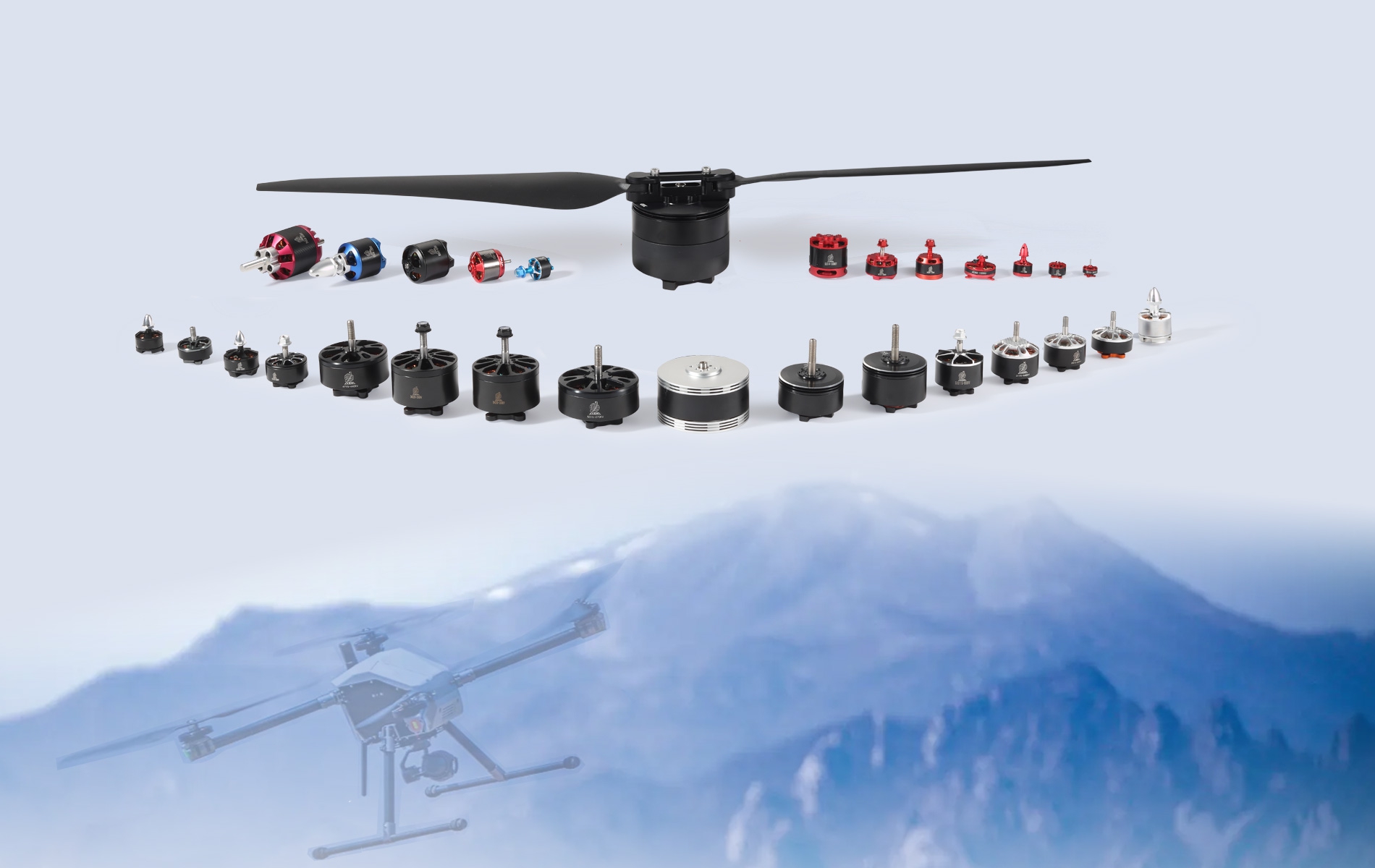
Struggling with inefficient UAV performance? Since 1994, BOGONG SUN has evolved from a traditional motor factory into an innovative drone electric motor manufacturer, committed to delivering high-efficiency, reliable solutions.
BOGONG SUN manufactures high-performance brushless drone motors aligned with NEMA standards, offering superior torque, efficiency, and thermal stability. These drone electric motors are designed for UAV, FPV motor applications, and industrial drone systems, ensuring durability, precision control, and optimized power output for demanding environments.
Let’s explore how drone motors work and why choosing the right UAV motor manufacturer matters for your applications.
Drone motors, commonly referred to as UAV motors or drone electric motors, are the core components responsible for generating thrust in unmanned aerial vehicles. Most modern drones rely on brushless motor technology due to its superior efficiency, longer lifespan, and reduced maintenance compared to brushed alternatives. A brushless drone motor converts electrical energy into mechanical rotation, driving propellers to produce lift and directional control.
Unlike traditional motors, brushless motors use electronic commutation instead of physical brushes, which significantly reduces friction and heat generation. This makes them ideal for high-speed and high-load applications such as FPV motor systems and agricultural UAV platforms. Drone motors are typically paired with electronic speed controllers (ESCs) that regulate speed, torque, and responsiveness. The precision and reliability of these motors directly influence flight stability, endurance, and payload capacity, making them critical for both commercial and industrial drone applications.
Brushed motor is a type of motor that relies on carbon brushes and commutators for mechanical commutation, and the current is transmitted to the rotor coil through the carbon brushes after powering, thereby generating a magnetic field and driving the rotor to rotate.
From a structural point of view, brushed motors usually consist of stator, rotor, carbon brushes and commutators, of which carbon brushes, as key components, need to be in constant contact with the rotor, which not only leads to wear, but also generates large heat and electromagnetic interference during high-speed operation, thereby affecting the stability and life of the motor.
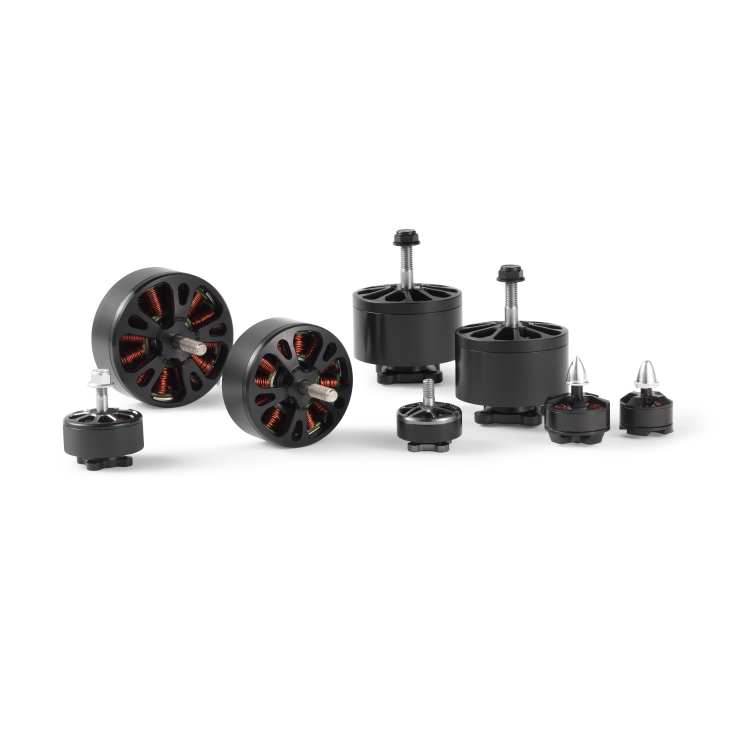
Brushless motors, also known as BLDC motors, are an advanced type of motor that realizes current commutation through electronic speed controllers (ESCs), and its core lies in replacing traditional mechanical carbon brushes with electronic control, thereby completely eliminating friction loss problems caused by physical contact.
In terms of structure, brushless motors usually consist of a stator winding and a permanent magnet rotor, in which the stator is responsible for generating a rotating magnetic field, while the rotor rotates synchronously through the action of the magnetic field.
The working principle of a coreless motor is similar to that of a traditional DC motor. However, due to structural differences, its electromagnetic response is more direct and efficient. When current flows through the rotor windings, it generates an electromagnetic force within the magnetic field created by the stator’s permanent magnets, thereby driving the rotor to rotate. The commutator continuously changes the direction of the current, ensuring that the rotor maintains a rotational torque.
Compared to traditional motors, coreless motors, lacking a ferrous core, eliminate hysteresis effects and eddy current losses. As a result, they exhibit virtually no “magnetic inertia” when the current changes. This characteristic enables them to achieve extremely fast start-up times, stoppage times, and responsive speed changes—a feature that is particularly valuable in precision control systems.
In the field of drones, coreless motors are usually only used for small or indoor flying equipment, while for scenarios that require high thrust and high power output, such as agricultural drones or industrial drones, brushless external rotor motors are still the main ones
When selecting a drone electric motor, several key specifications must be considered to ensure optimal performance. One of the most important parameters is KV rating, which indicates the motor’s RPM per volt. High-KV motors are suitable for FPV motor applications requiring speed, while low-KV motors are better for heavy-lift UAV motor systems requiring torque.
Another critical specification is thrust output, which determines how much weight a drone motor can lift. This is particularly important for agricultural UAVs and industrial drones carrying payloads such as spraying systems or sensors. Efficiency is also a key factor, as higher efficiency brushless motors reduce energy consumption and extend flight time.
Thermal management plays a vital role in maintaining motor performance during continuous operation. High-quality drone motors incorporate advanced heat dissipation designs to prevent overheating. Additionally, factors such as motor size, weight, winding configuration, and material quality (such as high-grade magnets) all contribute to the overall performance and reliability of a brushless drone motor.
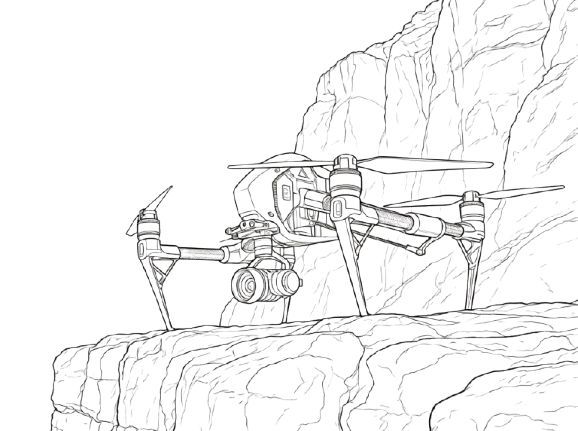
Aerial photography drones focus on flight stability and smooth thrust output, because image quality depends heavily on vibration control and hover precision.
These drones often carry:
Cameras
Gimbals
Stabilization systems
Therefore, the motors need to provide:
Low vibration
Stable thrust
High efficiency
Long endurance
For this application, 2216, 3115, and 3508 motors are commonly used.
The 2216 motor is suitable for lightweight aerial photography drones due to its light weight and efficient operation. For professional platforms requiring better stability and heavier payload capacity, 3115 or 3508 motors are better options because they can drive larger propellers at lower RPM, reducing vibration and improving hover stability.
FPV racing drones prioritize speed, rapid acceleration, and instant throttle response. In racing competitions, pilots require highly responsive motors that can deliver aggressive power output.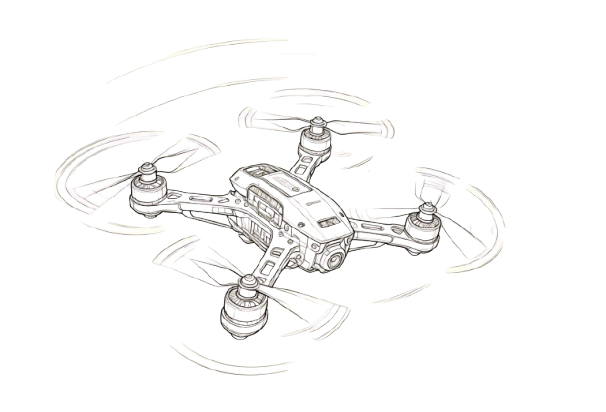
The motor requirements include:
High KV rating
Fast throttle response
High power density
Lightweight design
Motors such as 2207, 2306, and 2205 are widely used in FPV racing drones. These motors operate at high RPM and provide explosive acceleration, making them ideal for racing tracks that demand quick directional changes.
Among them, 2207 motors are especially popular because they offer strong thrust and excellent responsiveness, balancing power and control.
Freestyle drones require a balance between power and smooth control. Unlike racing drones, freestyle UAVs need flexible throttle modulation for aerial tricks, dives, and cinematic flying.
The motors should offer:
Smooth throttle response
Strong mid-range torque
Durability
Controlled power output
Models such as 2207, 2306, and 2506 are common for freestyle builds.
The 2306 motor is widely favored because it delivers smooth power transition while maintaining strong thrust, helping pilots perform precise maneuvers with stable control.
Industrial and logistics drones are designed for heavy payloads, high reliability, and efficient long-duration flight.
These drones may carry:
Delivery payloads
Inspection equipment
Industrial sensors
As a result, the motors must provide:
High torque
High payload capacity
Strong efficiency
Thermal reliability
Models such as 6215, 7010, and 8017 are ideal for industrial UAVs.
The 6215 motor is suitable for medium-load industrial drones, while 7010 and 8017 are better for heavy-lift applications due to their larger stator sizes and stronger torque output. These motors can drive large propellers efficiently, generating smooth thrust for stable flight under load.
Surveying drones require precise hover stability and low vibration, because image clarity directly affects mapping accuracy.
To ensure precise aerial imaging, the motors need:
Stable torque output
Low vibration
Efficient hovering
Payload compatibility
The 3115, 6215, and 7010 motors are commonly used for surveying drones.
The 3115 motor is ideal for light professional mapping drones, while 6215 and 7010 are better for larger platforms carrying RTK, LiDAR, or high-resolution mapping cameras.
Agricultural spraying drones are designed for heavy payload operation and efficient low-altitude flight, as they need to carry liquid tanks, spraying systems, and batteries during crop protection tasks.
These drones require motors with:
High thrust output
Strong load capacity
Efficient cooling performance
Stable low-speed flight capability
Because spraying drones often operate with varying payload weights as liquid is released, the motors must maintain stable thrust throughout the flight. Large motors such as 6215, 7010, and 8017 are commonly used because they can drive large propellers efficiently and provide the torque needed for lifting heavy spraying loads.
Among them, 7010 motors are widely used in agricultural drones because they provide excellent lifting performance, stable hovering ability, and efficient power output under heavy load conditions.
Multi-rotor heavy lift drones are widely used for cargo transport, engineering operations, and professional aerial equipment carrying, where the main priority is maximum lifting capacity and flight reliability.
These platforms need motors with:
High torque reserve
Excellent efficiency under load
Reliable thermal management
Stable multi-axis thrust consistency
To lift heavy payloads safely, motors such as 8017, 10015, and 10020 are ideal due to their ability to generate large thrust with oversized propellers. These motors maintain stable performance under high current loads and provide strong anti-vibration capability for safe operation.
The 8017 motor is often selected for medium heavy-lift drones, while 10015 and 10020 are more suitable for larger industrial multi-rotor UAV platforms requiring maximum payload capacity.
VTOL (Vertical Take-Off and Landing) fixed-wing drones combine the hovering ability of multi-rotor drones with the long endurance of fixed-wing aircraft. Their propulsion systems require motors that can handle both vertical lift and efficient forward propulsion.
The motor requirements include:
High vertical thrust
Efficient cruise performance
Quick transition response
Reliable endurance
VTOL drones usually use separate motors for lift and cruise. Lift motors such as 3508, 4006, and 6215 are selected for stable vertical takeoff, while propulsion motors are chosen for efficient forward flight.
The 3508 motor is commonly used for lightweight VTOL platforms due to its balanced thrust and efficiency, while 6215 motors are better suited for larger VTOL drones requiring stronger vertical lift capacity.
Motor size is one of the most important factors influencing the performance of a drone motor. The size of a motor directly affects its torque output, load capacity, efficiency, response speed, and thermal performance, which determines whether the motor is suitable for light-load or heavy-load applications.

In drone propulsion systems, motor size usually refers to the stator diameter and stator height. For example, in a 3115 motor, “31” represents the stator diameter, while “15” indicates the stator height. Larger motor dimensions generally provide higher torque and stronger load capacity, while smaller motors offer lighter weight and faster response.
Understanding how motor size affects performance is essential when selecting the right motor for different UAV applications.
In an outrunner motor, increasing the stator diameter and stator height enlarges the magnetic interaction area, allowing the motor to produce more torque. Higher torque means the motor can drive larger propellers more effectively and generate stronger thrust at lower speed.
This is especially important for drones carrying payloads, such as agricultural drones, delivery drones, and industrial inspection drones. These applications require stable thrust output during takeoff, hovering, and long-duration flight.
If the motor size is too small, the available torque becomes limited. Under load, the motor may struggle to maintain propeller speed, causing reduced lift, increased current consumption, and excessive heat generation. Over time, this reduces efficiency and shortens motor life.
For this reason, larger motors are generally better suited for high-thrust and heavy-load applications, where torque reserve is critical for stable flight.
Motor size greatly influences how well a drone performs under different payload conditions.
For light-load drones, such as racing drones and small aerial photography drones, smaller motors are often preferred. They are lighter, respond faster, and consume less power during operation. This improves maneuverability and allows the drone to react quickly to throttle changes.
For heavy-load drones, larger motors are necessary because they provide the sustained torque required to maintain lift with heavier payloads. This ensures that the drone remains stable during hovering, climbing, and forward flight, even when carrying additional equipment.
When a small motor is used in a heavy-load application, it tends to operate near its maximum limit. This causes higher current draw, reduced efficiency, and greater thermal stress. In contrast, a larger motor can operate with lower relative stress, improving reliability and performance.
Therefore, smaller motors are more efficient for light-load drones, while larger motors are essential for maintaining performance under heavy load.
The size of the motor determines the size of the propeller it can drive efficiently. Larger motors are capable of driving larger propellers, which generate more thrust with lower rotational speed.
This improves aerodynamic efficiency because a larger propeller moves more air per rotation, producing stronger lift with less RPM. For heavy-lift drones, this combination improves stability and reduces power loss.
Smaller motors are designed for smaller propellers that spin at higher speed. This setup is ideal for agile drones that prioritize fast response rather than maximum lift.
When the motor and propeller are not matched correctly, efficiency drops significantly. If a small motor drives an oversized propeller, it may overheat or lose speed under load. If a large motor drives an undersized propeller, the system may become unnecessarily heavy and inefficient.
This means proper matching between motor size and propeller size is necessary to achieve efficient thrust and stable flight behavior.
Heat management is a key factor in drone motor performance, especially during continuous heavy-load operation. Larger motors have more surface area and greater thermal mass, allowing them to dissipate heat more effectively.
This means the motor can maintain stable operating temperature even when producing high thrust for extended periods. Better cooling helps preserve magnet strength, winding insulation, and bearing durability.
Smaller motors have less thermal capacity, so temperature rises more quickly when the motor is heavily loaded. Excessive heat can reduce efficiency, damage internal components, and shorten service life.
For drones that operate under continuous load, such as spraying drones or transport drones, thermal stability is essential. A motor with sufficient size margin can maintain reliable output without overheating.
Therefore, larger motors provide better thermal performance and are more reliable for sustained high-load operation.
Motor efficiency depends on how closely the motor size matches the required thrust level. A properly sized motor can generate the needed thrust while operating in an efficient range.
For lightweight drones, smaller motors improve efficiency because they reduce total aircraft weight and minimize rotational inertia. This improves agility and helps maximize flight time.
For heavy-lift drones, larger motors are often more efficient because they can generate the required thrust without operating near overload. This reduces electrical losses and improves thrust-per-watt performance.
However, using an oversized motor on a lightweight drone increases total weight and may lower efficiency during low-load flight. This reduces endurance and affects handling.
As a result, the best flight efficiency is achieved when motor size is selected according to actual payload and thrust requirements.
Motor size also affects how quickly the drone responds to throttle input.
Smaller motors have lower rotational inertia, allowing them to accelerate and decelerate more rapidly. This produces faster throttle response, which is essential for racing drones and highly maneuverable FPV drones.
Larger motors have higher inertia, so speed changes are slower. Although this reduces responsiveness, it provides smoother and more stable thrust output, which is beneficial for aerial photography drones and heavy-load platforms.
In practical terms, smaller motors improve agility, while larger motors improve stability. The right choice depends on whether the application prioritizes rapid control response or smooth load handling.
Choosing the correct motor size improves the reliability of the entire drone system. A motor that operates with adequate performance margin experiences lower thermal stress, lower current load, and less wear on internal components.
This leads to better durability, longer service life, and safer operation, especially in commercial or industrial drones where reliability is critical.
When the motor is undersized, it may run continuously near maximum output, increasing the risk of overheating, efficiency loss, and even in-flight failure. This is particularly dangerous in drones carrying payloads.
By selecting a motor with the right size margin, the drone can maintain stable thrust, safer operating temperature, and reliable long-term performance.
For this reason, proper motor sizing is essential not only for performance, but also for operational safety and system reliability.
The continuous evolution of drone motor technology is driven by the increasing demand for higher efficiency, lighter weight, and smarter control systems. Modern brushless drone motors are being designed with advanced materials such as high-energy magnets and lightweight composites to improve power-to-weight ratios.
Innovation in thermal management, such as enhanced cooling structures and optimized airflow designs, allows drone motors to operate under heavy loads for extended periods. Additionally, integration with intelligent control systems enables real-time monitoring of parameters such as temperature, current, and RPM, improving reliability and performance.
Customization is another key trend in UAV motor development. Manufacturers like BOGONG SUN are focusing on tailored solutions, offering specific KV ratings, sizes, and structural designs to meet the unique requirements of different UAV applications. As drone technology continues to advance, the role of high-performance drone electric motors will become even more critical in enabling efficient and reliable aerial operations.
Choosing the right drone motor ensures better performance, efficiency, and reliability—making BOGONG SUN a strong partner for advanced UAV solutions.
 what's app