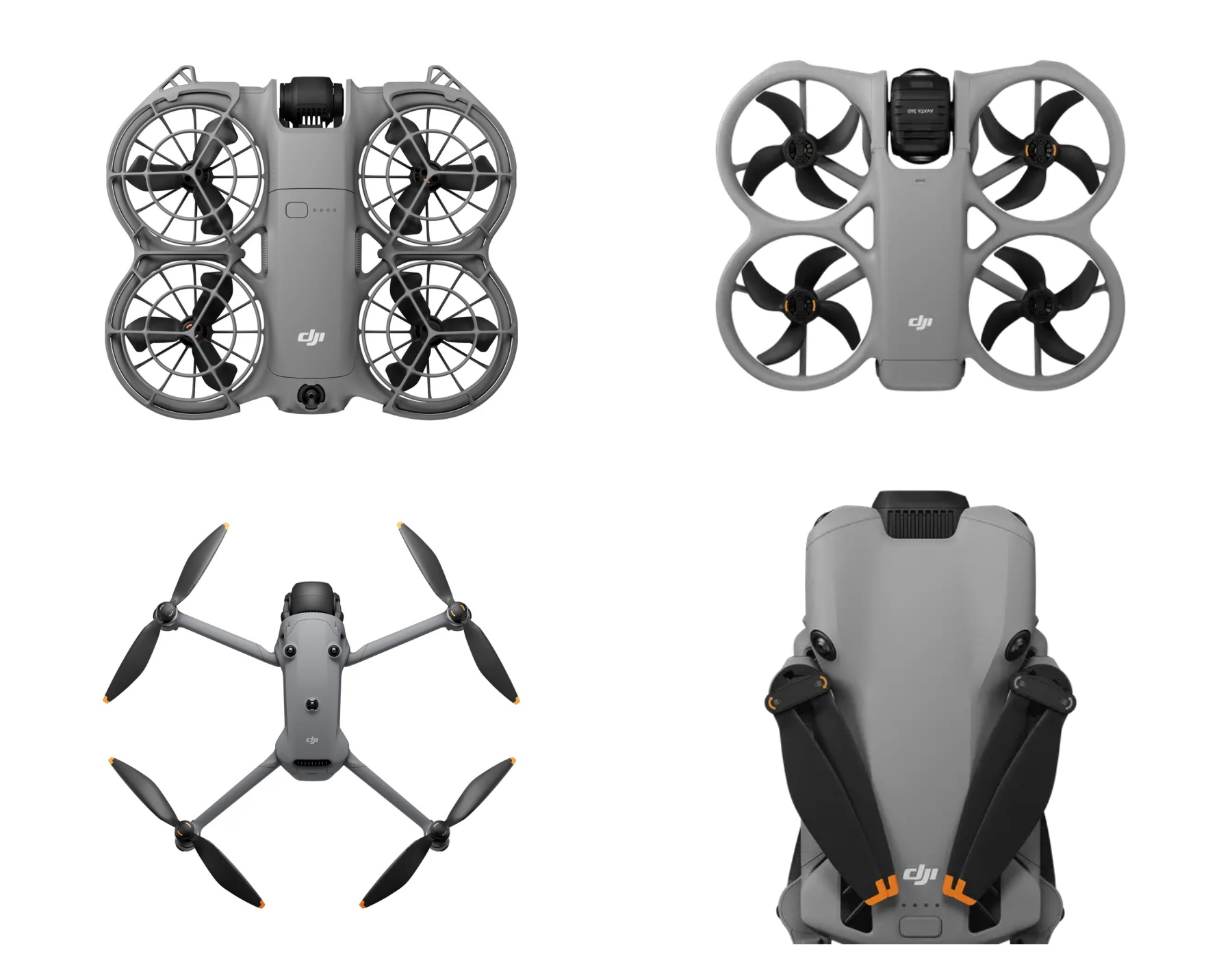
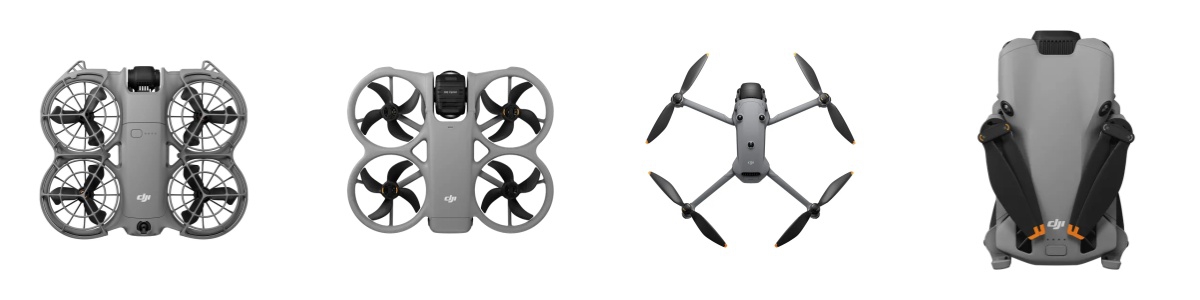
DJI's consumer drones feature highly integrated propulsion systems, with most models factory-optimized for airframe weight, propeller size, and flight modes to achieve the best balance of endurance, noise control, and flight stability. Even so, as the core power output component, drone motors present three scenarios that require attention:
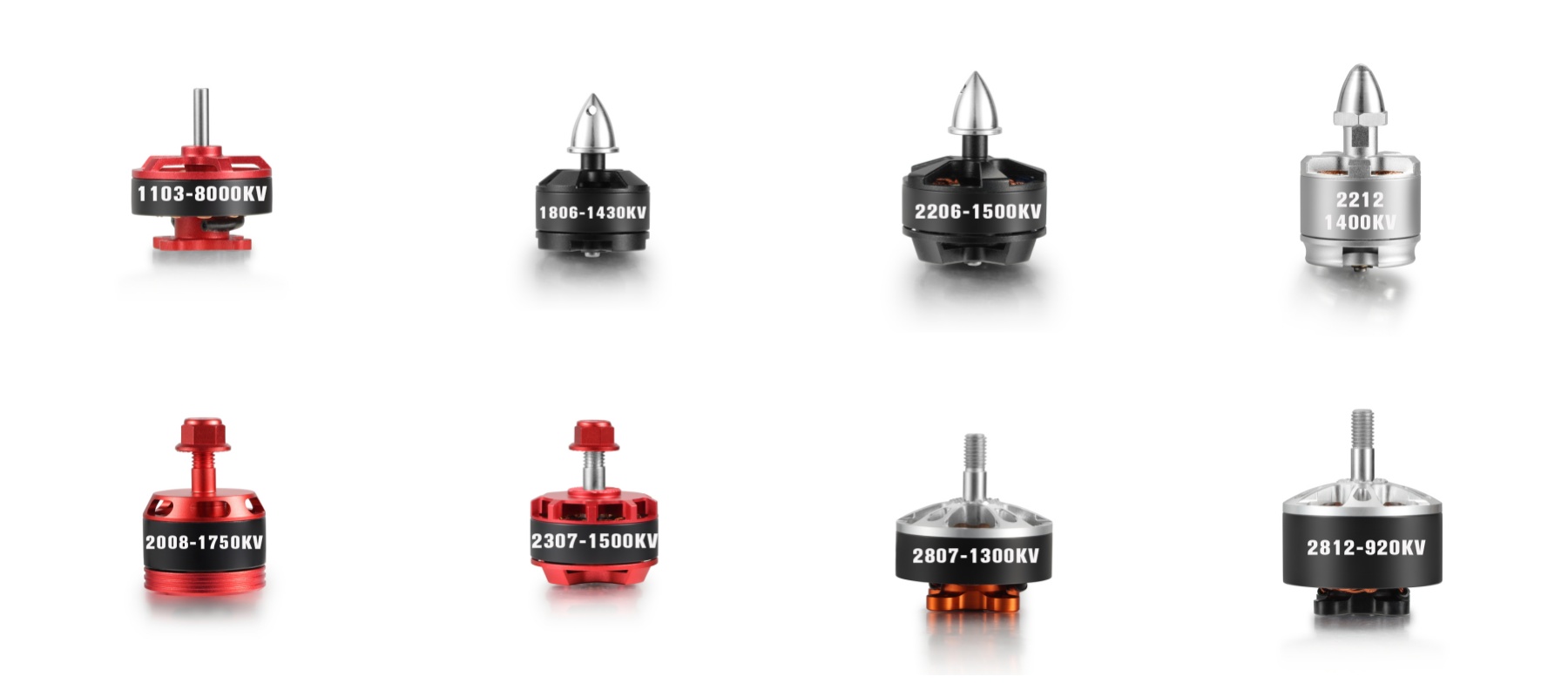
Replacement after damage: Official or third-party motor replacement solutions
Performance upgrades: Changing motors to improve flight performance (increased thrust or enhanced efficiency)
Custom modifications: Replacing motors for specific flight characteristics while maintaining compatibility with original propellers and flight controllers
Since DJI typically does not disclose specific motor specifications (stator dimensions, KV ratings, etc.) for its consumer drones, the following analysis combines publicly available product data with industry-standard selection logic. It outlines the propulsion requirements and motor selection references for representative models across three major categories.
Camera drones are DJI's core product line with the widest selection, targeting photography enthusiasts and content creators. These drones are designed around image quality, flight stability, and intelligent ease of use, pursuing smooth, efficient, and low-noise operation.
Propulsion system characteristics:
Quick-release propellers with clear CW/CCW markings and installation guides
Motors and propellers deeply customized for airframe weight and endurance targets
Battery voltage platforms range from 2-3S (Mini series) to 4-6S (Mavic series)
Motor replacement parameters and recommended ranges:
| Representative Model | Airframe Weight | Typical Battery | Propeller Size (inches) | Recommended Motor Stator Size | Notes |
| Mavic 4 Pro | ≈1063g | 4S Li-ion | 10.5×5.8 | 3508 ~ 3515 | High torque, low KV, ideal for heavy-lift long-endurance |
| Mavic 3 Pro | ≈958g | 4S Li-ion | 10.5×5.8 | 3508 ~ 3515 | Similar propulsion to Mavic 4 Pro |
| Air 3S | ≈724g | 4S Li-ion | 8.7×4.7 | 2207 ~ 2306 | High efficiency, suitable for medium payload aerial photography |
| Mini 5 Pro | ≈249g | 2S-3S Li-ion | 6.0×2.8 | 1806 ~ 2204 | Ultra-lightweight, thrust-to-weight priority |
| Mini 4 Pro | ≈249g | 2S-3S Li-ion | 6.0×2.8 | 1806 ~ 2204 | Same as Mini 5 Pro |
Replacement strategy: For camera drones, prioritize matching the original propeller size and battery voltage. Heavy-lift models (Mavic series) benefit from larger stator, lower KV motors to improve hover efficiency and heat dissipation. Lightweight models (Mini series) require careful attention to motor weight, as any added mass significantly impacts flight time.
Immersive FPV drones are built around delivering a "pilot's-eye view" experience, prioritizing maneuverability and agility over stable camera footage. For safety and proximity flight, the Avata series uses integrated propeller guards, making motors and propellers highly integrated within ducts.
Propulsion system characteristics:
Emphasizes rapid response, high agility, and impact resistance
Motors are often mounted inside ducts or guards, requiring attention to installation space, protection structure, and heat dissipation
Typically use 3-blade or 4-blade propellers with clear directional markings for correct installation
Motor replacement parameters and recommended ranges:
| Representative Model | Airframe Weight | Typical Battery | Propeller Size | Recommended Motor Stator Size | Notes |
| Avata 2 | ≈377g | 2S-3S Li-ion | ≈3.0 inch (75.66mm) | 1306 ~ 1408 | High response speed, moderate torque |
| Avata 360 | ≈377-410g | 2S-3S Li-ion | ≈3.0 inch (4-blade) | 1306 ~ 1408 | Same as Avata 2, requires 4-blade matching |
Replacement strategy: For FPV models, prioritize rapid response and guard compatibility. Ducted motors have limited heat dissipation, so choosing lower internal resistance motors reduces heat buildup. Keep motor size within the 1306-1408 range; larger motors disrupt duct balance and shorten flight time.
Entry-level drones are designed to lower the barrier to entry, allowing complete beginners to enjoy flying. Ease of use and safety take priority over image quality and performance. Ultra-lightweight construction is critical, with airframe weight typically under 250g, and the propulsion system is sized only for basic stable flight.
Propulsion system characteristics:
Airframe weight typically under 250g
Motor weight accounts for a significant portion of total weight, so any change in motor mass noticeably affects flight performance
Propellers are often non-quick-release, requiring the included screwdriver for replacement
Motor replacement parameters and recommended ranges:
| Representative Model | Airframe Weight | Typical Battery | Propeller Size | Recommended Motor Stator Size | Notes |
| Neo 2 | ≈151-161g | 2S Li-ion | ≈2.2 inch (55.9mm) | 1104 ~ 1306 | Micro motors, thrust-to-weight priority |
Replacement strategy: Replacement motor weight, mounting hole pattern, shaft diameter, and lead wire configuration must match the original exactly, otherwise installation may fail or the center of gravity may shift. Choose motors with KV values close to the original to minimize the need for flight controller retuning.
Regardless of category, follow these core principles when replacing drone motors:
Prioritize propeller size matching
Motor size, KV rating, and propeller size must align. Oversized propellers cause motor overload and overheating; undersized propellers waste thrust potential.
Battery voltage determines KV selection
Higher S-count batteries require lower KV motors to keep RPM within design limits. Recalculate KV-to-voltage matching when replacing motors.
Mounting compatibility is mandatory
Motor mounting hole spacing, shaft diameter, shaft length, and lead wire configuration must match the original installation exactly to avoid structural damage or mounting failure.
Confirm flight controller compatibility before replacement
DJI flight controllers have preset ranges for motor parameters. Choose motors with electrical characteristics (KV, phase resistance) close to the original to minimize retuning effort.
| Category | Representative Model | Airframe Weight | Propeller Size (inches) | Recommended Motor Size Range | Application |
| Flagship Camera | Mavic 4 Pro | ≈1063g | 10.5×5.8 | 3508 ~ 3515 | Heavy-lift, long-endurance, repair |
| Mid-range Camera | Air 3S | ≈724g | 8.7×4.7 | 2207 ~ 2306 | Balanced power, efficiency optimization |
| Entry Camera | Mini 5 Pro | ≈249g | 6.0×2.8 | 1806 ~ 2204 | Ultra-lightweight, thrust optimization |
| Immersive FPV | Avata 2 / 360 | ≈377-410g | ≈3.0 inch (ducted) | 1306 ~ 1408 | Fast response, duct compatibility |
| Entry-level | Neo 2 | ≈151g | ≈2.2 inch | 1104 ~ 1306 | Micro motors, weight-sensitive |
| DJI Category | Core Positioning | Representative Models | Propulsion System Characteristics |
| Camera Drones | Image creation, stable flight | Mavic 4 Pro, Air 3S, Mini 5 Pro | Efficiency and endurance optimized; deeply customized motors and propellers; quick-release propellers |
| Immersive FPV Drones | FPV control, high agility | Avata 2, Avata 360 | Guarded/ducted design; rapid response prioritized; highly integrated propulsion |
| Entry-Level Drones | Zero barrier, safe, easy to use | Neo 2 | Ultra-lightweight; propulsion sized for basic stable flight |
In summary: DJI's success in the small drone market reflects a "consumer electronics" mindset — turning a complex aircraft into a highly integrated smart device like a smartphone. As a result, DJI's consumer drones almost exclusively use deeply customized, flight-controller-integrated propulsion systems to deliver optimal performance, endurance, and intelligent features. Understanding the positioning and propulsion requirements of each category is the foundation for making informed motor selection and replacement decisions.
Finally, if you are interested in drone motors or complete machine supporting systems and have a need, please feel free to contact us. We will enthusiastically provide you with free customized solutions
 what's app