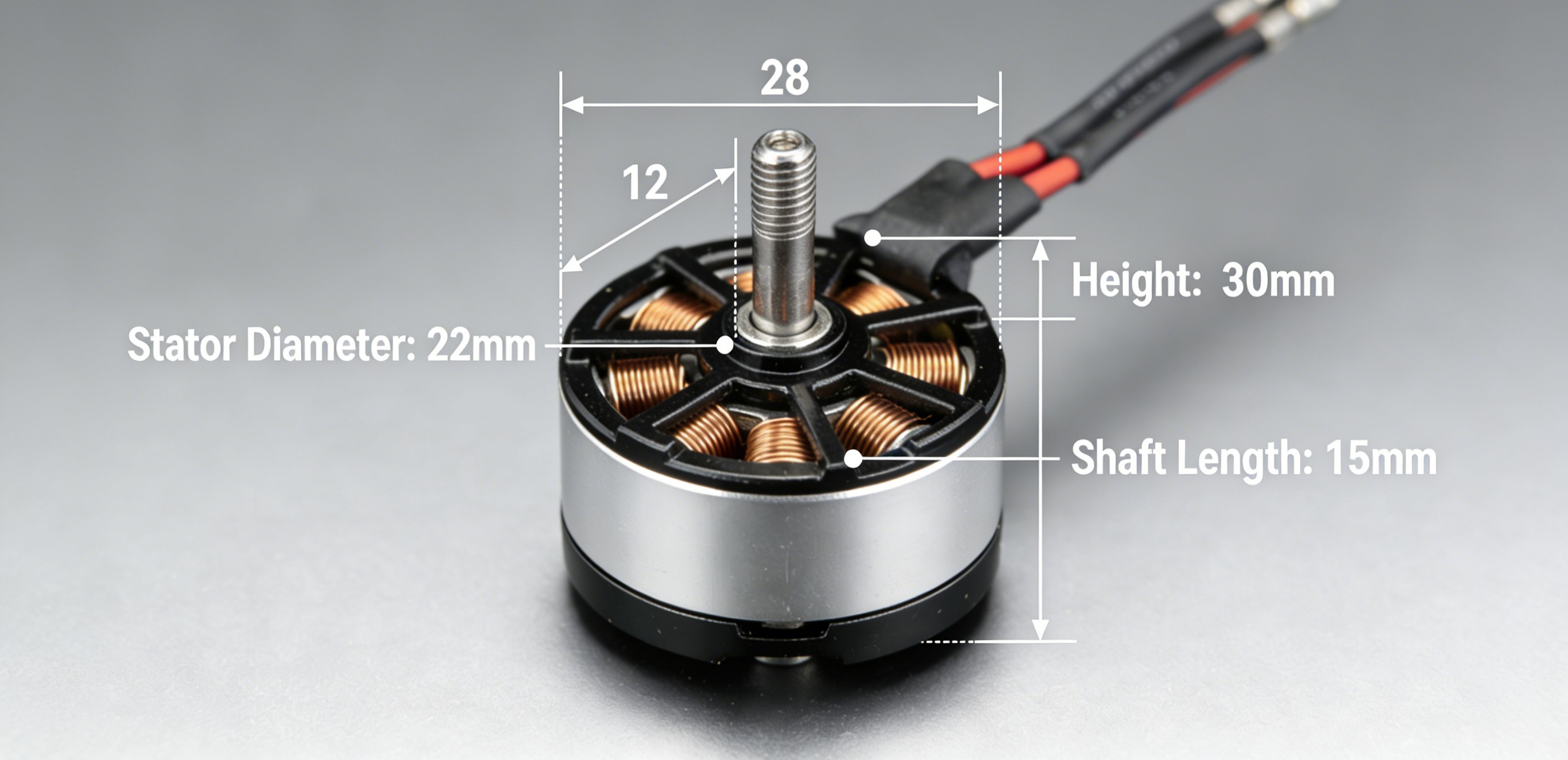
Understanding FPV motor sizes is critical for building a high-performance racing drone, as motor dimensions directly influence torque output, acceleration, throttle response, and overall flight behavior. While numbers like 2207, 2306, or 2806 may seem like simple labels, they encode important engineering details—stator diameter and height—that define the motor’s mechanical and electrical characteristics.
Choosing the right motor size is not just a technical decision, but a strategic one that balances speed, agility, and stability for specific track conditions and flying styles.
FPV motor sizes are typically expressed in a four-digit format: Width x Height, measured in millimeters.
First two digits: stator width (diameter)
Last two digits: stator height
For example:
2207 → 22mm stator diameter, 7mm stator height
2306 → 23mm diameter, 6mm height
2806 → 28mm diameter, 6mm height
The diameter affects torque and efficiency, while the height influences RPM response and heat dissipation. Larger diameters generally produce more torque, while taller stators generate slightly more thrust per ampere.
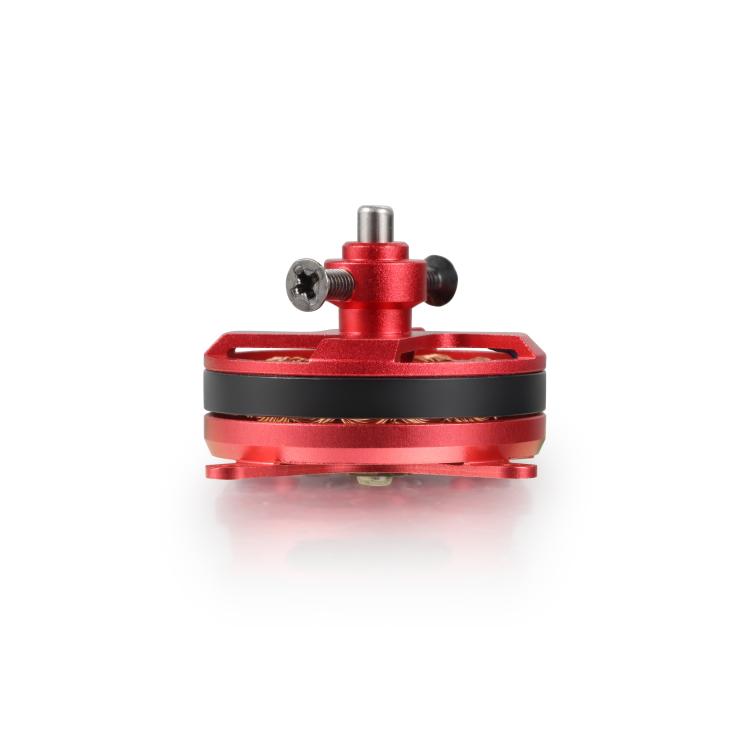
2207 motors are among the most popular in FPV racing, offering a balanced combination of lightweight construction and sufficient torque for 5-inch setups.
Advantages:
Lower weight → faster acceleration
Responsive handling → ideal for tight tracks
Moderate heat generation
Considerations:
Torque is slightly lower than larger stator motors
May require higher KV to achieve top speed
In practical terms, 2207 motors are perfect for pilots who prioritize agility and precision over maximum thrust, making them the default choice for most freestyle and racing drones.
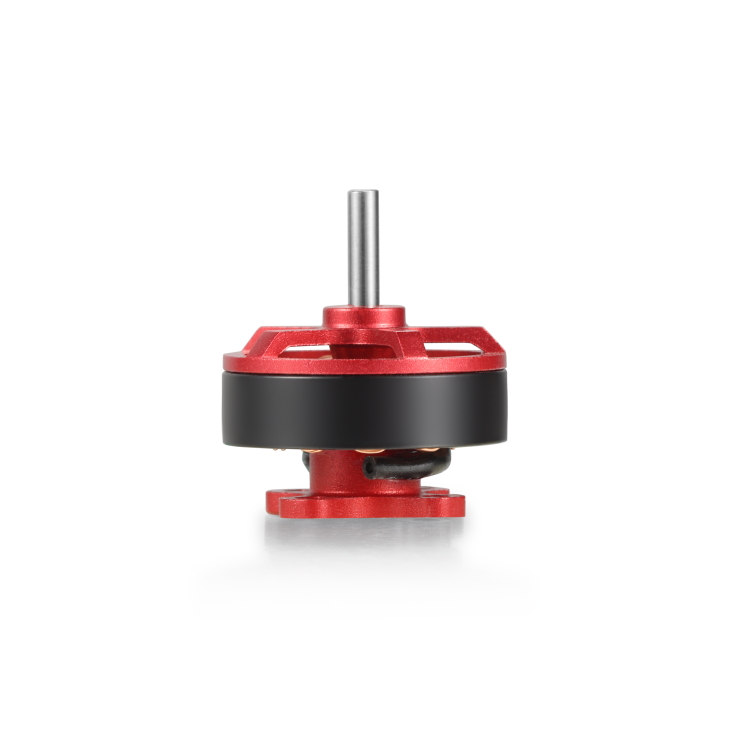
2306 motors increase the stator diameter by 1mm, which may seem minor but significantly affects torque output and thermal capacity.
Advantages:
Slightly higher torque → better control with high-pitch props
Maintains lightweight design → retains fast acceleration
Efficient heat dissipation → suitable for aggressive flying
Considerations:
Slightly heavier than 2207
May feel less “twitchy” in extremely tight maneuvers
2306 motors are widely chosen by pilots who want a balance between pure speed, slightly higher thrust, and thermal stability, making them excellent for competitive racing across mixed tracks.
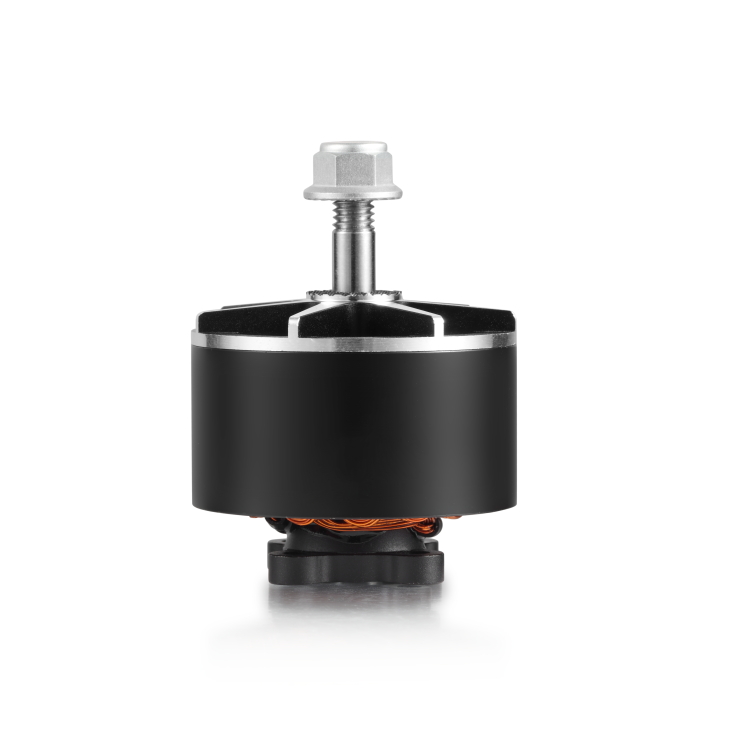
2806 motors represent a step up in diameter, focusing on torque and stability rather than ultra-light responsiveness.
Advantages:
Higher torque → handles larger or high-pitch propellers efficiently
Better stability → ideal for open tracks or heavier drones
Heat handling improved due to larger stator area
Considerations:
Heavier motor → slightly slower acceleration
Less agile in tight freestyle maneuvers
2806 motors are often used in setups prioritizing top-end thrust and stability over ultimate nimbleness, such as long-range or high-speed open-course racing drones.
Motor size and KV rating work together to define performance.
2207 → typically 2300–2700KV for 4S setups
2306 → 2200–2600KV
2806 → 1800–2200KV
Smaller motors with higher KV spin faster but generate less torque, while larger motors with lower KV provide more thrust and better propeller efficiency. The key is to match motor size, KV, propeller pitch, and battery voltage for optimal performance.
| Motor Size | Ideal Use Case | Track Type | Pros | Cons |
|---|---|---|---|---|
| 2207 | Agile freestyle / standard racing | Tight courses | Lightweight, responsive | Less torque for heavy props |
| 2306 | Competitive racing | Mixed tracks | Balanced torque and speed | Slightly heavier |
| 2806 | Open-course or heavy setups | Long straight tracks | High torque, stable | Less nimble in tight maneuvers |
Regardless of size, quality matters. Motors with precise rotor balancing, high-quality bearings, and heat-resistant windings perform better and last longer, especially under aggressive flying conditions. Larger stators, like 2806, naturally dissipate heat more efficiently, but smaller motors can still achieve excellent thermal performance with proper ESC calibration and airflow design.
Selecting the right FPV motor size is a strategic decision that balances agility, torque, thermal handling, and track requirements.
2207 → lightweight, highly responsive, ideal for tight tracks
2306 → balanced, fast, thermally stable, great for mixed tracks
2806 → torque-focused, stable, suited for open or heavy setups
Ultimately, understanding the interplay between stator dimensions, KV rating, propeller compatibility, and battery voltage allows pilots to tailor their motor choice to their flying style and track conditions, optimizing both performance and control in the highly competitive world of FPV racing.
 what's app