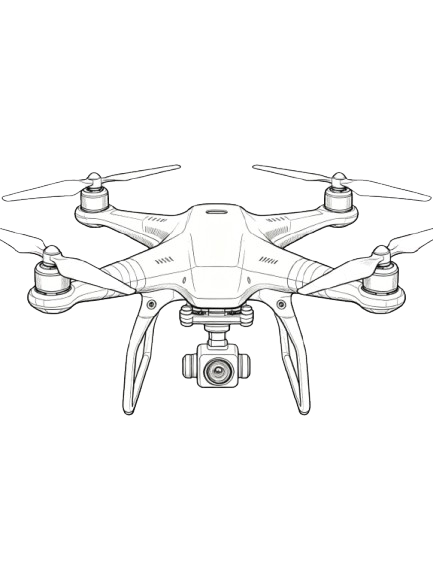
The FPV drone industry continues evolving at an incredible speed in 2026. What once began as a niche hobby for racing enthusiasts has now expanded into a global ecosystem covering freestyle flying, cinematic aerial filming, long-range exploration, drone competitions, and even professional commercial applications. As pilots demand faster acceleration, smoother throttle response, and greater aerial agility, high-speed FPV motors have become one of the most critical technologies driving the next generation of drone performance.
Unlike traditional camera drones that prioritize stability and endurance, FPV drones are designed around speed, responsiveness, and extreme maneuverability. At the center of this performance system is the motor. Almost every modern FPV drone relies on outrunner brushless DC motors, which convert electrical energy into the massive rotational force needed to spin high-pitch propellers at extremely high RPM.
In the FPV industry, “high-speed drone motors” generally refer to high-KV outrunner motors capable of handling high-voltage battery systems such as 4S, 6S, or even 8S LiPo configurations. These motors are designed to instantly release large amounts of power, generating explosive thrust and rapid acceleration during aggressive flight maneuvers.
At BGS Drone Motor Website, we continue developing advanced FPV motor solutions optimized for freestyle drones, racing UAVs, and high-speed FPV applications worldwide.
FPV motors are very different from industrial UAV motors or aerial photography drone systems. Instead of focusing mainly on long endurance and heavy payload capability, FPV motors prioritize rapid throttle changes, lightweight construction, and aggressive power output.
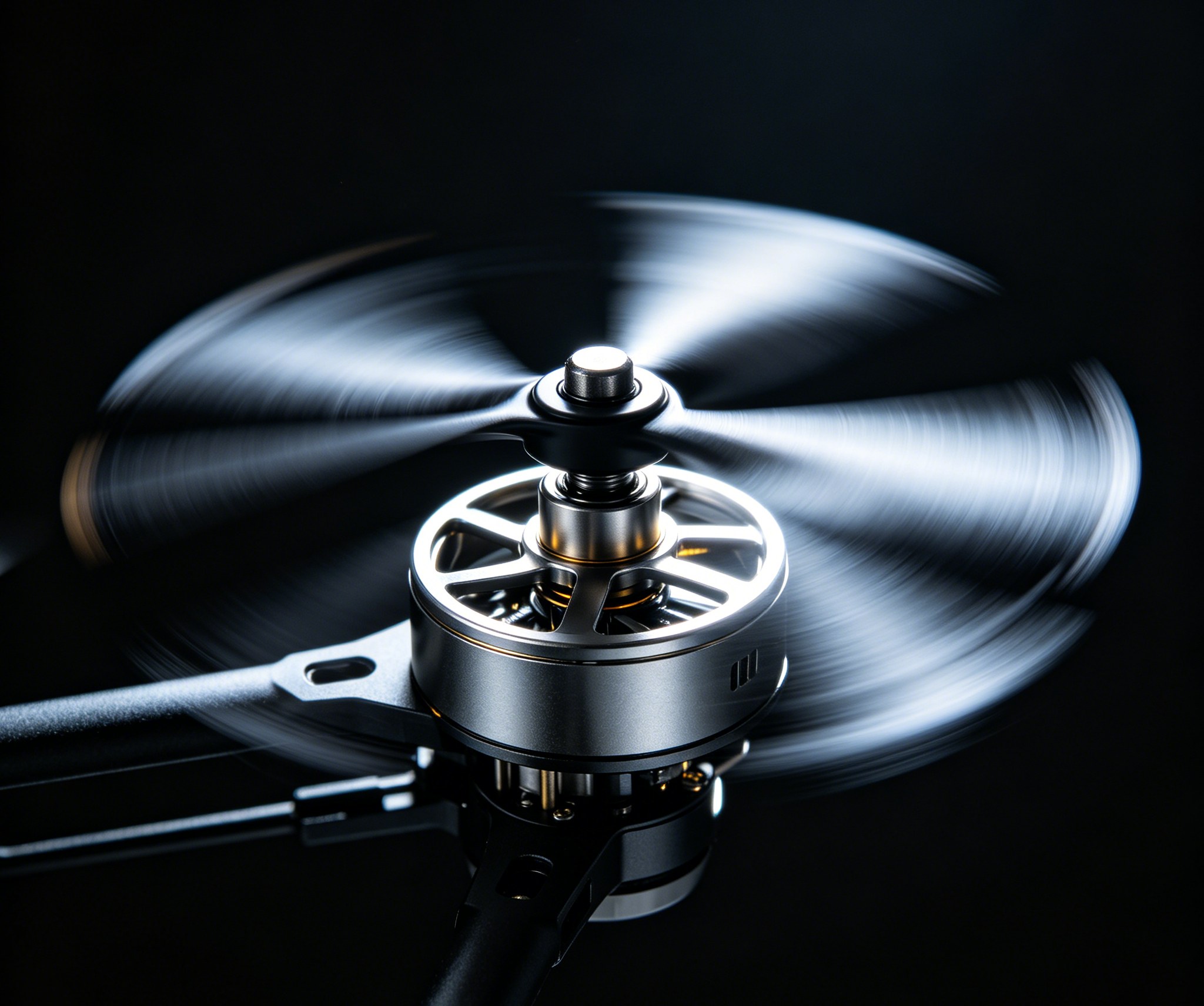
One of the most important characteristics is KV value.
RPM=KV×Voltage
A higher KV motor spins faster per volt applied. This allows FPV drones to achieve incredible acceleration and rapid directional changes, especially when paired with high-voltage battery systems and aggressive propeller designs.
Most modern high-speed FPV motors use outrunner brushless architecture. In this design, the outer shell rotates around the stator, increasing rotational leverage and improving torque generation. This structure allows the motor to spin larger or steeper-pitch propellers while maintaining quick throttle response and efficient cooling performance.
Another defining feature is lightweight engineering. Every gram matters in FPV flight. Manufacturers therefore use CNC-machined aluminum bells, titanium shafts, N52H high-temperature magnets, and optimized stator laminations to reduce rotational inertia while maintaining structural durability.
The result is a motor capable of explosive bursts of power while remaining agile and controllable during high-speed flight.

Among modern freestyle and racing platforms, the BGS 3115 Pro has become a highly balanced solution for pilots seeking both aggressive acceleration and smooth throttle control.
Built specifically for modern 5-inch FPV drones, this motor combines high-efficiency electromagnetic design with optimized airflow cooling and precision rotor balancing. The lightweight outer bell structure improves responsiveness during rapid throttle transitions, while the N52H curved magnet system enhances torque consistency under heavy load.
Supporting both 4S and 6S battery systems, the 3115 Pro is especially suitable for freestyle pilots who demand strong mid-throttle control and stable cornering behavior during technical maneuvers.
Its approximate weight of only 31g also helps reduce overall drone mass while maintaining excellent power output.
The T-Motor F60 series remains one of the most recognizable names in FPV racing. Known for its aggressive acceleration and extremely fast spool-up speed, the F60 Pro V is designed for competitive pilots who require instant power delivery and high-RPM stability.
The reinforced bell structure improves crash resistance while the precision bearing system enhances smoothness during sustained high-speed flight. With KV options ranging from 2020KV to 2550KV, the F60 Pro V performs exceptionally well in both 4S and 6S racing setups.
The XING2 platform has become one of the most popular freestyle motor series worldwide because of its balance between smooth throttle feel and explosive punch.
Its titanium alloy shaft improves structural strength while reducing weight, and the unibell construction helps improve durability during hard crashes. Many freestyle pilots appreciate the XING2 because of its predictable throttle curve and stable control during cinematic movements.
For pilots seeking an all-around freestyle motor with excellent reliability, the XING2 remains one of the safest choices in 2026.
BrotherHobby has long been respected for producing powerful FPV motors with outstanding build quality. The Avenger 2507 is especially popular among cinematic freestyle pilots and heavier 6-inch drone platforms.
Its larger stator volume allows the motor to generate stronger low-end torque while maintaining excellent efficiency at higher throttle ranges. This makes it particularly suitable for aggressive freestyle tricks, high-speed dives, and cinematic cruising with action cameras.
The Wasp Major V2 is widely regarded as one of the most powerful freestyle motors available today. Designed with thick copper windings and a highly responsive magnetic structure, this motor delivers extremely aggressive acceleration while maintaining excellent control precision.
Many advanced FPV pilots prefer RCINPOWER motors because of their strong power density and smooth throttle linearity. The Wasp Major V2 performs especially well during rapid punch-outs and technical freestyle maneuvers requiring precise throttle modulation.
Not every FPV pilot wants to spend premium-level budgets on motors. The EMAX ECO II series has therefore become extremely popular by offering strong performance at a more affordable price point.
Despite its lower cost, the ECO II still delivers solid efficiency, lightweight construction, and reliable freestyle capability. This motor is particularly suitable for beginner and intermediate pilots building their first 5-inch FPV drone.
Foxeer’s Datura series focuses heavily on responsive throttle behavior and stable high-speed handling. The motor’s balanced power curve makes it highly suitable for aggressive freestyle flying where pilots constantly transition between rapid acceleration and precision control.
Its lightweight rotor structure also helps improve rotational responsiveness during sharp directional changes.
The MEPS NEON series gained significant popularity throughout 2026 thanks to its excellent balance between efficiency, aesthetics, and freestyle performance.
Its optimized wiring layout improves durability while reducing electrical resistance, and the lightweight construction helps maintain agile flight behavior even during high-speed freestyle sessions.
For pilots seeking absolute speed, the T-Motor F80 Pro represents one of the most extreme FPV motor platforms currently available.
Its large stator structure and high-power configuration make it suitable for ultra-fast racing drones and experimental high-speed FPV aircraft. Although heavier than standard 2207 motors, the F80 Pro delivers enormous thrust output and exceptional top-end speed capability.
Not all high-speed FPV systems are large. In the growing micro FPV segment, BetaFPV’s 1404 series remains one of the most popular lightweight motor options.
With KV ratings reaching 4500KV, these motors deliver explosive acceleration for compact racing drones and indoor freestyle builds. Their extremely low weight allows micro drones to remain highly agile while still achieving impressive speed.
Choosing the correct FPV motor depends heavily on flight style and aircraft configuration.
Racing pilots generally prefer high-KV motors with rapid spool-up speed and lightweight construction. Motors in the 2207 or 2306 class with KV values between 2000KV and 2600KV remain common for competitive racing environments.
Freestyle pilots often prioritize smoother throttle response and stronger mid-range torque. Slightly lower KV motors usually provide better control during cinematic maneuvers and technical tricks.
Long-range FPV builds require a completely different balance. Instead of maximizing raw acceleration, these drones focus more on efficiency, lower heat generation, and stable cruising performance over extended distances.
For cinematic FPV and cinewhoop platforms, low vibration and precise hovering control become especially important. Lower KV motors paired with larger propellers often help create smoother footage and improved stability.
As a professional outrunner drone motor manufacturer, BGS focuses specifically on high-performance UAV propulsion systems for FPV, freestyle, racing, and industrial drone applications.
Compared with conventional hobby-grade motors, BGS FPV motors emphasize:
High-efficiency electromagnetic structures
Stable high-RPM performance
Optimized heat dissipation
Precision dynamic balancing
Lightweight rotor design
Durable CNC aluminum construction
Strong compatibility with modern 6S systems
Our engineering team continuously optimizes stator structures, winding configurations, and airflow cooling systems to improve throttle response and long-term reliability under aggressive flight conditions.
With over 30 years of motor manufacturing experience behind the BGS platform, we continue supporting global UAV brands, drone integrators, and FPV pilots with customized motor solutions designed for modern high-speed drone applications.
FPV motor technology continues advancing rapidly as manufacturers compete to improve both efficiency and raw performance.
Some of the biggest trends in 2026 include:
Higher voltage compatibility
Stronger N52H magnet systems
Lightweight unibell structures
Improved cooling airflow designs
Lower latency throttle response
Better crash durability
AI-assisted ESC optimization
As FPV drones become faster and more technically advanced, motor systems will remain at the center of innovation.
High-speed FPV drone motors are the true heart of modern racing and freestyle UAV systems. Their ability to generate explosive power, rapid acceleration, and precise throttle response directly determines how a drone performs in the air.
From lightweight racing builds to aggressive freestyle platforms and cinematic FPV systems, selecting the correct motor requires balancing KV rating, stator size, voltage compatibility, torque characteristics, and overall flight style.
At BGS Drone Motor Website, we continue developing high-performance FPV outrunner motors engineered for modern drone applications, helping pilots and UAV manufacturers achieve stronger thrust, smoother control, and more reliable high-speed flight performance in the rapidly evolving FPV industry.
 what's app