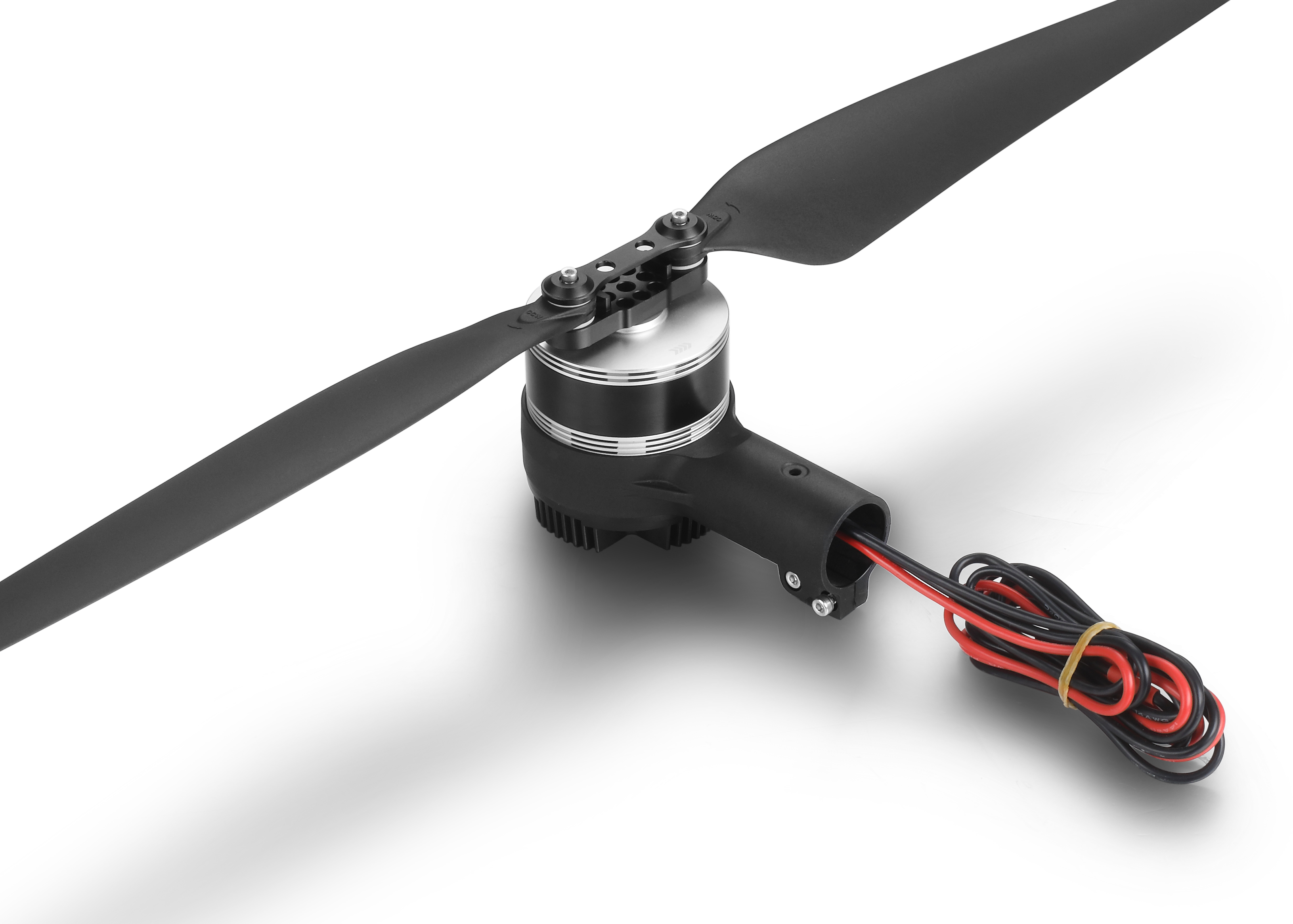
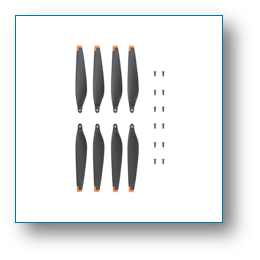
 Choosing the right drone motor size is one of the most important decisions in UAV propulsion design. Motor size directly affects the frame size, propeller diameter, battery voltage, total aircraft weight, available thrust, flight endurance, and even the flight characteristics of the drone.
A motor that is too small may not generate enough thrust for the aircraft, while a motor that is too large can add unnecessary weight and increase power consumption. The right combination of motor size + KV + propeller + battery + aircraft weight is what determines whether the propulsion system works efficiently.
BG Motor's UAV motor portfolio covers FPV motors, multi-rotor motors, fixed-wing motors, and vertical motors, allowing you to select a motor according to the actual mission of your aircraft. Explore BG Motor UAV Motors
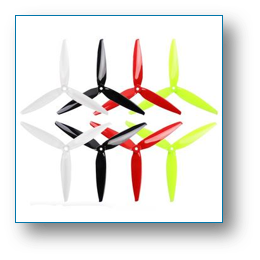 A motor model such as 3115, 3110, 3520, or 5315 is not just a product number. In most brushless outrunner motors, the first two digits generally indicate the stator diameter, while the last two digits indicate the stator height.
For example:
3115 = approximately 31 mm stator diameter + 15 mm stator height
The larger the stator, the greater the electromagnetic volume available for generating torque. However, motor size alone does not determine thrust. KV, winding configuration, battery voltage, propeller size, and motor efficiency must also be considered.
BG Motor's 3115, for example, has a 31 mm × 15 mm stator configuration and is designed for applications requiring strong torque and larger propellers. The current 3115 product is available in multiple KV configurations and supports different battery and propeller combinations.
| Motor Size | Typical UAV Positioning | Typical Application Direction |
|---|---|---|
| 1107 | Micro / ultra-light UAV | Small FPV, indoor or lightweight platforms |
| 2202 | Small UAV | Micro FPV, lightweight fixed-wing or compact multirotor |
| 3110 | Medium FPV / long-range UAV | 8–10 inch FPV, cinematic, logistics and payload applications |
| 3520 | Larger multirotor | Industrial, agricultural and medium-payload UAVs |
| 4720 | Large industrial UAV | Heavy-payload multirotor and professional UAV platforms |
| 5315 | Large / heavy-lift UAV | 15-inch+ industrial, inspection, mapping and logistics UAVs |
Important: these are application-oriented size categories, not universal industry standards. The same motor size can be wound with different KV values and matched with different propellers, so the final aircraft size should always be determined from the complete propulsion system.
For example, BG Motor's 3110 is specifically listed for 9–10 inch long-range, freestyle, cinematic and heavy-payload FPV drones, while its 5315 is positioned for 15-inch-class professional UAVs and larger industrial platforms.
The motor is not an isolated component. Once you change the motor size, you may also need to change the propeller, frame, battery, ESC and even the aircraft's structural design.
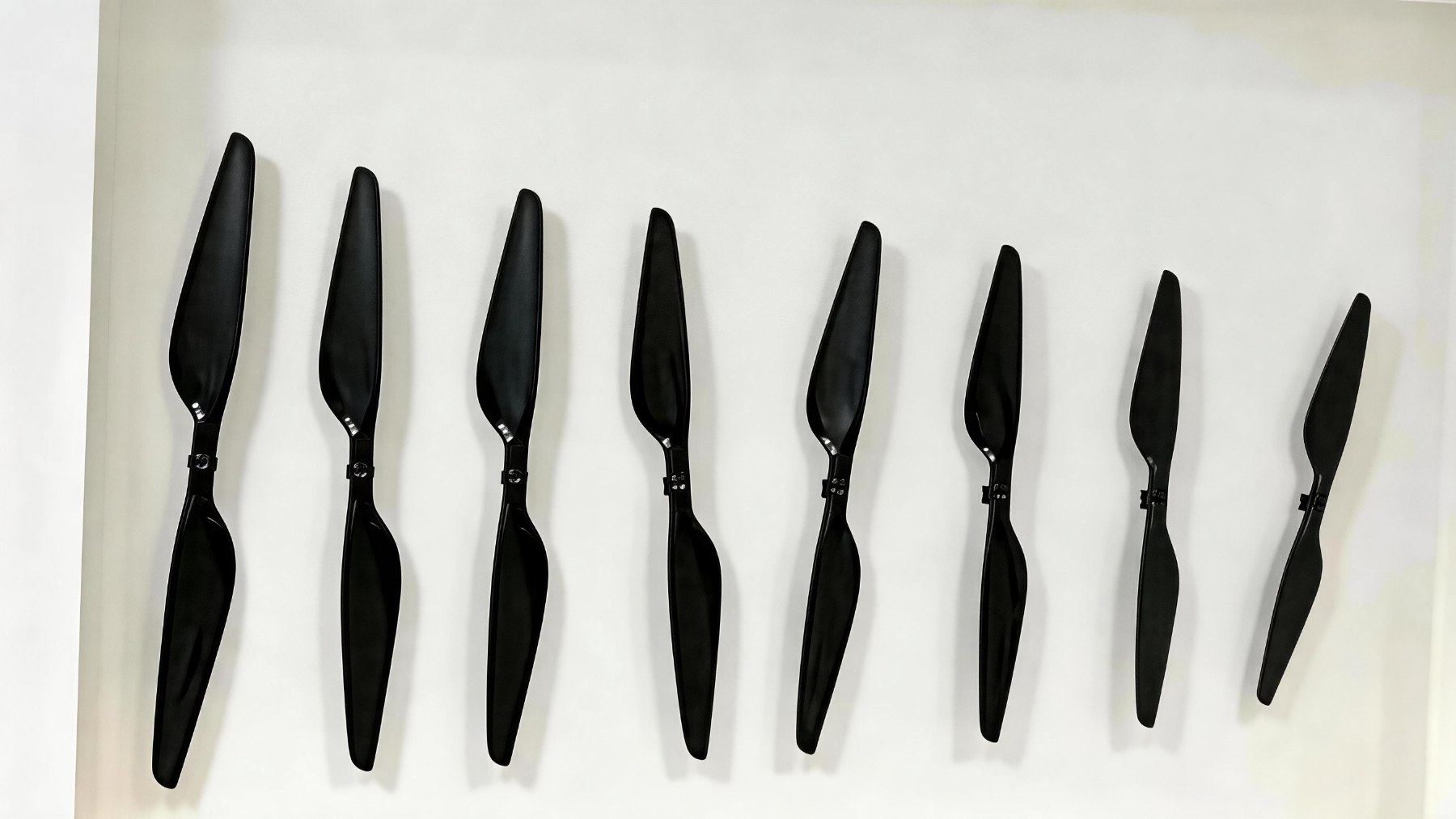
A larger motor normally requires a larger mounting structure and greater spacing between motors. If you install a large motor on a frame designed for a smaller propulsion system, the motor may physically fit but the propeller may not have enough clearance.
For this reason, motor selection should be considered at the same time as your frame design.
A 5-inch FPV drone, for example, needs a completely different propulsion system from a 15-inch industrial UAV. BG Motor's product portfolio separates its motors into FPV, multi-rotor, fixed-wing and vertical applications for this reason.
This is one of the most important relationships in UAV propulsion.
A larger motor generally provides the torque needed to drive a larger propeller, while a smaller high-KV motor is usually better suited to a smaller propeller and higher rotational speed.
The BG Motor 3110, for example, is specified for 9-inch and 10-inch propellers, while the 5315 is designed around much larger propellers in the 15–18 inch range.
The wrong combination can cause the motor to draw excessive current, generate too much heat, or operate outside its efficient range.
Battery voltage and KV are closely related.
A high-KV motor generally reaches higher RPM at a given voltage, while a lower-KV motor is often used with larger propellers and higher-voltage battery systems.
For example, BG Motor's 3115 is available in configurations such as 400KV, 640KV, 900KV and 1050KV, with different propeller and battery combinations. Its published test data includes 6S, 8S and 12S configurations depending on the winding and application.
This means you should never select the battery only from the motor size. You need to look at the specific KV winding and the manufacturer's recommended operating data.
Different UAV missions have very different propulsion requirements.
An FPV racing drone may prioritize acceleration and rapid throttle response. A mapping UAV needs stable and efficient cruising. An agricultural drone needs high torque and reliable continuous operation under heavy payloads. A fixed-wing aircraft needs a propulsion system optimized for efficient forward flight rather than continuous hovering.
The following table provides practical reference points based on BG Motor's published motor data and application information.
| UAV Application | Motor Example | Propeller Reference | Battery Reference | KV Reference |
|---|---|---|---|---|
| Micro / lightweight FPV | 1107-class | Small FPV propeller | 1–2S | High KV |
| Small FPV / compact UAV | 2202-class | Small FPV propeller | 3–4S | High KV |
| 5-inch FPV racing / freestyle | 3115-class or smaller FPV motor | 5-inch class | 4–6S | Medium/high KV |
| 8–10 inch long-range FPV | 3110 | 9–10 inch | 6S | 900–1250KV |
| 10-inch logistics / payload multirotor | 3115 | 9–10 inch | 6–12S depending on KV | 400–1050KV |
| Agricultural spraying UAV | 3520 / larger industrial motor | 12–15+ inch | 4–6S or application-specific | Lower KV |
| Fixed-wing mapping UAV | 4120 / similar fixed-wing motor | 14-inch class | 6S | Around 560KV |
| Heavy-lift / industrial UAV | 5315 | 15–18 inch | 6–12S | Around 280–400KV |
The exact combination must be confirmed through motor thrust testing rather than the motor model alone. For example, BG Motor's 3110 data shows 900KV and 1250KV configurations using 6S batteries and 9–10 inch propellers, while its 5315 material describes 15–18 inch propellers and lower KV configurations for industrial UAVs.
FPV drones usually need fast acceleration and rapid throttle response. Therefore, the motor tends to work with a smaller propeller and a relatively higher KV configuration.
For larger FPV platforms, the 3110 is a useful example. BG Motor specifies the 3110 for 9–10 inch long-range, freestyle, cinematic and heavy-payload FPV applications, with 900KV and 1250KV options.
For more compact FPV platforms, BG Motor also offers smaller high-KV motors designed for rapid response and lightweight construction.
Logistics drones normally need a stronger balance between payload, efficiency and endurance. The motor must provide sufficient thrust without continuously operating close to its maximum load.
BG Motor's 3115 900KV is presented for logistics transportation UAV applications, with the company reporting testing with large propellers and continuous operation requirements.
Agricultural spraying drones carry liquid payloads and therefore require high thrust and stable operation throughout the flight.
BG Motor's 3520-class motor solutions are positioned for agricultural spraying applications, while its larger agricultural motor range provides higher torque and thrust for larger aircraft. For example, its H4114 is specified with 13–18 inch propeller options and 6S configurations.
Fixed-wing UAVs have different propulsion requirements because they do not need continuous vertical lift from the motor.
The focus is usually on efficient forward propulsion, stable output and endurance. BG Motor's fixed-wing range includes long-shaft motors such as the FW2814, while larger fixed-wing applications can use higher-power motor configurations.
For example, BG Motor's website presents a 4120 560KV configuration for a 7 kg fixed-wing mapping UAV using a 14×7 propeller and 6S battery.
For inspection, mapping, emergency response and logistics applications, the aircraft becomes heavier and the propulsion system needs more torque reserve.
The 5315 is positioned for this type of application. Its larger 53 mm × 15 mm stator provides substantially more torque than smaller motor sizes and is designed to efficiently drive 15–18 inch propellers.
An incorrectly selected motor can affect much more than flight performance.
Insufficient Thrust
If the motor cannot generate enough thrust, the drone may struggle to take off, hover, climb or carry its intended payload. You may also have insufficient thrust reserve when flying in strong wind or performing emergency maneuvers.
If the motor is too small for the propeller, or if the propeller is too aggressive for the selected KV and battery, the motor may draw excessive current.
This can cause overheating in the motor, ESC, wiring and battery.
A motor that operates outside its efficient range can consume significantly more power during normal flight. Even when the drone can fly successfully, the actual endurance may be much lower than expected.
An unsuitable motor-propeller combination, poor dynamic balance, or an overloaded motor can increase vibration. This is particularly important for mapping, surveying and aerial photography because vibration can affect image quality and sensor accuracy.
Continuous operation at excessive current and temperature puts additional stress on the motor windings, magnets, bearings and ESC. For commercial UAVs that fly frequently, this can directly increase maintenance and replacement costs.
If the motor has too much inertia or does not provide the required torque and response characteristics, the flight controller may have difficulty achieving the expected control response.
Therefore, "the motor can lift the drone" does not mean the propulsion system is correctly matched. A good propulsion system needs sufficient thrust reserve while remaining within an efficient and thermally safe operating range.
In most cases, you should use motors with the same specifications on the same propulsion system.
Different motor sizes can have different KV, torque, weight, current and response characteristics, which can cause inconsistent thrust between motors. This is particularly problematic for multirotors because the flight controller expects the propulsion units to respond consistently.
For a special aircraft architecture, mixed motor configurations may be possible, but this should be designed and tested as a complete propulsion system.
They can sometimes be physically compatible, but physical compatibility does not mean performance compatibility.
Before replacing a motor, you should compare:
Motor size
KV
Weight
Shaft diameter
Mounting pattern
Recommended propeller
Battery voltage
Maximum current
Maximum power
Thrust curve
If these parameters are significantly different, simply replacing one motor with another may require changing the propeller, ESC or battery as well.
No.
A larger motor normally has greater torque potential, but actual thrust depends on the complete propulsion system.
A large motor with an unsuitable KV or propeller may perform worse than a smaller motor that is correctly matched to the aircraft.
Think of KV as part of the relationship between motor speed, battery voltage and propeller load.
Higher KV is generally associated with higher rotational speed and smaller propellers, while lower KV is commonly used with larger propellers and higher-voltage systems.
However, you should use the manufacturer's thrust test data whenever possible rather than selecting KV based only on the motor size.
Before each flight, check whether the motor rotates smoothly and whether there is unusual noise, excessive bearing play, or visible damage.
You should also inspect the propeller and motor mounting screws because an unbalanced or damaged propeller can increase vibration and place additional load on the motor.
For commercial UAVs, it is useful to keep operating records for motor temperature, current, flight hours and abnormal vibration. This allows you to identify potential problems before they become a flight failure.
Yes. This is especially important for OEM drone manufacturers that need a specific shaft, winding, KV, mounting pattern, cable length, connector, weight or performance target.
BG Motor provides UAV motors across FPV, multi-rotor, fixed-wing and vertical applications, and its product pages provide technical specifications and application information for different motor configurations. BG Motor FPV Motors BG Motor Multi-Rotor Motors BG Motor Fixed-Wing Motors
The right drone motor is not determined by size alone. You need to consider motor dimensions, KV, propeller diameter, battery voltage, aircraft weight, required thrust, flight time, ESC capacity and the actual mission together.
For a small FPV drone, a compact high-KV motor may be the right choice. For a 10-inch logistics UAV, a higher-torque 3110 or 3115-class motor may be more suitable. For agricultural and industrial platforms, larger low-KV motors can provide the torque required for larger propellers and heavier payloads. For 15-inch-class heavy-lift UAVs, the 5315 offers a much larger torque and propeller capability.
If you are developing a new UAV and already know your aircraft weight, propeller size, battery voltage, target flight time and payload, you can use these parameters as the starting point for motor selection.
For OEM and industrial UAV projects, you can also contact BGS Motor for a customized propulsion solution rather than selecting a motor only by its model number.
 what's app