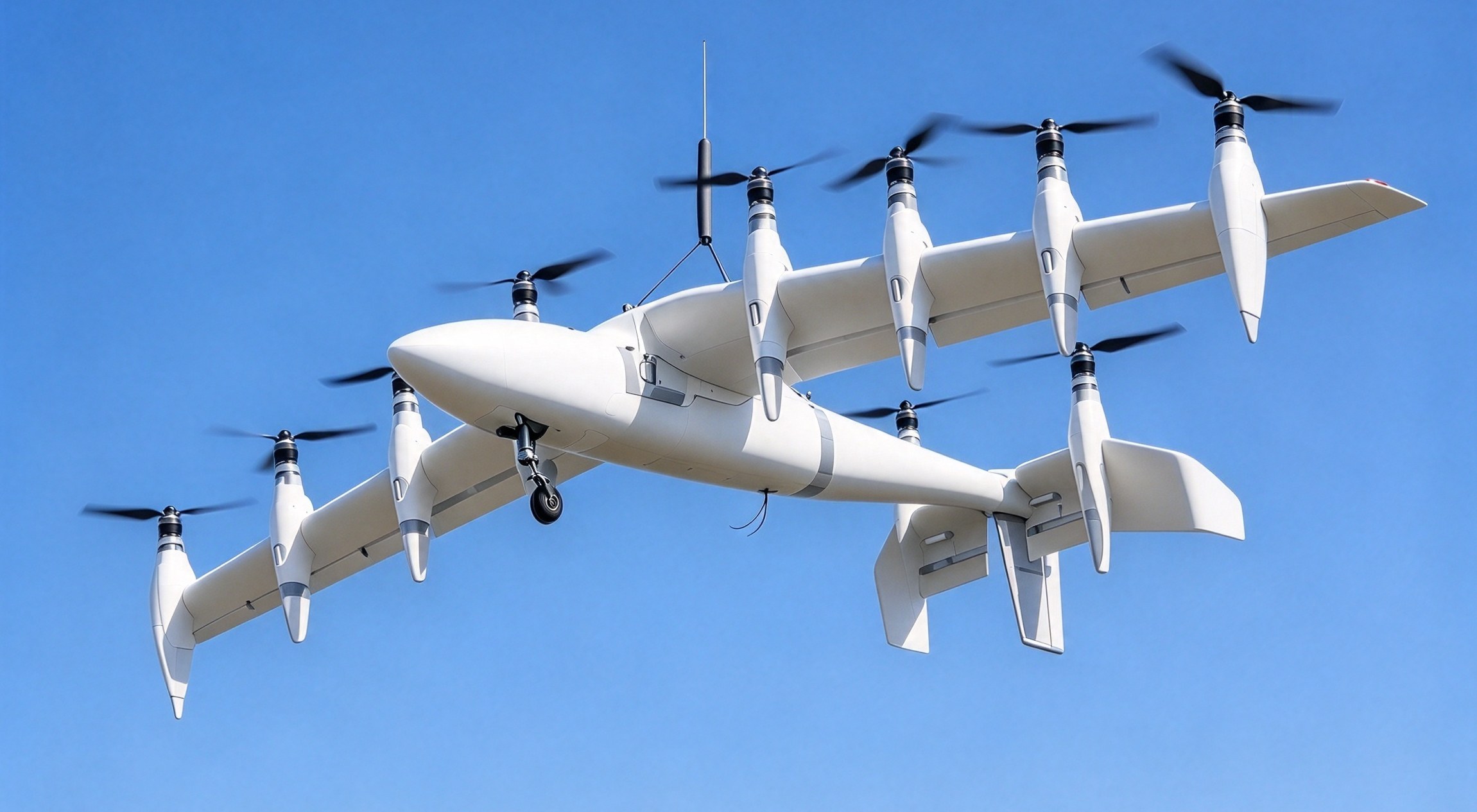
Unlike conventional fixed-wing drones, which rely on forward speed to generate lift, or multirotor drones, which depend on rotor thrust to remain airborne, VTOL (Vertical Take-Off and Landing) drones must perform both functions within a single flight system.
During vertical take-off, the propulsion system must generate enough thrust to lift the aircraft against gravity. Once airborne, the motors must maintain stable thrust during hovering and respond quickly to changing loads during the transition to forward flight. In cruise mode, the propulsion system must support efficient forward movement while minimizing energy consumption.
These different operating conditions create a major engineering challenge: a motor system optimized for hovering may not be the most efficient solution for forward cruise.
For motor designers, the objective is not simply to maximize power or thrust, but to maintain suitable performance across the entire flight envelope.
During vertical take-off and hovering, the propulsion system must continuously generate enough vertical thrust to balance the aircraft's weight. Unlike fixed-wing cruise, where the wings provide most of the lift, VTOL aircraft rely heavily on their vertical-lift propulsion system during these stages.
Motor torque, rotational speed and propeller matching directly influence thrust output and hovering stability. Since hovering can consume a significant portion of the available energy, motor efficiency and thermal management are also essential, particularly for aircraft carrying heavy payloads or operating for extended periods.
A motor that delivers high peak thrust but experiences excessive temperature rise during sustained operation may not be suitable for demanding VTOL missions.
The transition from hovering to forward flight introduces a different set of propulsion requirements. As the aircraft accelerates, aerodynamic forces change, and the wings gradually take over more of the lift-generation task.
Depending on the VTOL configuration, the vertical-lift motors may need to reduce their output or shut down, while dedicated cruise motors increase thrust to accelerate the aircraft. In other designs, the same propulsion units must change their operating conditions as the aircraft transitions between flight modes.
This process requires coordinated control, rapid motor response and predictable thrust delivery. If motor output does not match the flight controller's commands, the aircraft may experience unwanted attitude changes, increased energy consumption or reduced transition stability.
The challenge is not simply generating more power, but delivering the right thrust at the right time.
Once the aircraft reaches forward cruise, the wings provide most of the lift, and propulsion is primarily required to overcome aerodynamic drag.
At this stage, maximum static thrust is no longer the only meaningful performance indicator. The motor must operate efficiently at the required cruising speed, with appropriate propeller matching, manageable temperature rise and sufficient power reserves for changing flight conditions.
A motor designed primarily for high static thrust may not provide the best efficiency during cruise. Conversely, a motor optimized for efficient forward flight may not deliver sufficient thrust for vertical take-off.
This is why VTOL propulsion design often involves balancing two different objectives: high thrust for vertical flight and efficient power delivery for forward flight.
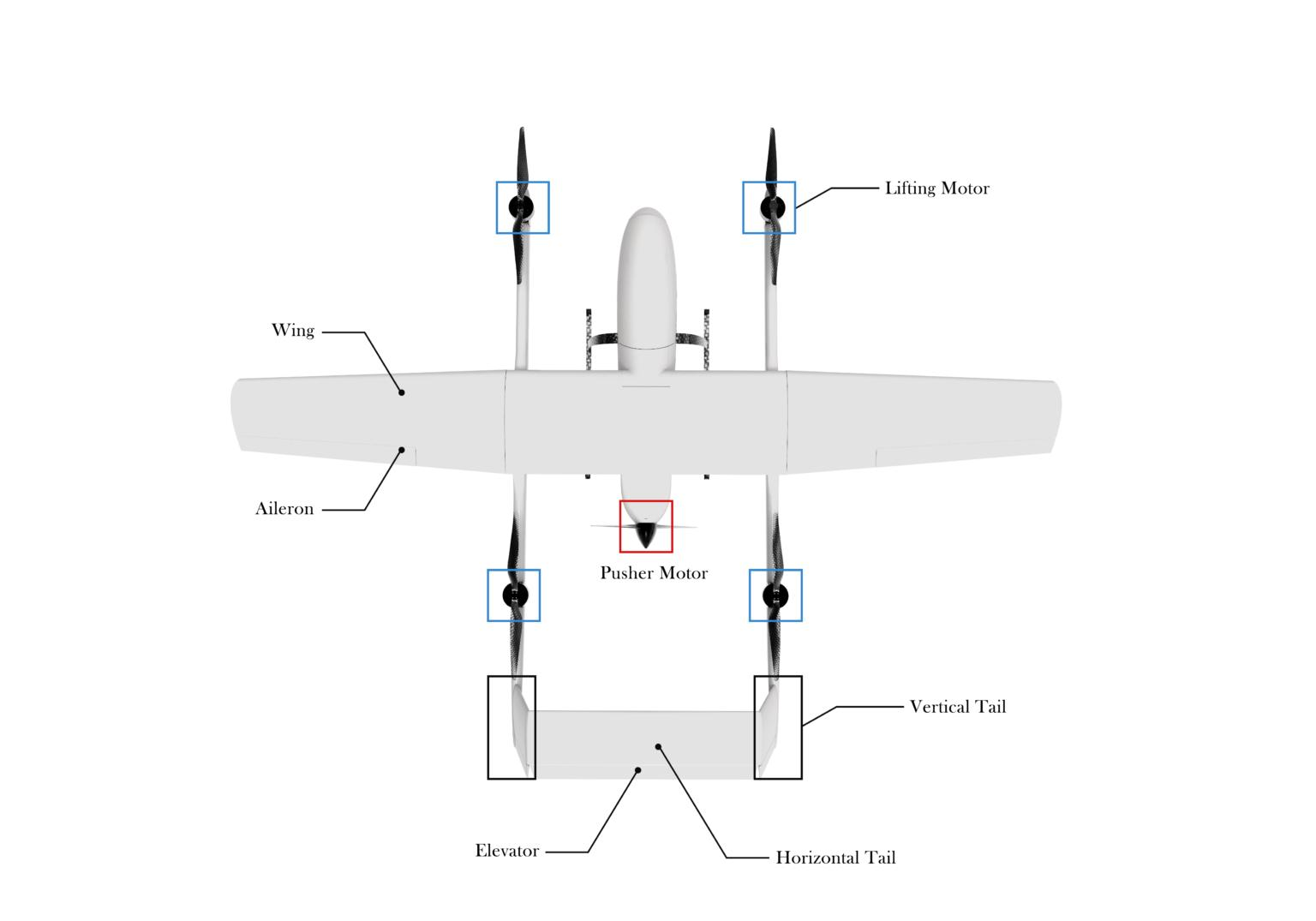
VTOL drones have different motor requirements from conventional fixed-wing or multirotor UAVs. During vertical take-off and hovering, motors must provide sufficient lifting force, while forward flight requires stable and efficient propulsion. Therefore, VTOL motors need to balance thrust, rotational speed, efficiency, and thermal performance.
During vertical take-off, lift motors must support the entire aircraft, including its battery, payload, and onboard equipment. Insufficient thrust can make take-off difficult and reduce the aircraft's ability to maintain stable hovering.
For example, a VTOL drone weighing 20 kg with four lift motors requires each motor to provide at least 5 kgf of thrust under ideal hovering conditions. In actual applications, additional thrust capacity is necessary to provide room for maneuvering, payload changes, and external disturbances.
However, higher thrust does not always mean better performance. Motor weight also affects the aircraft's total weight and payload capacity. Engineers should therefore consider both thrust output and motor weight when selecting lift motors.
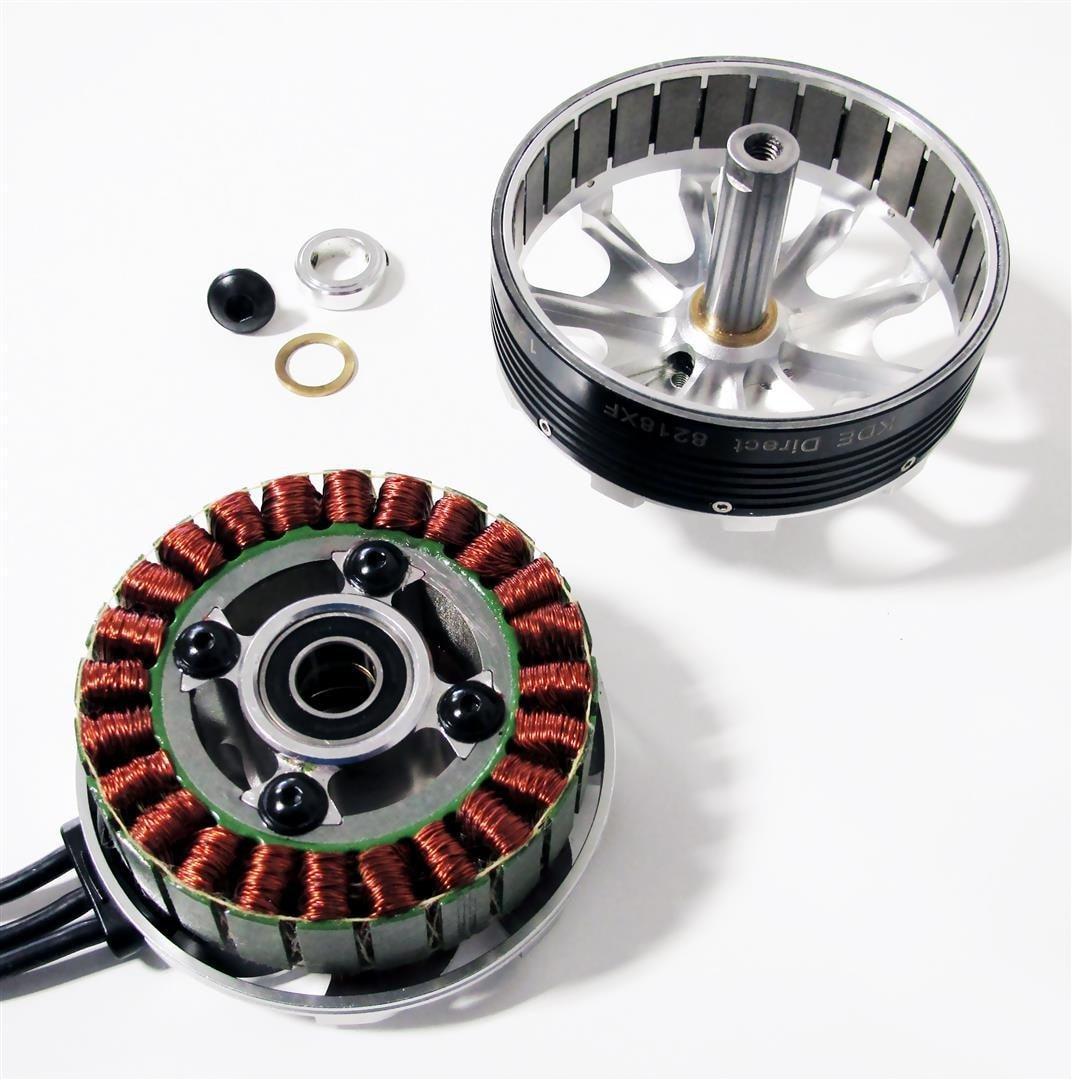
KV determines a brushless motor's approximate rotational speed per volt. It is an important parameter when matching motors with battery voltage and propeller size.
Generally, higher-KV motors are suitable for higher rotational speeds and smaller propeller configurations, while lower-KV motors are commonly used with larger propellers and lower operating speeds.
For VTOL drones, lift motors and cruise motors may require different KV ratings because they perform different tasks. Lift motors focus on generating sufficient vertical thrust, while cruise motors need to provide efficient forward propulsion.
The right KV rating should always be selected according to battery voltage, propeller size, required thrust, and actual operating conditions rather than simply choosing a higher or lower value.
A motor may deliver high thrust during a short test, but maintaining stable performance over a longer flight is a different challenge.
During hovering and repeated take-offs, lift motors can operate under considerable loads. Continuous high current generates heat inside the windings, and excessive temperature rise may reduce efficiency and affect motor reliability.
Several factors influence motor temperature, including winding resistance, operating current, motor structure, cooling conditions, and flight duration.
For VTOL applications, engineers should pay particular attention to continuous power output and temperature rise rather than relying only on peak power ratings. A motor that can maintain stable output under continuous load is more suitable for demanding flight missions.
VTOL aircraft need stable motor output during take-off, hovering, and the transition to forward flight. Motors must respond effectively to changing loads so that the aircraft can maintain balanced thrust.
In multi-motor configurations, consistency between motors is especially important. Differences in rotational speed or thrust output may affect the aircraft's stability and increase the workload of the flight-control system.
Motor performance is influenced by rotor design, winding consistency, ESC compatibility, and propeller loading. Therefore, engineers should consider not only the performance of an individual motor but also the consistency of multiple motors operating together.
Choosing a suitable motor for a VTOL drone requires more than checking its rated power or maximum thrust. Engineers need to consider aircraft weight, required thrust, propeller size, battery voltage, and operating time to find a balanced motor configuration.
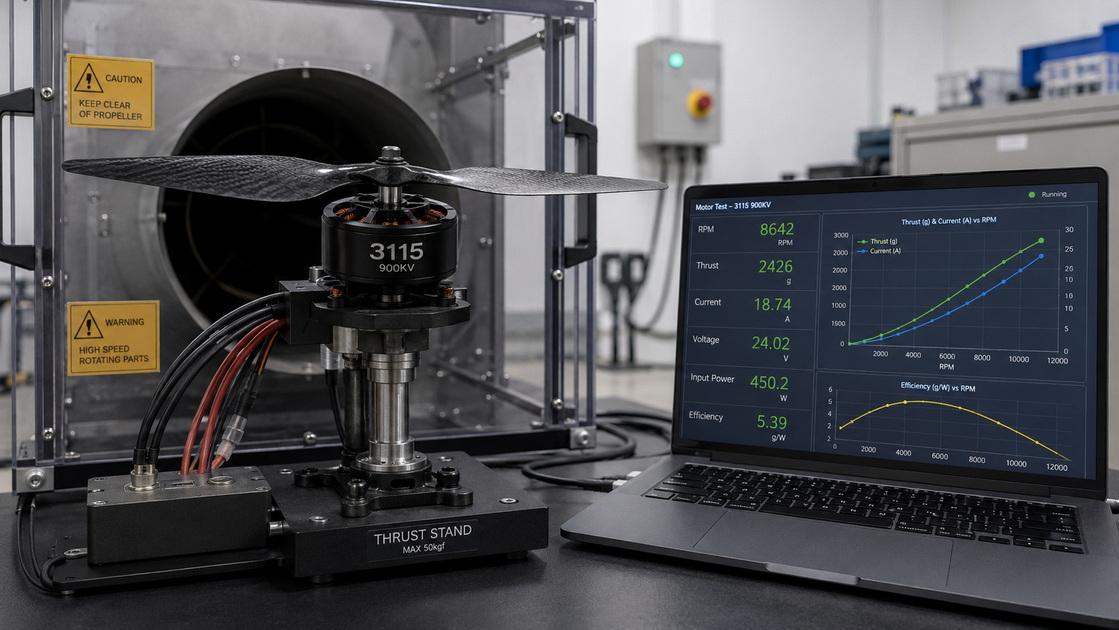
The first step is to calculate the total thrust required by the aircraft and distribute it across the lift motors.
For example, a VTOL drone with a maximum take-off weight of 20 kg and four lift motors needs approximately 5 kgf of thrust per motor to hover under ideal conditions. However, this is only the minimum requirement. Additional thrust capacity should be considered to support take-off, maneuvering, and changing payload conditions.
The actual thrust target depends on aircraft structure, motor quantity, payload, and flight requirements. Selecting motors with insufficient thrust may limit flight performance, while excessive motor capacity can increase weight and power consumption.
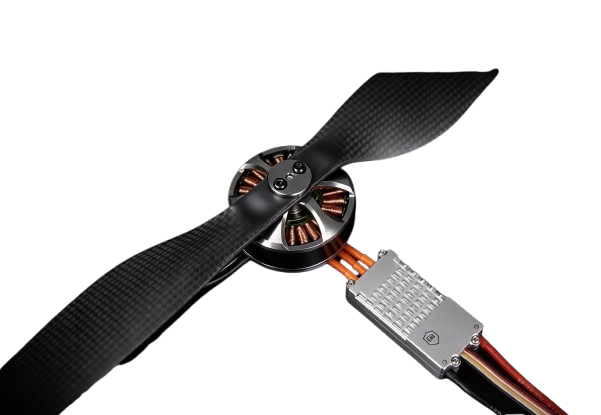
The propeller directly affects motor loading, rotational speed, thrust, and power consumption.
Larger propellers can generate substantial thrust at relatively lower RPM, making them useful for many vertical lift applications. However, they also place greater loads on the motor and require sufficient installation space.
Smaller propellers generally operate at higher RPM and may be more suitable for different propulsion requirements.
When selecting a propeller, engineers should consider its diameter, pitch, required thrust, and compatibility with the motor. The best combination should be confirmed through actual testing rather than relying on propeller size alone.
Motor KV and battery voltage must work together to achieve the required rotational speed.
A high-KV motor operating at an unsuitable voltage or with an oversized propeller may draw excessive current. On the other hand, a motor with an unsuitable low-KV configuration may not reach the RPM required by the selected propeller.
For VTOL applications, engineers should evaluate motor KV, battery voltage, and propeller load as a complete combination. This helps prevent excessive current consumption and ensures that the motor operates within a suitable performance range.
Thrust alone cannot determine whether a motor is suitable for a VTOL drone. Two motors may produce similar thrust but consume different amounts of electrical power.
Engineers should compare current consumption and power requirements at similar thrust levels. A motor that generates the required thrust with lower power consumption may help improve overall flight efficiency.
Temperature is equally important, especially for lift motors that need to operate continuously during hovering. If a motor becomes excessively hot under normal operating loads, its long-term reliability may be affected.
Therefore, both efficiency and temperature rise should be checked before finalizing the motor configuration.
Product specifications provide a starting point, but actual test results are essential for confirming motor suitability.
Before selecting a motor for a VTOL project, engineers should pay attention to several key test parameters:
Thrust: Whether the motor can meet the aircraft's lifting requirements.
RPM: Whether it matches the selected propeller.
Current consumption: Whether the electrical load is within the motor and ESC limits.
Power consumption: Whether the motor operates efficiently at the required thrust.
Temperature rise: Whether it can maintain stable performance under continuous operation.
Testing different propeller and voltage combinations can help engineers identify a more suitable configuration for the aircraft.
Ultimately, the right VTOL motor is not simply the one with the highest power or thrust rating. It is the one that delivers the required lifting force and propulsion efficiency while maintaining stable operation under actual flight conditions.
BGS Motor provides brushless outer-rotor motor solutions for various UAV applications. By considering aircraft weight, propeller requirements, battery voltage, and target thrust, BGS Motor can help customers evaluate suitable motor configurations for their VTOL projects.
A more reliable approach is to evaluate motor performance against the aircraft's actual flight profile.
First, determine the thrust required for vertical take-off and hovering, including the aircraft's maximum take-off weight and an appropriate thrust margin. Next, evaluate the motor's efficiency and thermal performance under sustained loading rather than relying exclusively on short-duration peak test results.
For the cruise propulsion system, engineers should assess the expected flight speed, propeller characteristics, required shaft power and energy consumption. KV, supply voltage and propeller size must be considered together, because changing one parameter can affect current draw, rotational speed, thrust and efficiency.
Finally, the propulsion system should be evaluated across the transition between flight modes, where changing loads and control commands can reveal performance limitations that are not obvious during static testing.
For motor manufacturers, this means that successful VTOL propulsion design depends on more than producing a motor with high output. It requires matching the motor's electromagnetic design, operating speed, thermal characteristics and mechanical configuration to the aircraft's real operating conditions.
VTOL drones place different demands on their propulsion systems throughout a single mission. Vertical take-off requires sufficient thrust, hovering demands stable and thermally sustainable output, transition requires responsive power delivery, and forward cruise places greater emphasis on propulsion efficiency.
These changing requirements explain why VTOL motor systems are more complex than those designed for a single flight mode. The best solution is not necessarily the motor with the highest power or thrust, but the propulsion system that maintains the right balance of performance, efficiency and reliability across the entire flight envelope.
 what's app