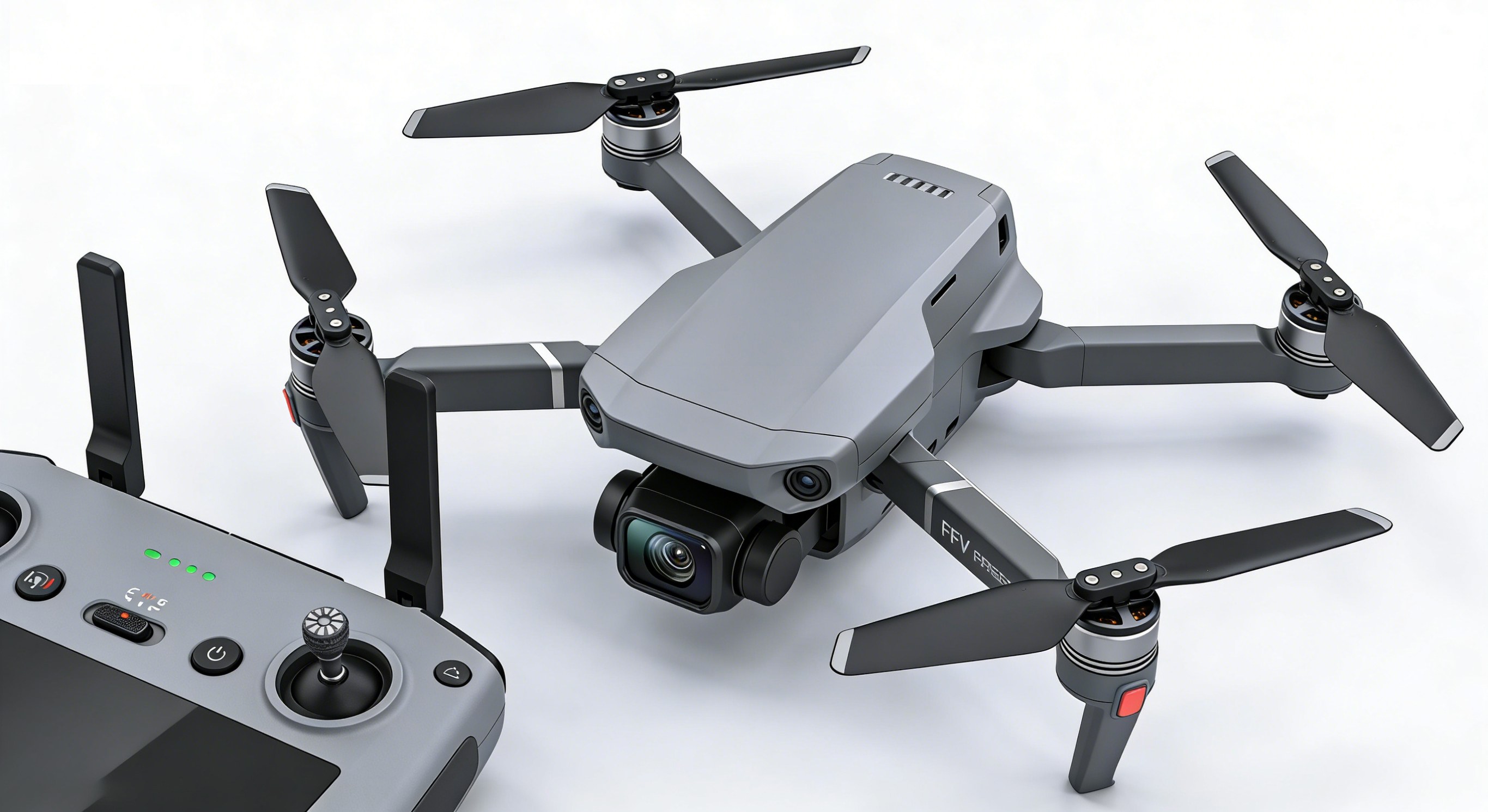
Long-range FPV missions are becoming increasingly popular worldwide, especially in applications such as mountain exploration, infrastructure inspection, and remote-area surveying. Unlike racing or freestyle flying, these missions focus on maximum flight distance, stable cruising, and energy efficiency, which directly places new demands on FPV outrunner brushless motors.
In recent long-range FPV events and endurance challenges, pilots are pushing drones to travel tens of kilometers on limited battery capacity. This shift is forcing a fundamental change in motor design priorities.
Long-range FPV flight is not about peak power, but about sustained efficiency at mid-throttle levels.
Your motor must:
Maintain high efficiency during steady-state flight
Minimize energy loss under partial load
Deliver stable torque without fluctuation
This requires optimized electromagnetic design, where copper loss and iron loss are carefully controlled to maximize energy conversion efficiency.
Long-range FPV drones typically use low KV outrunner motors, which are better suited for:
Larger propellers
Lower RPM operation
Higher propulsion efficiency
This combination allows you to generate sufficient thrust while consuming less power, which directly extends flight distance.
Motor efficiency is closely linked to propeller configuration. In long-range systems, you need to match:
Motor KV
Propeller diameter and pitch
Battery voltage
A well-matched system reduces unnecessary load and improves overall propulsion efficiency.
Poor matching will result in:
Excessive current draw
Reduced flight time
Increased heat generation
Even with efficient design, long-duration flights generate continuous heat. Without proper thermal management, motor performance will degrade over time.
You need:
Efficient heat dissipation paths
Low-resistance winding structure
Materials with high thermal tolerance
Stable temperature ensures consistent efficiency throughout the mission.
Long-range FPV missions often take place in remote or harsh environments, where failure is not an option.
Motors must provide:
Long service life
Stable bearing performance
Resistance to dust, humidity, and temperature variation
Because during long-range missions:
You cannot afford motor failure far from the launch point
In long-range FPV applications, performance depends on the entire system working efficiently together.
You should optimize:
Motor + ESC efficiency
Battery energy density
Aerodynamic performance of the drone
Only through system-level optimization can you achieve maximum flight distance.
At BOGONG SUN, we develop high-efficiency FPV outrunner motors specifically for long-range missions, focusing on energy optimization and reliability.
You can benefit from:
Custom low KV motor design for long-distance flight
High-efficiency electromagnetic structure to reduce energy loss
Thermal-optimized motor architecture for continuous operation
Stable mechanical design for long service life
We also support application-based customization, helping you match motor parameters with your full propulsion system.
 what's app