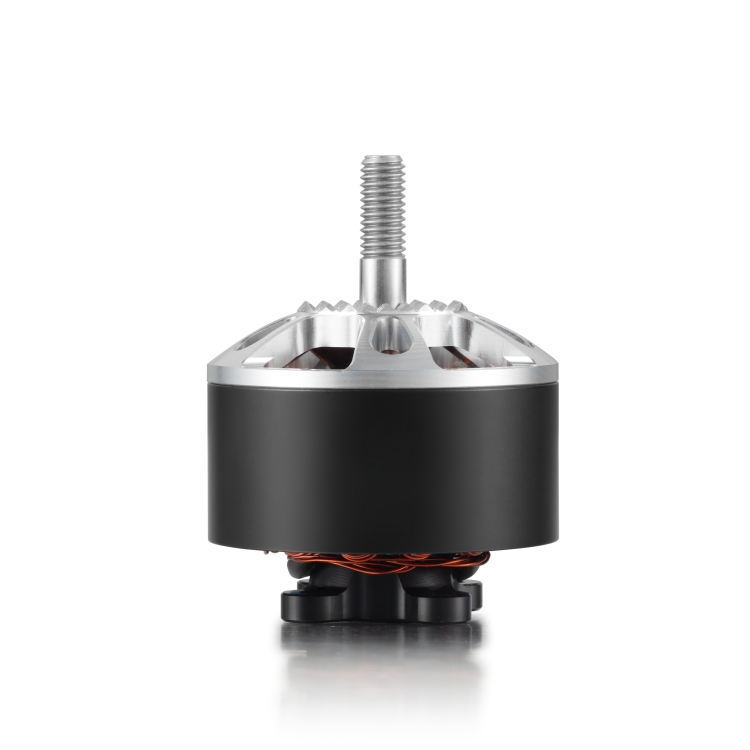
In the surveying and mapping industry, aerial imaging quality is the foundation of accurate data collection. Whether used for land surveying, topographic mapping, infrastructure inspection, or agricultural analysis, drones must deliver clear and stable images to ensure reliable mapping results.
Many operators believe that aerial image stability depends mainly on the gimbal system. While the gimbal plays an important role in camera stabilization, the drone motor is equally critical. The motor directly affects the aircraft’s thrust consistency, vibration level, flight balance, and response speed—all of which determine the final quality of aerial images.
For professional surveying drones, selecting the right Surveying and Mapping Drone Motor is one of the most important factors in achieving high-precision aerial photography.
Unlike recreational drones, surveying and mapping UAVs require extremely stable flight performance. Even slight vibration or positional drift can cause:
Image blur
Data overlap errors
Distorted orthophotos
Reduced mapping precision
High-resolution aerial cameras capture fine details from altitude, meaning even minimal vibration can significantly affect image sharpness.
For example, during photogrammetry missions, the drone must maintain smooth and consistent motion while capturing overlapping images. If the propulsion system creates unstable thrust or excessive vibration, the camera sensor may record blurred or misaligned images, reducing the accuracy of mapping outputs.
This is why professional aerial imaging systems demand not only advanced gimbals but also high-performance drone motors designed for stable operation.
The drone motor is the core component that generates lift and controls aircraft movement. In surveying applications, the motor must provide:
Stable thrust output
Fast response speed
Low vibration operation
High efficiency under load
If motor thrust fluctuates, the flight controller continuously adjusts the aircraft attitude, causing micro-movements that affect image capture stability.
Even when the gimbal compensates for some motion, it cannot completely eliminate vibration generated by poor motor performance. Excessive vibration can travel through the frame and interfere with the camera, especially during hovering or low-speed flight where imaging precision is essential.
Therefore, the performance of the surveying drone motor is a key contributor to stable aerial photography.
Motor weight directly affects the drone’s center of gravity and overall efficiency.
A motor that is too heavy increases the aircraft load, requiring more thrust to maintain flight. This leads to:
Higher energy consumption
Reduced endurance
Increased system stress
Slower control response
For surveying drones, long endurance is essential because missions often require extended flight paths and precise hovering. Choosing a motor with an optimized weight-to-power ratio helps improve flight efficiency while maintaining stability.
A lightweight but powerful motor reduces unnecessary structural burden, allowing the drone to fly longer and respond more smoothly during aerial imaging tasks.
Motor size influences propeller compatibility, thrust characteristics, and vibration behavior.
Larger motors generally support larger propellers, which can generate:
Greater lift efficiency
Lower RPM operation
Smoother thrust output
Lower rotational speed often means less vibration, which improves aerial image stability.
However, oversized motors may add unnecessary weight, while undersized motors may operate near maximum load, increasing vibration and reducing stability.
The ideal surveying and mapping drone motor should match:
Aircraft takeoff weight
Payload weight
Propeller diameter
Flight mission duration
Proper motor sizing ensures stable thrust margins and smooth aircraft operation.
The internal structural design of a motor greatly affects vibration performance.
High-quality motors use optimized designs such as:
Precision-balanced rotors
High concentricity shafts
Low-tolerance bearings
Efficient magnetic circuits
These features reduce mechanical vibration during rotation.
Poor structural precision causes imbalance, which leads to oscillation in the propulsion system. This vibration propagates through the airframe and affects image stability.
For surveying UAVs, low-vibration brushless motors are essential for producing sharp and accurate aerial images.
Motor performance is closely related to the ESC, propeller, and battery system.
Even a high-quality motor may perform poorly if the power system is mismatched.
To improve flight smoothness, the propulsion system should be optimized as a whole:
Motor KV matched with propeller size
ESC response tuned for smooth output
Battery voltage compatible with load demand
When the propulsion system is balanced, the drone can maintain stable speed and attitude, reducing flight oscillation.
This integrated system approach is especially important for mapping drone motors, where consistent flight behavior directly affects image accuracy.
Surveying operations often take place in challenging environments, including:
High-altitude regions
Windy open areas
Long-duration flights
Under these conditions, the motor must maintain reliable output without overheating or efficiency loss.
Reliable motors offer:
Better thermal management
Stable magnetic performance
Durable bearings
Consistent efficiency
A reliable motor reduces the risk of vibration changes during flight, ensuring stable image acquisition throughout the mission.
Its main advantage is the lightweight structure, which helps reduce the total takeoff weight of the UAV and improves flight efficiency. For small surveying drones equipped with lightweight cameras, the 2216 drone motor can provide enough thrust while extending endurance.
In addition, the 2216 motor usually works with 10–12 inch propellers, enabling relatively smooth thrust output at moderate RPM, which helps maintain basic aerial imaging stability.
However, because the stator size is relatively small, the torque reserve is limited, meaning:
Lower wind resistance
Weaker load capacity
Reduced hovering stability under payload
This means that when the drone carries mapping payloads such as stabilized gimbals or surveying cameras, the motor may operate near high load, increasing vibration and reducing image stability.
Therefore, 2216 is only suitable for lightweight surveying drones, where payload and wind resistance requirements are not extremely demanding.
Compared with 2216, the 3115 outrunner motor is much better suited for professional surveying and mapping drones because it offers higher torque, better stability, and stronger payload capacity.
The larger stator design allows the 3115 drone motor to drive larger propellers, usually 15–18 inch, at lower rotational speed. This creates:
Smoother thrust outputv
Lower vibration
Better hovering precision
For aerial surveying, low vibration is critical because it directly affects camera stability and image clarity. The lower-speed, higher-torque operation of the 3115 motor significantly improves the smoothness of aerial photography.
Another important advantage is its higher payload tolerance. Surveying drones often carry:
Mapping cameras
Stabilized gimbals
RTK modules
The 3115 motor provides enough torque reserve to maintain stable flight under these loads, reducing thrust fluctuation during hovering and maneuvering.
This is essential for ensuring stable aerial imaging accuracy during photogrammetry missions.
For aerial surveying and mapping drones, image stability is the foundation of accurate data collection. While gimbal stabilization is important, the Surveying and Mapping Drone Motor plays a central role in ensuring stable flight and sharp aerial images.
By optimizing:
Motor weight
Motor size
Structural design
System matching
Reliability
operators can significantly improve aerial imaging stability and mapping precision.
Choosing the right motor is not simply about thrust—it is about building a propulsion system that delivers smooth, efficient, and vibration-free flight performance for professional aerial imaging applications.
For manufacturers and drone integrators, investing in high-performance surveying and mapping drone motors is essential to achieving better flight stability and higher-quality aerial data.
 what's app