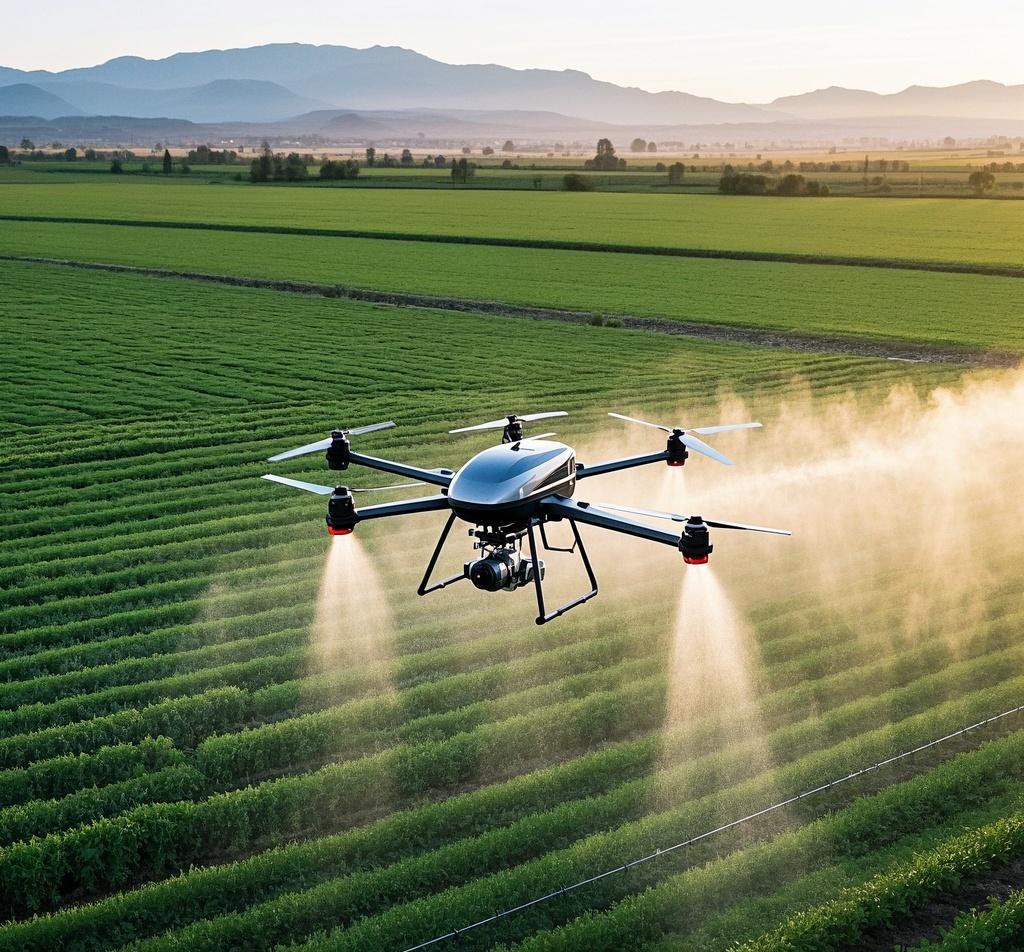
Agriculture is no longer confined to traditional, labor-intensive practices, as rising global food demand, urbanization, and labor shortages are accelerating the transition toward automation, precision, and data-driven farming systems. In this evolving landscape, efficiency and sustainability have become essential, pushing the industry to adopt advanced technologies that can optimize productivity while reducing resource consumption.
At the same time, environmental challenges such as soil degradation, water scarcity, and the need to minimize chemical overuse are driving the adoption of smarter and more sustainable agricultural solutions. Among these innovations, agricultural drones have emerged as a key technology, integrating aerodynamics, propulsion systems, and intelligent control to enable precise, efficient, and scalable farming operations across diverse terrains.
By combining high-efficiency motor systems, intelligent flight control, and precision application technologies, UAV platforms are transforming essential agricultural processes such as seeding and spraying, ultimately redefining modern agriculture as a technology-driven ecosystem focused on performance, sustainability, and efficiency.
High thrust-to-weight ratio to lift payloads without compromising flight time
Continuous high-load operation during long spraying or seeding runs.
Environmental resilience, including dust, humidity, and chemical exposure.
Precise control for variable-rate application to optimize crop yield.
Meeting these requirements demands advanced motor technology that combines efficiency, durability, and intelligent control.
Why it matters: Outrunner motors feature a spinning outer rotor that increases torque at lower speeds—ideal for multi-rotor drones carrying heavy tanks or seed dispensers.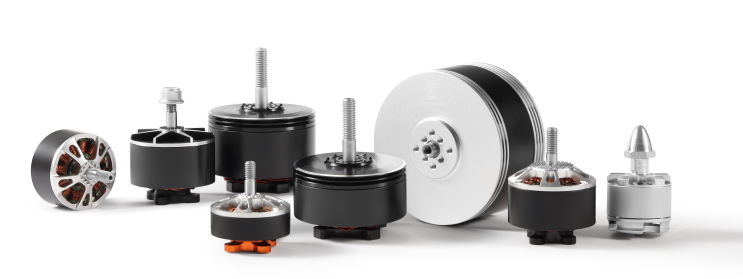
Technical specifics:
KV range: 200–600 KV for optimal balance of thrust and efficiency.
High-grade Neodymium magnets for energy-dense output.
Copper windings optimized for minimal energy loss under sustained load.
Performance impact: Provides precise thrust control, smooth acceleration, and longer flight times during spraying missions.
Application: Seeding drones often require controlled low-speed, high-torque outputs to operate seed distribution mechanisms.
Key features:
Integrated planetary or worm gear reduction for low RPM precision.
Torque output: 2–10 Nm for micro-seeding systems; up to 50 Nm for larger UAV seed spreaders.
Efficient thermal management to prevent overheating under continuous operation.
Benefits: Enables consistent seed placement while maintaining drone stability.
Functionality:
Real-time monitoring of motor current, voltage, temperature, and RPM.
Adaptive thrust management to maintain stable flight when payload weight changes during spraying.
Integration with GPS-guided flight systems to synchronize variable-rate application.
Advantages: Optimizes energy usage, prevents motor burnout, and ensures uniform crop coverage.
Agricultural UAV motors must endure:
Chemical-resistant coatings to withstand fertilizers and pesticides.
IP65–IP67 dust and water protection.
High-strength bearings and shafts to sustain repeated vertical takeoffs and landings.
Use of carbon fiber housings and high-energy magnets increases thrust without adding weight, improving efficiency for payload-intensive missions.
Advanced heat dissipation designs (vented stators, aluminum fins) allow continuous spraying runs without overheating.
High-efficiency windings reduce energy loss, extending battery life for longer field coverage.
Motors integrated with variable-speed control can adjust sprayer pressure or seeding rate in real time.
Data from sensors allows UAVs to compensate for wind or payload variation, ensuring uniform application.
Manufacturers are providing motor modules optimized for specific crop types, field sizes, and drone configurations, making replacement, upgrades, and maintenance simpler.
For agricultural drones, motor technology is no longer generic—it is mission-critical. High-torque, high-efficiency, environmentally resilient, and intelligently controlled motors enable precise spraying and seeding operations that maximize yield and reduce resource waste.
The future of agricultural UAVs lies in smarter, lighter, and more durable motor solutions, combining cutting-edge materials, thermal management, and intelligent control systems to meet the growing demands of modern precision agriculture.
 what's app